


Page 65 - Hall et al (2015) Principles of Critical Care-McGraw-Hill
P. 65
34      PART 1: An Overview of the Approach to and Organization of Critical Care


                                                                         in a patient safety infrastructure. As our understanding of how to improve
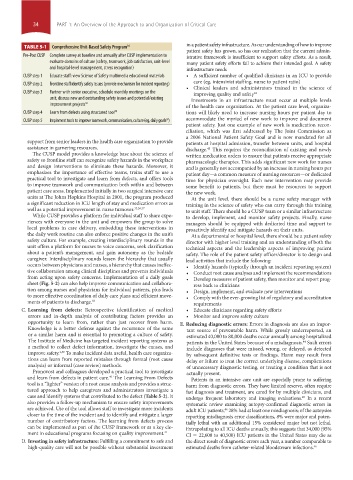
                   TABLE 5-1    Comprehensive Unit-Based Safety Program 34
                                                                         patient safety has grown, so has our realization that the current admin-
                  Pre-Post CUSP Complete survey at baseline and annually after CUSP implementation to   istrative framework is insufficient to support safety efforts. As a result,
                           evaluate domains of culture (safety, teamwork, job satisfaction, unit-level   many patient safety efforts fail to achieve their intended goal. A safety
                           and hospital-level management, stress recognition)  infrastructure needs
                  CUSP step 1  Educate staff: view Science of Safety multimedia educational materials    • A sufficient number of qualified clinicians in an ICU to provide
                                                                            care (eg, intensivist staffing, nurse to patient ratio)
                  CUSP step 2  Frontline staff identify safety issues (provide mechanism for incident reporting)
                                                                            • Clinical leaders and administrators trained in the science of
                  CUSP step 3  Partner with senior executive, schedule monthly meetings on the   improving quality and safety 42
                           unit, discuss new and outstanding safety issues and potential/existing   Investments  in  an  infrastructure  must  occur  at  multiple  levels
                           improvement projects 32                       of the health care organization. At the patient care level, organiza-
                  CUSP step 4  Learn from defects using structured tool 40  tions will likely need to increase nursing hours per patient day to
                                                                   38
                  CUSP step 5  Implement tools to improve teamwork, communication, culture (eg, daily goals )  accommodate the myriad of new work to improve and document
                                                                         patient safety. Just one example of new work is medication recon-
                                                                         ciliation, which was first addressed by The Joint Commission as
                                                                         a 2006 National Patient Safety Goal and is now mandated for all
                   support from senior leaders in the health care organization to provide   patients at hospital admission, transfer between units, and hospital
                   assistance in garnering resources.                    discharge.  This requires the reconciliation of existing and newly
                                                                                 43
                     The CUSP model provides a knowledge base about the science of   written medication orders to ensure that patients receive appropriate
                   safety so frontline staff can recognize safety hazards in the workplace   pharmacologic therapies. This adds significant new work for nurses
                   and design interventions to eliminate these hazards. Moreover, it   and is generally not accompanied by an increase in nursing hours per
                   emphasizes the importance of effective teams, trains staff to use a   patient day—a common measure of nursing resources—or dedicated
                   practical tool to investigate and learn from defects, and offers tools   time  for  physician  oversight.  Each  new  intervention  may  provide
                   to improve teamwork and communication both within and between   some benefit to patients, but there must be resources to support
                   patient care areas. Implemented initially in two surgical intensive care   the new work.
                   units at The Johns Hopkins Hospital in 2001, the program produced   At the unit level, there should be a nurse safety manager with
                   a significant reduction in ICU length of stay and medication errors as   training in the science of safety who can carry through this training
                   well as a potential improvement in nurse turnover. 33,36,37  to unit staff. There should be a CUSP team or a similar infrastructure
                     While CUSP provides a platform for individual staff to share expe-  to develop, implement, and monitor safety projects. Finally, nurse
                   riences with everyone in the unit and empowers the group to solve   managers should be equipped with dedicated time and support to
                   local problems in care delivery, embedding these interventions in   proactively identify and mitigate hazards on their units.
                   the daily work routine can also enforce positive changes in the unit’s   At a departmental or hospital level, there should be a patient safety
                   safety culture. For example, creating interdisciplinary rounds in the   director with higher level training and an understanding of both the
                   unit offers a platform for nurses to voice concerns, seek clarification   technical aspects and the leadership aspects of improving patient
                   about a patient’s management, and gain autonomy as the bedside   safety. The role of the patient safety officer/director is to design and
                   caregiver. Interdisciplinary rounds lessen the hierarchy that usually   lead activities that include the following:
                   occurs between physicians and nurses, a hierarchy that causes ineffec-    • Identify hazards (typically through an incident reporting system)
                   tive collaboration among clinical disciplines and prevents individuals     • Conduct root cause analyses and implement the recommendations
                   from acting upon safety concerns. Implementation of a daily goals     • Develop measures of patient safety, then monitor and report prog-
                   sheet (Fig. 5-2) can also help improve communication and collabora-  ress back to clinicians
                   tion among nurses and physicians for individual patients, plus leads     • Design, implement, and evaluate new interventions
                   to more effective coordination of daily care plans and efficient move-    • Comply with the ever-growing list of regulatory and accreditation
                   ments of patients to discharge. 38                       requirements
                 C. Learning from defects: Retrospective identification of medical     • Educate clinicians regarding safety efforts
                   errors and in-depth analysis of contributing factors provides an     • Monitor and improve safety culture
                   opportunity to  learn from,  rather  than  just  recover  from  harm.   E. Reducing diagnostic errors: Errors in diagnosis are also an impor-
                   Knowledge is a better defense against the recurrence of the same   tant source of preventable harm. While grossly underreported, an
                   or a similar harm and is essential to promoting a culture of safety.   estimated 40,000 to 80,000 deaths occur annually among hospitalized
                   The Institute of Medicine has targeted incident reporting systems as   patients in the United States because of a misdiagnosis.  Such errors
                                                                                                                 44
                   a method to collect defect information, investigate the causes, and   include diagnoses that were missed, wrong, or delayed, as detected
                   improve safety.  To make incident data useful, health care organiza-  by subsequent definitive tests or findings. Harm may result from
                              1,39
                   tions can learn from reported mistakes through formal (root cause   delay or failure to treat the correct underlying disease, complications
                   analysis) or informal (case review) methods.          of unnecessary diagnostic testing, or treating a condition that is not
                     Pronovost and colleagues developed a practical tool to investigate   actually present.
                   and learn from defects in patient care.  The Learning From Defects   Patients in an intensive care unit are especially prone to suffering
                                               40
                   tool is a “lighter” version of a root cause analysis and provides a struc-  harm from diagnostic errors. They have limited reserve, often require
                   tured approach to help caregivers and administrators investigate a   fast diagnosis and treatment, are cared for by multiple clinicians, and
                   case and identify systems that contributed to the defect (Table 5-2). It   undergo frequent laboratory and imaging evaluations.  In a recent
                                                                                                                 45
                   also provides a follow-up mechanism to ensure safety improvements   systematic  review  examining  autopsy-confirmed  diagnostic  errors  in
                   are achieved. Use of the tool allows staff to investigate more incidents   adult ICU patients,  28% had at least one misdiagnosis; of the autopsies
                                                                                      46
                   closer to the time of the incident and to identify and mitigate a larger   reporting misdiagnosis error classifications, 8% were major and poten-
                   number of contributory factors. The learning from defects process   tially lethal with an additional 15% considered major but not lethal.
                   can be implemented as part of the CUSP framework or as a key ele-  Extrapolating to all ICU deaths annually, this suggests that 34,000 (95%
                   ment in educational programs focusing on quality improvement. 41  CI = 22,600 to 40,500) ICU patients in the United States may die as
                 D. Investing in safety infrastructure: Fulfilling a commitment to safe and   the direct result of diagnostic errors each year, a number comparable to
                   high-quality care will not be possible without substantial investment    estimated deaths from catheter-related bloodstream infections. 46


            Section01.indd   34                                                                                        1/22/2015   9:36:50 AM

