


Page 721 - Hall et al (2015) Principles of Critical Care-McGraw-Hill
P. 721
540     PART 4: Pulmonary Disorders


                                                                                    Myocardial Ischemia


                                                                            •
                                                                             V O 2
                                                                             Preload
                                                           Weaning           Afterload               MV O 2   > MQ •  O 2
                                                                                                       •
                                                                             Contractility
                                                                             Heart Rate


                                                                         Congestive Heart
                                                                            Failure


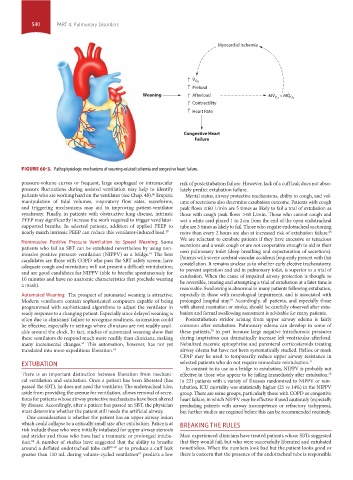
                 FIGURE 60-3.  Pathophysiologic mechanisms of weaning-related ischemia and congestive heart failure.

                 pressure-volume curves or frequent, large esophageal or intravascular   risk of postextubation failure. However, lack of a cuff leak does not abso-
                 pressure fluctuations during assisted ventilation may help to identify   lutely predict extubation failure.
                                                              60
                 patients who are working hard on the ventilator (see Chap. 48).  Empiric   Mental status, airway protective mechanisms, ability to cough, and vol-
                 manipulation of tidal volumes, inspiratory flow rates, waveforms,   ume of secretions also determine extubation outcome. Patients with cough
                 and triggering mechanisms may aid in improving patient-ventilator   peak flows ≤60 L/min are 5 times as likely to fail a trial of extubation as
                 synchrony. Finally, in patients with obstructive lung disease, intrinsic   those with cough peak flows >60 L/min. Those who cannot cough and
                 PEEP may significantly increase the work required to trigger ventilator-   wet a white card placed 1 to 2 cm from the end of the open endotracheal
                 supported breaths. In selected patients, addition of applied PEEP to   tube are 3 times as likely to fail. Those who require endotracheal suctioning
                 nearly match intrinsic PEEP can reduce this ventilator-induced load. 48  more than every 2 hours are also at increased risk of extubation failure.
                                                                                                                          68
                                                                       We are reluctant to extubate patients if they have excessive or tenacious
                 Noninvasive Positive Pressure  Ventilation to Speed  Weaning:  Some
                 patients who fail an SBT can be extubated nevertheless by using non-  secretions and a weak cough or are not cooperative enough to aid in their
                                                                       own pulmonary toilet (deep breathing and expectoration of secretions).
                 invasive positive pressure ventilation (NIPPV) as a bridge.  The best
                                                             61
                 candidates are those with COPD who pass the SBT safety screen; have   Patients with severe cerebral vascular accidents frequently present with this
                                                                       constellation. It remains unclear as to whether early elective tracheostomy,
                 adequate cough and mentation; will not present a difficult reintubation;
                 and are good candidates for NIPPV (able to breathe spontaneously for   to prevent aspiration and aid in pulmonary toilet, is superior to a trial of
                                                                       extubation. When the cause of impaired airway protection is thought to
                 10 minutes and have no anatomic characteristics that preclude wearing
                 a mask).                                              be reversible, treating and attempting a trial of extubation at a later time is
                                                                       reasonable. Swallowing is abnormal in many patients following extubation,
                 Automated Weaning:  The prospect of automated weaning is attractive.   especially in those with neurological impairment, and is associated with
                 Modern ventilators contain sophisticated computers capable of being   prolonged  hospital  stay.   Accordingly, all  patients,  and  especially  those
                                                                                        69
                 programmed with sophisticated algorithms to adjust the ventilator in   with altered mentation or stroke, should be carefully observed after extu-
                 ready response to a changing patient. Especially since delayed weaning is   bation and formal swallowing assessment is advisable for many patients.
                 often due to clinicians’ failure to recognize readiness, automation could   Postextubation stridor arising from upper airway edema is fairly
                 be effective, especially in settings where clinicians are not readily avail-  common after extubation. Pulmonary edema can develop in some of
                 able around the clock. In fact, studies of automated weaning show that   these patients,  in part because large negative intrathoracic pressures
                                                                                  70
                 these ventilators do respond much more readily than clinicians, making   during inspiration can dramatically increase left ventricular afterload.
                 many incremental changes.  This automation, however, has not yet   Nebulized racemic epinephrine and parenteral corticosteroids treating
                                      62
                 translated into more expeditious liberation. 63       airway edema but have not been systematically studied. Heliox or mask
                                                                       CPAP may be used to temporarily reduce upper airway resistance in
                 EXTUBATION                                            selected patients who do not require immediate reintubation. 71
                                                                         In contrast to its use as a bridge to extubation, NIPPV is probably not
                 There is an important distinction between liberation from mechani-  effective in those who appear to be failing immediately after extubation.
                                                                                                                          72
                 cal ventilation and extubation. Once a patient has been liberated (has   In 221 patients with a variety of illnesses randomized to NIPPV or rein-
                 passed the SBT), he does not need the ventilator. The endotracheal tube,   tubation, ICU mortality was statistically higher (25 vs 14%) in the NIPPV
                 aside from providing the avenue for ventilation, allows removal of secre-  group. There are some groups, particularly those with COPD or congestive
                 tions for patients whose airway protective mechanisms have been altered   heart failure, in which NIPPV may be effective if used cautiously (especially
                 by disease. Accordingly, after a patient has passed an SBT, the physician   precluding patients with airway incompetence or refractory tachypnea),
                 must determine whether the patient still needs the artificial airway.  but further studies are required before this can be recommended routinely.
                   One consideration is whether the patient has an upper airway lesion
                 which could collapse to a critically small size after extubation. Patients at   BREAKING THE RULES
                 risk include those who were initially intubated for upper airway stenosis
                 and stridor and those who have had a traumatic or prolonged intuba-  Most experienced clinicians have treated patients whose SBTs suggested
                     64
                 tion.  A number of studies have suggested that the ability to breathe   that they would fail, but who were successfully liberated and extubated
                 around a deflated endotracheal tube cuff 65-67  or to produce a cuff leak   nonetheless. When the numbers look bad but the patient looks good or
                                                         67
                 greater than 110 mL during volume-cycled ventilation  predicts a low   there is concern that the presence of the endotracheal tube is  responsible


            section04.indd   540                                                                                       1/23/2015   2:20:48 PM

