


Page 722 - Hall et al (2015) Principles of Critical Care-McGraw-Hill
P. 722
CHAPTER 60: Liberation From Mechanical Ventilation  541


                                                                          reintubation  must  be  weighed against  those  of  continued  mechanical
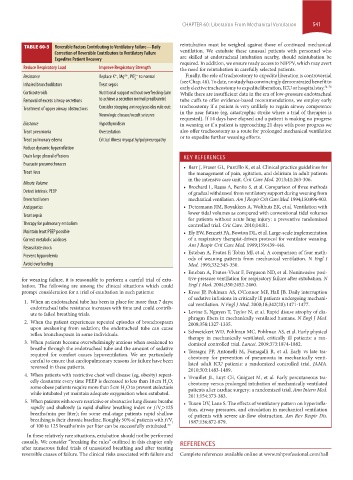
                      TABLE 60-3     Reversible Factors Contributing to Ventilatory Failure—Daily
                               Correction of Reversible Contributors to Ventilatory Failure   ventilation. We extubate these unusual patients with personnel who
                                                                          are skilled at endotracheal intubation nearby, should reintubation be
                               Expedites Patient Recovery
                                                                          required. In addition, we ensure ready access to NIPPV, which may avert
                    Reduce Respiratory Load   Improve Respiratory Strength  the need for reintubation in carefully selected patients.
                    Resistance                Replace K , Mg , PO  to normal  Finally, the role of tracheostomy to expedite liberation is controversial
                                                   +
                                                       2+
                                                          2−
                                                          4               (see Chap. 46). To date, no study has convincingly demonstrated benefit to
                    Inhaled bronchodilators   Treat sepsis
                                                                          early elective tracheostomy to expedite liberation, ICU or hospital stay. 74-76
                    Corticosteroids           Nutritional support without overfeeding (aim   While there are insufficient data in the era of low-pressure endotracheal
                    Removal of excess airway secretions  to achieve a secretion normal prealbumin)  tube cuffs to offer evidence-based recommendations, we employ early
                    Treatment of upper airway obstructions  Consider stopping aminoglycosides rule out:  tracheostomy if a patient is very unlikely to regain airway competence
                                              Neurologic disease/occult seizures  in the near future (eg, catastrophic stroke where a trial of therapies is
                                                                          requested). If 14 days have elapsed and a patient is making no progress
                    Elastance                 Hypothyroidism              in weaning or if a patient is approaching 21 days with poor progress we
                    Treat pneumonia           Oversedation                also offer tracheostomy as a route for prolonged mechanical ventilation
                                                                          or to expedite further weaning efforts.
                    Treat pulmonary edema     Critical illness myopathy/polyneuropathy
                    Reduce dynamic hyperinflation
                    Drain large pleural effusions                          KEY REFERENCES
                    Evacuate pneumothoraces
                                                                              • Barr J, Fraser GL, Puntillo K, et al. Clinical practice guidelines for
                    Treat ileus                                             the management of pain, agitation, and delirium in adult patients
                                                                            in the intensive care unit. Crit Care Med. 2013;41:263-306.
                    Minute Volume
                                                                             • Brochard L, Rauss A, Benito S, et al. Comparison of three methods
                    Detect intrinsic PEEP                                   of gradual withdrawal from ventilatory support during weaning from
                    Bronchodilators                                         mechanical ventilation. Am J Respir Crit Care Med. 1994;150:896-903.
                    Antipyretics                                              • Determann RM, Royakkers A, Wolthuis EK, et al. Ventilation with
                                                                            lower tidal volumes as compared with conventional tidal volumes
                    Treat sepsis
                                                                            for patients without acute lung injury: a preventive randomized
                    Therapy for pulmonary embolism                          controlled trial. Crit Care. 2010;14:R1.
                    Maintain least PEEP possible                              • Ely EW, Bennett PA, Bowton DL, et al. Large-scale implementation
                    Correct metabolic acidoses                              of a respiratory therapist-driven protocol for ventilator weaning.
                                                                            Am J Respir Crit Care Med. 1999;159:439-446.
                    Resuscitate shock
                                                                              • Esteban A, Frutos F, Tobin MJ, et al. A comparison of four meth-
                    Prevent hypovolemia
                                                                            ods of weaning patients from mechanical ventilation.  N Engl J
                    Avoid overfeeding                                       Med. 1995;332:345-350.
                                                                              • Esteban A, Frutos-Vivar F, Ferguson ND, et al. Noninvasive posi-
                    for weaning failure, it is reasonable to perform a careful trial of extu-  tive-pressure ventilation for respiratory failure after extubation. N
                    bation.  The  following  are  among  the  clinical  situations  which  could   Engl J Med. 2004;350:2452-2460.
                    prompt consideration for a trial of extubation in such patients:    • Kress JP, Pohlman AS, O’Connor MF, Hall JB. Daily interruption
                                                                            of sedative infusions in critically ill patients undergoing mechani-
                      1.  When an endotracheal tube has been in place for more than 7 days;   cal ventilation. N Engl J Med. 2000;18;342(20):1471-1477.
                       endotracheal tube resistance increases with time and could contrib-
                       ute to failed breathing trials.                        • Levine S, Nguyen T, Taylor N, et al. Rapid disuse atrophy of dia-
                      2.  When the patient experiences repeated episodes of bronchospasm   phragm fibers in mechanically ventilated humans. N Engl J Med.
                                                                            2008;358:1327-1335.
                       upon awakening from sedation; the endotracheal tube can cause
                       reflex bronchospasm in some individuals.               • Schweickert WD, Pohlman MC, Pohlman AS, et al. Early physical
                                                                            therapy in mechanically ventilated, critically ill patients: a ran-
                      3.  When patients become overwhelmingly anxious when awakened to   domised controlled trial. Lancet. 2009;373:1874-1882.
                       breathe through the endotracheal tube and the amount of sedative     • Terragni PP, Antonelli M, Fumagalli R, et al. Early vs late tra-
                       required for comfort causes hypoventilation. We are particularly   cheotomy for prevention of pneumonia in mechanically venti-
                       careful to ensure that cardiopulmonary reasons for failure have been   lated adult ICU patients: a randomized controlled trial.  JAMA.
                       reversed in these patients.                          2010;303:1483-1489.
                      4.  When patients with restrictive chest wall disease (eg, obesity) repeat-    • Trouillet JL, Luyt CE, Guiguet M, et al. Early percutaneous tra-
                       edly desaturate every time PEEP is decreased to less than 10 cm H O;   cheotomy versus prolonged intubation of mechanically ventilated
                                                                     2
                       some obese patients require more than 5 cm H O to prevent atelectasis   patients after cardiac surgery: a randomized trial. Ann Intern Med.
                                                       2
                       while intubated yet maintain adequate oxygenation when extubated.  2011;154:373-383.
                      5.  When patients with severe restrictive or obstructive lung disease breathe     • Tuxen DV, Lane S. The effects of ventilatory pattern on hyperinfla-
                       rapidly and shallowly (a rapid shallow breathing index or ƒ/V>125   tion, airway pressures, and circulation in mechanical ventilation
                                                                   t
                       breaths/min per liter); for some end-stage patients rapid shallow   of patients with severe air-flow obstruction. Am Rev Respir Dis.
                       breathing is their chronic baseline. Roughly 50% of patients with ƒ/V   t  1987;136:872-879.
                       of 100 to 125 breaths/min per liter can be successfully extubated. 73
                     In these relatively rare situations, extubation should not be performed
                    casually. We consider “breaking the rules” outlined in this chapter only   REFERENCES
                    after numerous failed trials of unassisted breathing and after treating
                    reversible causes of failure. The clinical risks associated with failure and   Complete references available online at www.mhprofessional.com/hall


            section04.indd   541                                                                                       1/23/2015   2:20:48 PM

