


Page 865 - Hall et al (2015) Principles of Critical Care-McGraw-Hill
P. 865
596     PART 5: Infectious Disorders


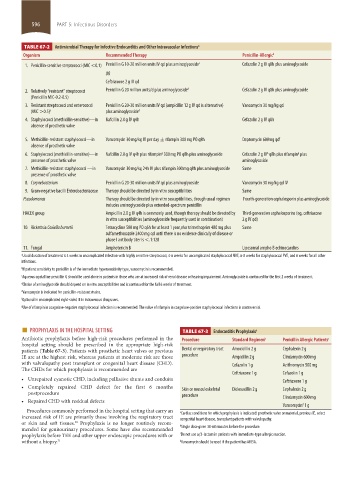
                   TABLE 67-2    Antimicrobial Therapy for Infective Endocarditis and Other Intravascular Infections a
                  Organism                    Recommended Therapy                           Penicillin-Allergic b
                    1.  Penicillin-sensitive streptococci (MIC <0.1)  Penicillin G 10-20 million units IV qd plus aminoglycoside   c  Cefazolin 2 g IV q8h plus aminoglycoside
                                              OR
                                              Ceftriaxone 2 g IV qd
                    2.  Relatively “resistant” streptococci   Penicillin G 20 million units/d plus aminoglycoside   d  Cefazolin 2 g IV q8h plus aminoglycoside
                    (Penicillin  MIC-0.2-0.5)
                    3.  Resistant streptococci and enterococci    Penicillin G 20-30 million units IV qd (ampicillin 12 g IV qd is alternative)    Vancomycin 30 mg/kg qd
                    (MIC >0.5) e              plus  aminoglycoside   d
                    4.  Staphylococci (methicillin-sensitive)—in   Nafcillin 2.0 g IV q4h   Cefazolin 2 g IV q8h
                    absence of prosthetic valve

                    5.  Methicillin-resistant staphylococci—in   Vancomycin 30 mg/kg IV per day ± rifampin 300 mg PO q8h   Daptomycin 600mg qd f
                    absence of prosthetic valve
                                                                 g
                                                                                                               g
                                                                                                     b
                    6.  Staphylococci (methicillin-sensitive)—in    Nafcillin 2.0 g IV q4h plus rifampin  300 mg PO q8h plus aminoglycoside   Cefazolin 2 g IV  q8h plus rifampin  plus
                    presence of prosthetic valve                                            aminoglycoside
                    7.  Methicillin-resistant staphylococci —in    Vancomycin 30 mg/kg 24h IV plus rifampin 300 mg q8h plus aminoglycoside   Same
                    presence of prosthetic valve
                    8.  Corynebacterium       Penicillin G 20-30 million units IV qd plus aminoglycoside   Vancomycin 30 mg/kg qd IV
                    9.  Gram-negative bacilli Enterobacteriaceae  Therapy should be directed by in vitro susceptibilities  Same
                  Pseudomonas                 Therapy should be directed by in vitro susceptibilities, though usual regimen       Fourth-generation cephalosporin plus aminoglycoside
                                              includes aminoglycoside plus extended-spectrum penicillin
                  HACEK group                 Ampicillin 2.0 g IV q4h is commonly used, though therapy should be directed by   Third-generation cephalosporins (eg, ceftriaxone
                                              in vitro susceptibilities (aminoglycoside frequently used in combination)  2 g IV qd)
                    10.  Rickettsia Coxiella burnetii  Tetracycline 500 mg PO q6h for at least 1 year plus trimethoprim 480 mg plus   Same
                                                sulfamethoxazole 2400 mg qd until there is no evidence clinically of disease or
                                              phase I antibody titer is <.1:128
                    11.  Fungal               Amphotericin B                                Liposomal ampho B echinocandins
                 a Usual duration of treatment is 4 weeks in uncomplicated infection with highly sensitive streptococci, 4-6 weeks for uncomplicated staphylococcal NVE, 6-8 weeks for staphylococcal PVE, and 6 weeks for all other
                 infections.
                 b If patient sensitivity to penicillin is of the immediate hypersensitivity type, vancomycin is recommended.
                 c Aqueous crystalline penicillin G should be used alone in patients in those who are at increased risk of renal disease or hearing impairment. Aminoglycoside is continued for the first 2 weeks of treatment.
                 d Choice of aminoglycoside should depend on in vitro susceptibilities and is continued for the full 6 weeks of treatment.
                 e Vancomycin is indicated for penicillin-resistant strains.
                 f Optional in uncomplicated right-sided IE in intravenous drug users.
                 g Use of rifampin in coagulase-negative staphylococcal infection is recommended. The value of rifampin in coagulase-positive staphylococcal infections is controversial.

                     ■  PROPHYLAXIS IN THE HOSPITAL SETTING              TABLE 67-3    Endocarditis Prophylaxis a


                 Antibiotic prophylaxis before high-risk procedures performed in the   Procedure  Standard Regimen b  Penicillin Allergic Patients c
                 hospital setting should be prescribed in the appropriate high-risk
                 patients (Table 67-3). Patients with prosthetic heart valves or previous   Dental or respiratory tract   Amoxicillin 2 g  Cephalexin 2 g
                 IE are at the highest risk, whereas patients at moderate risk are those   procedure  Ampicillin 2 g  Clindamycin 600 mg
                 with valvulopathy post transplant or congenital heart disease (CHD).    Cefazolin 1 g    Azithromycin 500 mg
                 The CHDs for which prophylaxis is recommended are
                                                                                         Ceftriaxone 1 g  Cefazolin 1 g
                    • Unrepaired cyanotic CHD, including palliative shunts and conduits                   Ceftriaxone 1 g
                    • Completely  repaired  CHD  defect  for  the  first  6  months   Skin or musculoskeletal   Dicloxacillin 2 g  Cephalexin 2 g
                     postprocedure                                      procedure
                    • Repaired CHD with residual defects                                                  Clindamycin 600 mg
                                                                                                          Vancomycin  1 g
                                                                                                                 d
                   Procedures commonly performed in the hospital setting that carry an   a
                                                                        Cardiac conditions for which prophylaxis is indicated: prosthetic valve or material, previous IE, select
                 increased risk of IE are primarily those involving the respiratory tract   congenital heart disease, transplant patients with valvulopathy.
                 or skin and soft tissues.  Prophylaxis is no longer routinely recom-
                                   30
                 mended for genitourinary procedures. Some have also recommended   b Single dose given 30-60 minutes before the procedure.
                 prophylaxis before TEE and other upper endoscopic procedures with or   c Do not use a β-lactam in patients with immediate-type allergic reaction.
                 without a biopsy. 31                                  d Vancomycin should be used if the patient has MRSA.


            section05_c61-73.indd   596                                                                                1/23/2015   12:48:01 PM

