


Page 908 - Hall et al (2015) Principles of Critical Care-McGraw-Hill
P. 908
CHAPTER 69: Human Immunodeficiency Virus (HIV) and AIDS in the Intensive Care Unit  639


                                                         New or worsening headache or CNS
                                                          dysfunction in late HIV infection


                                                           MRI or CT (contrast) showing
                                                               mass lesion or shift


                                                                                                  No
                                  Yes
                                                                                               Lumbar puncture
                                 Positive serum        If strongly suggestive
                              toxoplasma serology          of PCNSL a                      Spinal fluid: positive culture,
                                                                                             antigen, PCR, or VDRL


                                                                                        Yes                    No
                               Yes                          No
                                                                                    Treat for              Consider
                            Empiric therapy for        Lumbar puncture              Cryptococcal, TB, or  metabolic or toxic
                             toxoplasmosis             considered safe                other meningitis, or  encephalopathy,
                                                                                    CMV or HSV           AIDS dementia
                                                                                      encephalitis, or   complex, vascular
                                                                                    Neurosyphilis, or   lesions, and others
                                                                                    PML (JC virus)
                                                No            Yes
                            Improved clinically           Positive CSF
                           and by neuroimaging          cytology or EBV
                             after 7-14 days                PCR


                              Yes             No     No                   Yes

                            Continue therapy  Consider stereotactic  Treat for PCNSL (consider
                            for toxoplasmosis   brain biopsy    brain biopsy confirmation)
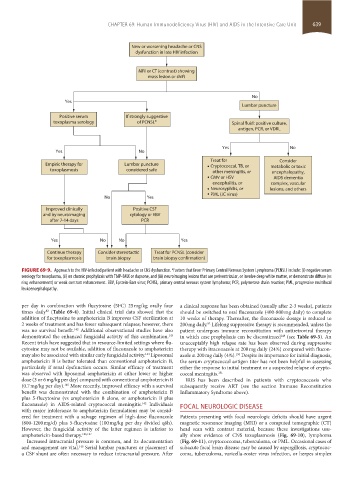
                    FIGURE 69-9.  Approach to the HIV-infected patient with headache or CNS dysfunction.  Factors that favor Primary Central Nervous System Lymphoma (PCNSL) include: (i) negative serum
                                                                       a
                    serology for toxoplasma, (ii) on chronic prophylaxis with TMP-SMX or dapsone, and (iii) neuroimaging lesions that are periventricular, or involve deep white matter, or demonstrate diffuse (vs
                    ring enhancement) or weak contrast enhancement. EBV, Epstein-Barr virus; PCNSL, primary central nervous system lymphoma; PCR, polymerase chain reaction; PML, progressive multifocal
                    leukoencephalopathy.


                    per day in combination with flucytosine (5FC) 25 mg/kg orally four   a clinical response has been obtained (usually after 2-3 weeks), patients
                    times daily  (Table 69-4). Initial clinical trial data showed that the   should be switched to oral fluconazole (400-800 mg daily) to complete
                            82
                      addition of flucytosine to amphotericin B improves CSF sterilization at   10 weeks of therapy. Thereafter, the fluconazole dosage is reduced to
                    2 weeks of treatment and has fewer subsequent relapses; however, there   200 mg daily.  Lifelong suppressive therapy is recommended, unless the
                                                                                   82
                    was no survival benefit.  Additional observational studies have also   patient undergoes immune reconstitution with antiretroviral therapy
                                     142
                    demonstrated the enhanced fungicidal activity of this combination.    in which case prophylaxis can be discontinued  (see Table 69-5). An
                                                                      143
                                                                                                            149
                    Recent trials have suggested that in resource-limited settings where flu-  unacceptably high relapse rate has been observed during suppressive
                    cytosine may not be available, addition of fluconazole to amphotericin   therapy with itraconazole at 200 mg daily (24%) compared with flucon-
                    may also be associated with similar early fungicidal activity.  Liposomal   azole at 200 mg daily (4%).  Despite its importance for initial diagnosis,
                                                                                             150
                                                              144
                    amphotericin B is better tolerated than conventional amphotericin B,   the serum cryptococcal antigen titer has not been helpful in assessing
                    particularly if renal dysfunction occurs. Similar efficacy of treatment   either the response to initial treatment or a suspected relapse of crypto-
                    was observed with liposomal amphotericin at either lower or higher   coccal meningitis. 151
                    dose (3 or 6 mg/kg per day) compared with conventional amphotericin B    IRIS has been described in patients with cryptococcosis who
                    (0.7 mg/kg per day).  More recently, improved efficacy with a survival   subsequently receive ART (see the section Immune Reconstitution
                                  145
                    benefit was demonstrated with the combination of amphotericin B   Inflammatory Syndrome above).
                    plus 5-flucytosine (vs amphotericin B alone, or amphotericin B plus
                    fluconazole)  in  AIDS-related  cryptococcal  meningitis.   Individuals   FOCAL NEUROLOGIC DISEASE
                                                             142
                    with major intolerance to amphotericin formulations may be consid-
                    ered for treatment with a salvage regimen of high-dose fluconazole   Patients presenting with focal neurologic deficits should have urgent
                    (800-1200 mg/d) plus 5-flucytosine (100 mg/kg per day divided q6h).    magnetic resonance imaging (MRI) or a computed tomographic (CT)
                    However, the fungicidal activity of the latter regimen is inferior to   head scan with contrast material, because these investigations usu-
                    amphotericin-based therapy. 146,147                   ally show evidence of CNS toxoplasmosis (Fig.  69-10), lymphoma
                     Increased intracranial pressure  is common,  and its documentation   (Fig. 69-11), cryptococcoma, tuberculoma, or PML. Occasional cases of
                    and management are vital.  Serial lumbar punctures or placement of   subacute focal brain disease may be caused by aspergillosis, cryptococ-
                                       148
                    a CSF shunt are often necessary to reduce intracranial pressure. After   coma, tuberculoma, varicella-zoster virus infection, or herpes simplex


            section05_c61-73.indd   639                                                                                1/23/2015   12:48:23 PM

