


Page 199 - Psychology of Wounds and Wound Care in Clinical Practice ( PDFDrive )
P. 199
174  Chapter 7.  Concordance


                  Understanding


                                 Satisfaction  Concordance

                    Memory


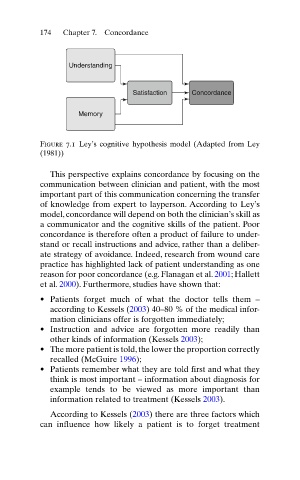
             Figure  7.1     Ley’s cognitive hypothesis model (Adapted from Ley
           (1981))


               This perspective explains concordance by focusing on the
           communication between clinician and patient, with the most
           important part of this communication concerning the transfer
           of knowledge from expert to layperson. According to Ley’s
           model, concordance will depend on both the clinician’s skill as
           a communicator and the cognitive skills of the patient. Poor
           concordance is therefore often a product of failure to under-
           stand or recall instructions and advice, rather than a deliber-
           ate strategy of avoidance. Indeed, research from wound care
           practice has highlighted lack of patient understanding as one
           reason for poor concordance (e.g. Flanagan et al.   2001 ; Hallett
           et al.   2000 ). Furthermore, studies have shown that:
           •     Patients forget much of what the doctor tells them –
             according to Kessels (  2003 ) 40–80 % of the medical infor-
             mation clinicians offer is forgotten immediately;
           •    Instruction and advice are forgotten more readily than
             other kinds of information (Kessels   2003 );
           •    The more patient is told, the lower the proportion  correctly
             recalled (McGuire   1996 );
           •    Patients remember what they are told first and what they
             think is most important – information about diagnosis for
             example tends to be viewed as more important than
               information related to treatment (Kessels   2003 ).

               According to Kessels (  2003 ) there are three factors which
           can influence how likely a patient is to forget treatment

