


Page 72 - Psychology of Wounds and Wound Care in Clinical Practice ( PDFDrive )
P. 72
Pain Management    45


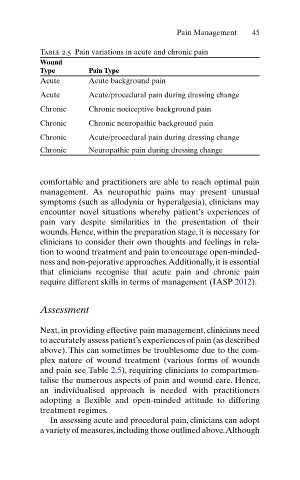
              Table 2.5   Pain variations in acute and chronic pain
            Wound
           Type       Pain Type
            Acute      Acute background pain
             Acute      Acute/procedural pain during dressing change
             Chronic     Chronic nociceptive background pain
             Chronic     Chronic neuropathic background pain
             Chronic     Acute/procedural pain during dressing change
             Chronic     Neuropathic pain during dressing change


           comfortable and practitioners are able to reach optimal pain
           management.  As neuropathic pains may present unusual
           symptoms (such as allodynia or hyperalgesia), clinicians may
           encounter novel situations whereby patient’s experiences of
           pain vary despite similarities in the presentation of their
           wounds. Hence, within the preparation stage, it is necessary for
             clinicians to consider their own thoughts and feelings in rela-
           tion to wound treatment and pain to encourage open-minded-
           ness and non-pejorative approaches. Additionally, it is essential
           that clinicians recognise that acute pain and chronic pain
           require different skills in terms of management (IASP   2012 ).


               Assessment

             Next, in providing effective pain management, clinicians need
           to accurately assess patient’s experiences of pain (as described
           above). This can sometimes be troublesome due to the com-
           plex nature of wound treatment (various forms of wounds
           and pain see Table   2.5 ), requiring clinicians to compartmen-
           talise the numerous aspects of pain and wound care. Hence,
           an individualised approach is needed with practitioners
           adopting a flexible and open-minded attitude to differing
           treatment regimes.
                   In assessing acute and procedural pain, clinicians can adopt
           a variety of measures, including those outlined above. Although

