


Page 143 - Clinical Anatomy
P. 143
ECA2  7/18/06  6:43 PM  Page 128


                 128  The abdomen and pelvis


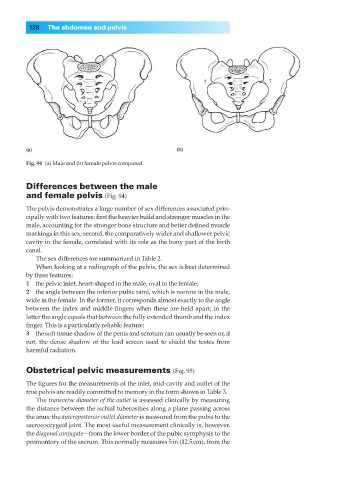
                Fig. 94 (a) Male and (b) female pelvis compared.

                Differences between the male
                and female pelvis (Fig. 94)

                The pelvis demonstrates a large number of sex differences associated prin-
                cipally with two features: first the heavier build and stronger muscles in the
                male, accounting for the stronger bone structure and better defined muscle
                markings in this sex; second, the comparatively wider and shallower pelvic
                cavity in the female, correlated with its role as the bony part of the birth
                canal.
                   The sex differences are summarized in Table 2.
                   When looking at a radiograph of the pelvis, the sex is best determined
                by three features:
                1◊◊the pelvic inlet, heart-shaped in the male, oval in the female;
                2◊◊the angle between the inferior pubic rami, which is narrow in the male,
                wide in the female. In the former, it corresponds almost exactly to the angle
                between the index and middle fingers when these are held apart; in the
                latter the angle equals that between the fully extended thumb and the index
                finger. This is a particularly reliable feature;
                3◊◊the soft tissue shadow of the penis and scrotum can usually be seen or, if
                not, the dense shadow of the lead screen used to shield the testes from
                harmful radiation.


                Obstetrical pelvic measurements (Fig. 95)
                The figures for the measurements of the inlet, mid-cavity and outlet of the
                true pelvis are readily committed to memory in the form shown in Table 3.
                   The transverse diameter of the outlet is assessed clinically by measuring
                the distance between the ischial tuberosities along a plane passing across
                the anus; the anteroposterior outlet diameter is measured from the pubis to the
                sacrococcygeal joint. The most useful measurement clinically is, however,
                the diagonal conjugate—from the lower border of the pubic symphysis to the
                promontory of the sacrum. This normally measures 5in (12.5cm); from the

