


Page 333 - Clinical Anatomy
P. 333
ECA5  7/18/06  6:51 PM  Page 318


                 318  The head and neck


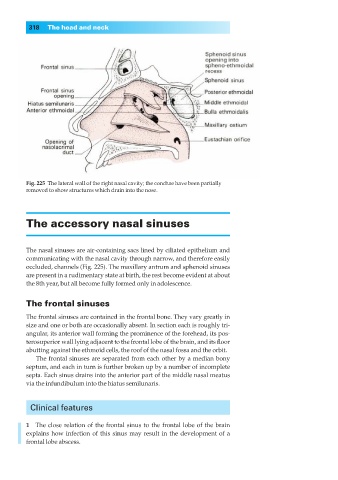
                Fig. 225◊The lateral wall of the right nasal cavity; the conchae have been partially
                removed to show structures which drain into the nose.


                The accessory nasal sinuses


                The nasal sinuses are air-containing sacs lined by ciliated epithelium and
                communicating with the nasal cavity through narrow, and therefore easily
                occluded, channels (Fig. 225). The maxillary antrum and sphenoid sinuses
                are present in a rudimentary state at birth, the rest become evident at about
                the 8th year, but all become fully formed only in adolescence.

                The frontal sinuses

                The frontal sinuses are contained in the frontal bone. They vary greatly in
                size and one or both are occasionally absent. In section each is roughly tri-
                angular, its anterior wall forming the prominence of the forehead, its pos-
                terosuperior wall lying adjacent to the frontal lobe of the brain, and its floor
                abutting against the ethmoid cells, the roof of the nasal fossa and the orbit.
                   The frontal sinuses are separated from each other by a median bony
                septum, and each in turn is further broken up by a number of incomplete
                septa. Each sinus drains into the anterior part of the middle nasal meatus
                via the infundibulum into the hiatus semilunaris.


                 Clinical features

                1◊◊The close relation of the frontal sinus to the frontal lobe of the brain
                explains how infection of this sinus may result in the development of a
                frontal lobe abscess.

