


Page 362 - Clinical Anatomy
P. 362
ECA6  7/18/06  6:54 PM  Page 347


                                                                                   The brain   347


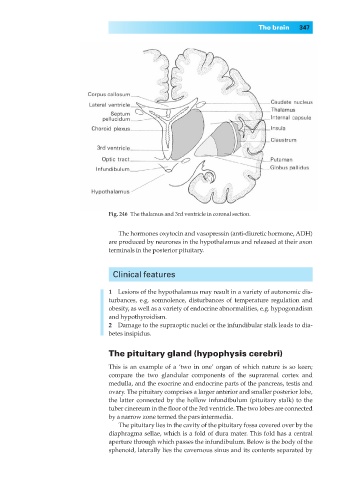
                                        Fig. 246◊The thalamus and 3rd ventricle in coronal section.

                                          The hormones oxytocin and vasopressin (anti-diuretic hormone, ADH)
                                        are produced by neurones in the hypothalamus and released at their axon
                                        terminals in the posterior pituitary.


                                         Clinical features

                                        1◊◊Lesions of the hypothalamus may result in a variety of autonomic dis-
                                        turbances, e.g. somnolence, disturbances of temperature regulation and
                                        obesity, as well as a variety of endocrine abnormalities, e.g. hypogonadism
                                        and hypothyroidism.
                                        2◊◊Damage to the supraoptic nuclei or the infundibular stalk leads to dia-
                                        betes insipidus.


                                        The pituitary gland (hypophysis cerebri)
                                        This is an example of a ‘two in one’ organ of which nature is so keen;
                                        compare the two glandular components of the suprarenal cortex and
                                        medulla, and the exocrine and endocrine parts of the pancreas, testis and
                                        ovary. The pituitary comprises a larger anterior and smaller posterior lobe,
                                        the latter connected by the hollow infundibulum (pituitary stalk) to the
                                        tuber cinereum in the floor of the 3rd ventricle. The two lobes are connected
                                        by a narrow zone termed the pars intermedia.
                                          The pituitary lies in the cavity of the pituitary fossa covered over by the
                                        diaphragma sellae, which is a fold of dura mater. This fold has a central
                                        aperture through which passes the infundibulum. Below is the body of the
                                        sphenoid, laterally lies the cavernous sinus and its contents separated by

