


Page 97 - Clinical Application of Mechanical Ventilation
P. 97
Classification of Mechanical Ventilators  63


                                      Inspiration is      Inspiration is      Inspiration is     Inspiration is
                                   Pressure Triggered  Volume Triggered     Flow Triggered     Time Triggered


                                           yes                 yes                 yes
                                     Does inspiration  no  Does inspiration  no  Does inspiration  no  Inspiration starts
                                   start because a preset  start because a preset  start because a preset  because a preset time
                                   pressure is detected?  volume is detected?  flow is detected?  interval has elapsed.


                               Observation and previous knowledge  before inspiration ends?  no  before inspiration ends?  no  before inspiration ends?  no  during inspiration. From R. L. Chatburn (1991). Respir Care, 36  (10). Used with permission.
                                                          Inspiration is
                                                                              Inspiration is
                                      Inspiration is
                                                                             Flow Limited
                                                        Volume Limited
                                    Pressure Limited
                                                                                   yes
                                                               yes
                                           yes
                                                        Does peak volume
                                    Does peak pressure
                                                                             Does peak flow
                                                                                                  No variables
                                                        reach preset value
                                                                            reach preset value
                                    reach preset value
                                                                                                  are limited
                                                                             Inspiration is
                                                                                                 Inspiration is
                                                          Inspiration is
                                      Inspiration is
                                    Pressure Cycled
                                                                                   yes
                                                               yes
                                           yes          Volume Cycled        Flow Cycled        Time Cycled
                                    Does inspiratory flow  no  Does inspiratory flow  no  Does inspiratory flow  no  Inspiration ends
                                   end because a preset  end because a preset  end because a preset  because a preset time
                                    pressure is attained?  volume is attained?  flow is attained?  interval has elapsed.
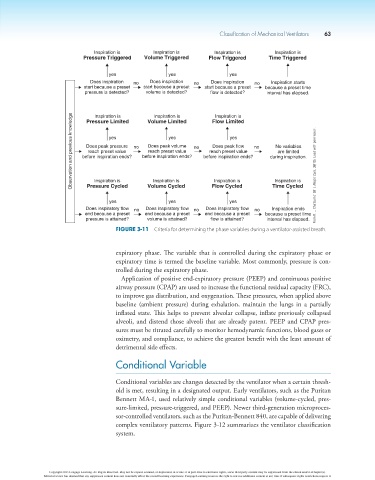
                                             Figure 3-11  Criteria for determining the phase variables during a ventilator-assisted breath.
                                             expiratory phase. The variable that is controlled during the expiratory phase or
                                             expiratory time is termed the baseline variable. Most commonly, pressure is con-
                                             trolled during the expiratory phase.
                                               Application of positive end-expiratory pressure (PEEP) and continuous positive
                                             airway pressure (CPAP) are used to increase the functional residual capacity (FRC),
                                             to improve gas distribution, and oxygenation. These pressures, when applied above
                                             baseline  (ambient  pressure)  during  exhalation,  maintain  the  lungs  in  a  partially
                                             inflated state. This helps to prevent alveolar collapse, inflate previously collapsed
                                             alveoli, and distend those alveoli that are already patent. PEEP and CPAP pres-
                                             sures must be titrated carefully to monitor hemodynamic functions, blood gases or
                                             oximetry, and compliance, to achieve the greatest benefit with the least amount of
                                             detrimental side effects.

                                             Conditional Variable


                                             Conditional variables are changes detected by the ventilator when a certain thresh-
                                             old is met, resulting in a designated output. Early ventilators, such as the Puritan
                                             Bennett MA-1, used relatively simple conditional variables (volume-cycled, pres-
                                             sure-limited, pressure-triggered, and PEEP). Newer third-generation microproces-
                                             sor-controlled ventilators, such as the Puritan-Bennett 840, are capable of delivering
                                             complex ventilatory patterns. Figure 3-12 summarizes the ventilator classification
                                             system.


                        Copyright 2013 Cengage Learning. All Rights Reserved. May not be copied, scanned, or duplicated, in whole or in part. Due to electronic rights, some third party content may be suppressed from the eBook and/or eChapter(s).
                      Editorial review has deemed that any suppressed content does not materially affect the overall learning experience. Cengage Learning reserves the right to remove additional content at any time if subsequent rights restrictions require it.

