


Page 633 - Clinical Application of Mechanical Ventilation
P. 633
Mechanical Ventilation in Nontraditional Settings  599


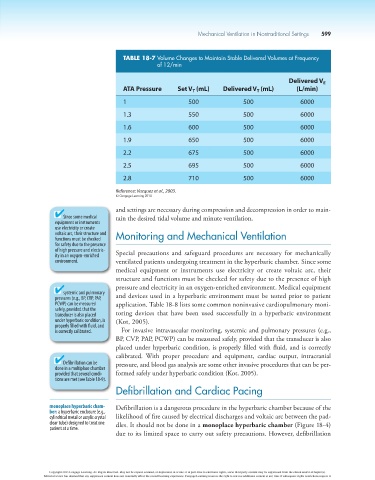
                                                TABLE 18-7  Volume Changes to Maintain Stable Delivered Volumes at Frequency
                                                           of 12/min

                                                                                                      Delivered V
                                                                                                                 E
                                                ATA Pressure      Set V  (mL)   Delivered V  (mL)       (L/min)
                                                                                           T
                                                                      T
                                                1                    500               500                6000
                                                1.3                  550               500                6000
                                                1.6                  600               500                6000

                                                1.9                  650               500                6000
                                                2.2                  675               500                6000

                                                2.5                  695               500                6000

                                                2.8                  710               500                6000
                                             Reference: Vazquez et al., 2003.
                                             © Cengage Learning 2014
                                             and settings are necessary during compression and decompression in order to main-
                            Since some medical   tain the desired tidal volume and minute ventilation.
                          equipment or instruments
                          use electricity or create
                          voltaic arc, their structure and   Monitoring and Mechanical Ventilation
                          functions must be checked
                          for safety due to the presence
                          of high pressure and electric-  Special  precautions  and  safeguard  procedures  are  necessary  for  mechanically
                          ity in an oxygen-enriched
                          environment.       ventilated patients undergoing treatment in the hyperbaric chamber. Since some
                                             medical  equipment  or  instruments  use  electricity  or  create  voltaic  arc,  their
                                             structure and functions must be checked for safety due to the presence of high
                                             pressure and electricity in an oxygen-enriched environment. Medical equipment
                            systemic and pulmonary
                          pressures (e.g., BP, CVP, PAP,   and devices used in a hyperbaric environment must be tested prior to patient
                          PCWP) can be measured   application. Table 18-8 lists some common noninvasive cardiopulmonary moni-
                          safely, provided that the
                          transducer is also placed   toring  devices  that  have  been  used  successfully  in  a  hyperbaric  environment
                          under hyperbaric condition, is   (Kot, 2005).
                          properly filled with fluid, and
                          is correctly calibrated.   For invasive intravascular monitoring, systemic and pulmonary pressures (e.g.,
                                             BP, CVP, PAP, PCWP) can be measured safely, provided that the transducer is also
                                             placed under hyperbaric condition, is properly filled with fluid, and is correctly
                                             calibrated.  With  proper  procedure  and  equipment,  cardiac  output,  intracranial
                            Defibrillation can be   pressure, and blood gas analysis are some other invasive procedures that can be per-
                          done in a multiplace chamber
                          provided that several condi-  formed safely under hyperbaric condition (Kot, 2005).
                          tions are met (see Table 18-9).
                                             Defibrillation and Cardiac Pacing


                        monoplace hyperbaric cham-  Defibrillation is a dangerous procedure in the hyperbaric chamber because of the
                        ber: a hyperbaric enclosure (e.g.,
                        cylindrical metal or acrylic crystal   likelihood of fire caused by electrical discharges and voltaic arc between the pad-
                        clear tube) designed to treat one   dles. It should not be done in a monoplace hyperbaric chamber (Figure 18-4)
                        patient at a time.
                                             due to its limited space to carry out safety precautions. However, defibrillation


                        Copyright 2013 Cengage Learning. All Rights Reserved. May not be copied, scanned, or duplicated, in whole or in part. Due to electronic rights, some third party content may be suppressed from the eBook and/or eChapter(s).
                      Editorial review has deemed that any suppressed content does not materially affect the overall learning experience. Cengage Learning reserves the right to remove additional content at any time if subsequent rights restrictions require it.

