


Page 180 - Cardiac Nursing
P. 180
LWBK340-c07_p153-176.qxd  6/29/09  10:14 PM  Page 156 Aptara Inc.


                  156    PA R T  II / Physiologic and Pathologic Responses


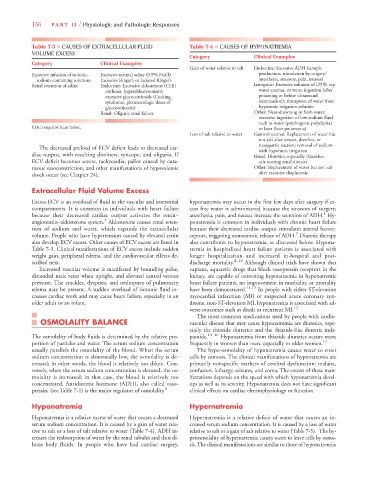
                  Table 7-3 ■ CAUSES OF EXTRACELLULAR FLUID           Table 7-4 ■ CAUSES OF HYPONATREMIA
                  VOLUME EXCESS
                                                                      Category             Clinical Examples
                  Category               Clinical Examples
                                                                      Gain of water relative to salt  Endocrine: Excessive ADH (ectopic
                  Excessive infusion of isotonic,  Excessive normal saline (0.9% NaCl)       production; stimulation by surgery/
                    sodium-containing solutions  Excessive Ringer’s or lactated Ringer’s     anesthesia, stressors, pain, nausea)
                  Renal retention of saline  Endocrine: Excessive aldosterone (CHF,        Iatrogenic: Excessive infusion of D5W, tap
                                          cirrhosis, hyperaldosteronism);                    water enemas, or water ingestion (after
                                          excessive glucocorticoids (Cushing                 poisoning or before ultrasound
                                          syndrome, pharmacologic doses of                   examination); absorption of water from
                                          glucocorticoids)                                   hypotonic irrigation solution
                                         Renal: Oliguric renal failure                     Other: Near-drowning in fresh water;
                                                                                             excessive ingestion of low-sodium fluid
                                                                                             such as water (psychogenic polydipsia)
                  CHF, congestive heart failure.                                             or beer (beer potomania)
                                                                      Loss of salt relative to water  Gastrointestinal: Replacement of water but
                                                                                             not salt after emesis, diarrhea, or
                                                                                             nasogastric suction; removal of sodium
                     The decreased preload of ECV deficit leads to decreased car-             with hypotonic irrigation
                  diac output, with resulting dizziness, syncope, and oliguria. If         Renal: Diuretics, especially thiazides;
                  ECV deficit becomes severe, tachycardia, pallor caused by cuta-             salt-wasting renal diseases
                  neous vasoconstriction, and other manifestations of hypovolemic          Other: Replacement of water but not salt
                  shock occur (see Chapter 24).                                              after excessive diaphoresis

                  Extracellular Fluid Volume Excess
                  Excess ECV is an overload of fluid in the vascular and interstitial  hyponatremia may occur in the first few days after surgery if ex-
                  compartments. It is common in individuals with heart failure  cess free water is administered because the stressors of surgery,
                                                                                                                  1
                  because their  decreased cardiac output activates the renin–  anesthesia, pain, and nausea increase the secretion of ADH. Hy-
                                          5
                  angiotensin–aldosterone system. Aldosterone causes renal reten-  ponatremia is common in individuals with chronic heart failure
                  tion of sodium and water, which expands the extracellular   because their decreased cardiac output stimulates arterial barore-
                                                                                                         7
                  volume. People who have hypertension caused by elevated renin  ceptors, triggering nonosmotic release of ADH. Diuretic therapy
                  also develop ECV excess. Other causes of ECV excess are listed in  also contributes to hyponatremia, as discussed below. Hypona-
                  Table 7-3. Clinical manifestations of ECV excess include sudden  tremia in hospitalized heart failure patients is associated with
                  weight gain, peripheral edema, and the cardiovascular effects de-  longer  hospitalization and increased in-hospital and post-
                  scribed next.                                       discharge mortality. 8–10  Although clinical trials have shown that
                     Increased vascular volume is manifested by bounding pulse,  vaptans, aquaretic drugs that block vasopressin receptors in the
                  distended neck veins when upright, and elevated central venous  kidney, are capable of correcting hyponatremia in hyponatremic
                  pressure. The crackles, dyspnea, and orthopnea of pulmonary  heart failure patients, no improvement in morbidity or mortality
                  edema may be present. A sudden overload of isotonic fluid in-  have been demonstrated. 11,12  In people with either ST-elevation
                  creases cardiac work and may cause heart failure, especially in an  myocardial infarction (MI) or suspected acute coronary syn-
                  older adult or an infant.                           drome, non-ST-elevation MI, hyponatremia is associated with ad-
                                                                      verse outcomes such as death or recurrent MI. 13
                                                                        The most common medications used by people with cardio-
                     OSMOLALITY BALANCE                               vascular disease that may cause hyponatremia are diuretics, espe-
                                                                      cially the thiazide diuretics and the thiazide-like diuretic inda-
                  The osmolality of body fluids is determined by the relative pro-  pamide. 14–16  Hyponatremia from thiazide diuretics occurs more
                  portion of particles and water. The serum sodium concentration  frequently in women than men, especially in older women. 17
                  usually parallels the osmolality of the blood. When the serum  The hypo-osmolality of hyponatremia causes water to enter
                  sodium concentration is abnormally low, the osmolality is de-  cells by osmosis. The clinical manifestations of hyponatremia are
                  creased; in other words, the blood is relatively too dilute. Con-  primarily nonspecific markers of cerebral dysfunction: malaise,
                  versely, when the serum sodium concentration is elevated, the os-  confusion, lethargy, seizures, and coma. The extent of these man-
                  molality is increased; in that case, the blood is relatively too  ifestations depends on the speed with which hyponatremia devel-
                  concentrated. Antidiuretic hormone (ADH), also called vaso-  ops as well as its severity. Hyponatremia does not have significant
                  pressin, (see Table 7-1) is the major regulator of osmolality. 6  clinical effects on cardiac electrophysiology or function.

                  Hyponatremia                                        Hypernatremia
                  Hyponatremia is a relative excess of water that causes a decreased  Hypernatremia is a relative deficit of water that causes an in-
                  serum sodium concentration. It is caused by a gain of water rela-  creased serum sodium concentration. It is caused by a loss of water
                  tive to salt or a loss of salt relative to water (Table 7-4). ADH in-  relative to salt or a gain of salt relative to water (Table 7-5).  The hy-
                  creases the reabsorption of water by the renal tubules and thus di-  perosmolality of hypernatremia causes water to leave cells by osmo-
                  lutes  body  fluids. In people who  have  had cardiac surgery,  sis. The clinical manifestations are similar to those of hyponatremia:

