


Page 184 - Cardiac Nursing
P. 184
LWBK340-c07_p153-176.qxd  6/29/09  10:14 PM  Page 160 Aptara Inc.


                  160    PA R T  II / Physiologic and Pathologic Responses

                     Long-standing hypokalemia is associated with selective my-  mentation or angiotensin-converting enzyme inhibitors or used by
                  ocardial cell necrosis. As discussed in Chapter 27, selective my-  people who have any degree of renal impairment. 50,51,53,54  Nonselec-
                  ocardial cell necrosis is associated with sudden cardiac death.  tive  -adrenergic blockers promote the development of hyperkalemia
                                                                      by blocking catecholamine action at   2 receptors that normally stim-
                     Vascular Effects of Hypokalemia.  In addition to the mul-                49,56
                                                                      ulates potassium entry into cells.  The hyperkalemic effect of
                  tiple cardiac effects discussed previously, hypokalemia has vascular
                                                              3
                  effects. Postural hypotension often occurs in hypokalemia, most   -blockade is especially pronounced during exercise, which has
                                                                      relevance to treadmill stress testing, and is enhanced in people who
                  likely caused by impaired smooth muscle function.             48,56,57
                                                                      take digitalis.  Administration of either unfractionated or
                     Classic studies indicate that chronic potassium depletion in
                                                           44
                  humans impairs vasodilation during strenuous exercise. The re-  low-molecular-weight heparin, even in low-dose therapy, decreases
                                                                      the synthesis of aldosterone; hyperkalemia is likely to occur in he-
                  sulting impaired muscle blood flow decreases oxygen delivery and                                48,58
                                                                      parinized individuals who have even mild renal insufficiency.  A
                  contributes to the rhabdomyolysis that occurs with whole-body
                  potassium depletion. 45–47                          massive digitalis overdose causes hyperkalemia by allowing intracellu-
                                                                      lar potassium to leak into the extracellular fluid and impairing its
                                                                      movement back into cells. 52
                  Hyperkalemia
                                                                        Another cardiovascular-related source of hyperkalemia is mas-
                  Hyperkalemia, an increased plasma potassium concentration, re-
                                                                      sive blood transfusion. While blood is stored, potassium ions leak
                  sults from increased potassium intake, shift of potassium ions
                                                                      from the erythrocytes into the plasma. The longer the storage time,
                  from the cells to the extracellular fluid, decreased potassium ex-                              59,60
                                                   1
                  cretion, or any combination of these factors. Examples of specific  the greater the potassium load contained in a unit of blood.  A
                                                                      classic study indicates that if the blood has been in storage for more
                  etiologic factors in each of these categories are listed in Table 7-8.
                                                                      than 3 days, rewarming the blood before administration causes
                  Hyperkalemia may occur during hemorrhagic or hypovolemic                               61
                                                                      only minimal return of potassium to the cells.  Individuals re-
                  shock and during cardiopulmonary resuscitation.
                                                                      ceiving more than 7 or 8 units of stored blood within a few hours
                     Several medications commonly administered to individuals
                  with cardiac  disease may cause  hyperkalemia. 48  Angiotensin-  are considered at high risk for severe hyperkalemia; however, fatal
                                                                      hyperkalemia has occurred with transfusion of fewer units, espe-
                  converting enzyme inhibitors such as captopril and enalapril, an-                 60,62
                                                                      cially when they are administered rapidly.
                  giotensin II receptor blockers such as losartan, selective aldosterone
                                                                        Hyperkalemia may be manifested clinically by intestinal cramp-
                  blockers such as eplerenone, and direct renin inhibitors such as
                                                                      ing and diarrhea, skeletal muscle weakness, flaccid paralysis, cardiac
                  aliskiren decrease the release of aldosterone. Aldosterone normally fa-
                                                                      arrhythmias, and cardiac arrest. The cardiac effects of hyperkalemia
                  cilitates renal excretion of potassium. When these drugs decrease the
                  availability of aldosterone, hyperkalemia may occur. 49–52  The potas-  are potentially fatal; they are discussed in the next section.
                  sium-sparing diuretics spironolactone, triamterene, and amiloride
                                                                        Cardiac Effects of Hyperkalemia.  Hyperkalemia alters
                  may cause hyperkalemia, especially if given with potassium supple-
                                                                      myocardial cell function in several ways. When the plasma potas-
                                                                      sium concentration increases, the extracellular/intracellular potas-
                                                                      sium concentration ratio increases. Consequently, the resting
                                                                      membrane potential of cardiac cells becomes partially depolarized
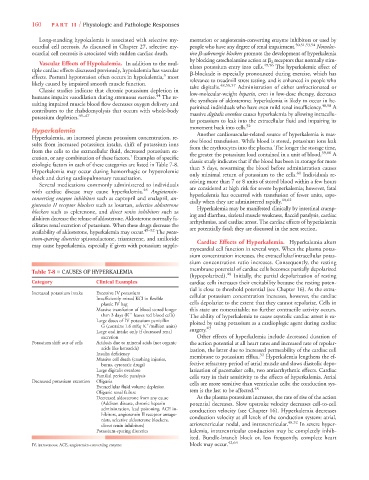
                  Table 7-8 ■ CAUSES OF HYPERKALEMIA                              48
                                                                      (hypopolarized).  Initially, the partial depolarization of resting
                  Category             Clinical Examples              cardiac cells increases their excitability because the resting poten-
                                                                      tial is close to threshold potential (see Chapter 16). As the extra-
                  Increased potassium intake  Excessive IV potassium
                                        Insufficiently mixed KCl in flexible  cellular potassium concentration increases, however, the cardiac
                                         plastic IV bag               cells depolarize to the extent that they cannot repolarize. Cells in
                                       Massive transfusion of blood stored longer  this state are nonexcitable; no further contractile activity occurs.

                                         than 3 days (K leaves red blood cells)  The ability of hyperkalemia to cause asystolic cardiac arrest is ex-
                                       Large doses of IV potassium penicillin  ploited by using potassium as a cardioplegic agent during cardiac

                                         G (contains 1.6 mEq K /million units)  63
                                       Large oral intake only if decreased renal  surgery.
                                         excretion                      Other effects of hyperkalemia include decreased duration of
                  Potassium shift out of cells  Acidosis due to mineral acids (not organic  the action potential at all heart rates and increased rate of repolar-
                                         acids like ketoacids)        ization, the latter due to increased permeability of the cardiac cell
                                        Insulin deficiency                                    32
                                       Massive cell death (crushing injuries,  membrane to potassium efflux.  Hyperkalemia lengthens the ef-
                                         burns, cytotoxic drugs)      fective refractory period of atrial muscle and slows diastolic depo-
                                       Large digitalis overdose       larization of pacemaker cells, two antiarrhythmic effects. Cardiac
                                        Familial periodic paralysis   cells vary in their sensitivity to the effects of hyperkalemia. Atrial
                  Decreased potassium excretion  Oliguria             cells are more sensitive than ventricular cells; the conduction sys-
                                       Extracellular fluid volume depletion                 48
                                        Oliguric renal failure        tem is the last to be affected.
                                       Decreased aldosterone from any cause   As the plasma potassium increases, the rate of rise of the action
                                         (Addison disease, chronic heparin  potential decreases. Slow upstroke velocity decreases cell-to-cell
                                         administration, lead poisoning, ACE in-  conduction velocity (see Chapter 16). Hyperkalemia decreases
                                         hibitors, angiotensin II receptor antago-
                                         nists, selective aldosterone blockers,   conduction velocity at all levels of the conduction system: atrial,
                                                                                                      48,52
                                         direct renin inhibitors)     atrioventricular nodal, and intraventricular.  In severe hyper-
                                       Potassium-sparing diuretics    kalemia, intraventricular conduction may be completely inhib-
                                                                      ited. Bundle-branch block or, less frequently, complete heart
                  IV, intravenous; ACE, angiotensin-converting enzyme.  block may occur. 42,64

