


Page 181 - Cardiac Nursing
P. 181
LWBK340-c07_p153-176.qxd  6/29/09  10:14 PM  Page 157 Aptara Inc.


                                                 C HAP TE R  7 / Fluid and Electrolyte and Acid–Base Balance and Imbalance  157

                                                                       the oral route; other routes of electrolyte intake include the in-
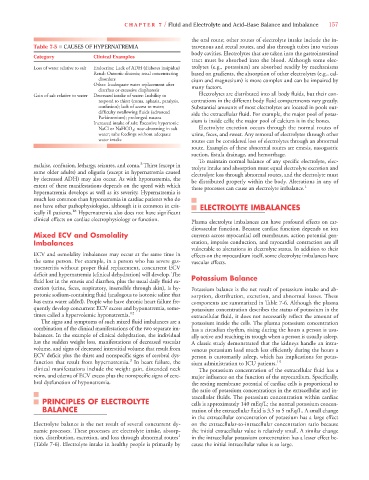
                   Table 7-5 ■ CAUSES OF HYPERNATREMIA                 travenous and rectal routes, and also through tubes into various
                                                                       body cavities. Electrolytes that are taken into the gastrointestinal
                   Category            Clinical Examples
                                                                       tract must be absorbed into the blood. Although some elec-
                   Loss of water relative to salt  Endocrine: Lack of ADH (diabetes insipidus)  trolytes (e.g., potassium) are absorbed readily by mechanisms
                                       Renal: Osmotic diuresis; renal concentrating  based on gradients, the absorption of other electrolytes (e.g., cal-
                                        disorders                      cium and magnesium) is more complex and can be impaired by
                                       Other: Inadequate water replacement after
                                        diarrhea or excessive diaphoresis  many factors.
                   Gain of salt relative to water  Decreased intake of water: Inability to  Electrolytes are distributed into all body fluids, but their con-
                                        respond to thirst (coma, aphasia, paralysis,  centrations in the different body fluid compartments vary greatly.
                                        confusion); lack of access to water;  Substantial amounts of most electrolytes are located in pools out-
                                        difficulty swallowing fluids (advanced  side the extracellular fluid. For example, the major pool of potas-
                                        Parkinsonism); prolonged nausea
                                       Increased intake of salt: Excessive hypertonic  sium is inside cells; the major pool of calcium is in the bones.
                                        NaCl or NaHCO 3 ; near-drowning in salt  Electrolyte excretion occurs through the normal routes of
                                        water; tube feedings without adequate  urine, feces, and sweat. Any removal of electrolytes through other
                                        water intake                   routes can be considered loss of electrolytes through an abnormal
                                                                       route. Examples of these abnormal routes are emesis, nasogastric
                                                                       suction, fistula drainage, and hemorrhage.
                                                                         To maintain normal balance of any specific electrolyte, elec-
                                                      3
                   malaise, confusion, lethargy, seizures, and coma. Thirst (except in  trolyte intake and absorption must equal electrolyte excretion and
                   some older adults) and oliguria (except in hypernatremia caused  electrolyte loss through abnormal routes, and the electrolyte must
                   by decreased ADH) may also occur. As with hyponatremia, the  be distributed properly within the body. Alterations in any of
                   extent of these manifestations depends on the speed with which  these processes can cause an electrolyte imbalance. 1
                   hypernatremia develops as well as its severity. Hypernatremia is
                   much less common than hyponatremia in cardiac patients who do
                   not have other pathophysiologies, although it is common in crit-  ELECTROLYTE IMBALANCES
                   ically ill patients. 18  Hypernatremia also does not have significant
                   clinical effects on cardiac electrophysiology or function.
                                                                       Plasma electrolyte imbalances can have profound effects on car-
                                                                       diovascular function. Because cardiac function depends on ion
                   Mixed ECV and Osmolality                            currents across myocardial cell membranes, action potential gen-
                   Imbalances                                          eration, impulse conduction, and myocardial contraction are all
                                                                       vulnerable to alterations in electrolyte status. In addition to their
                   ECV and osmolality imbalances may occur at the same time in  effects on the myocardium itself, some electrolyte imbalances have
                   the same person. For example, in a person who has severe gas-  vascular effects.
                   troenteritis without proper fluid replacement, concurrent ECV
                   deficit and hypernatremia (clinical dehydration) will develop. The  Potassium Balance
                   fluid lost in the emesis and diarrhea, plus the usual daily fluid ex-
                   cretion (urine, feces, respiratory, insensible through skin), is hy-  Potassium balance is the net result of potassium intake and ab-
                   potonic sodium-containing fluid (analogous to isotonic saline that  sorption, distribution, excretion, and abnormal losses. These
                   has extra water added). People who have chronic heart failure fre-  components are summarized in Table 7-6. Although the plasma
                   quently develop concurrent ECV excess and hyponatremia, some-  potassium concentration describes the status of potassium in the
                   times called a hypervolemic hyponatremia. 12        extracellular fluid, it does not necessarily reflect the amount of
                     The signs and symptoms of such mixed fluid imbalances are a  potassium inside the cells. The plasma potassium concentration
                   combination of the clinical manifestations of the two separate im-  has a circadian rhythm, rising during the hours a person is usu-
                   balances. In the example of clinical dehydration, the individual  ally active and reaching its trough when a person is usually asleep.
                   has the sudden weight loss, manifestations of decreased vascular  A classic study demonstrated that the kidneys handle an intra-
                   volume, and signs of decreased interstitial volume that result from  venous potassium load much less efficiently during the hours a
                   ECV deficit plus the thirst and nonspecific signs of cerebral dys-  person is customarily asleep, which has implications for potas-
                                                  3
                   function that result from hypernatremia. In heart failure, the  sium administration to ICU patients. 19
                   clinical manifestations include the weight gain, distended neck  The potassium concentration of the extracellular fluid has a
                   veins, and edema of ECV excess plus the nonspecific signs of cere-  major influence on the function of the myocardium. Specifically,
                   bral dysfunction of hyponatremia.                   the resting membrane potential of cardiac cells is proportional to
                                                                       the ratio of potassium concentrations in the extracellular and in-
                                                                       tracellular fluids. The potassium concentration within cardiac
                      PRINCIPLES OF ELECTROLYTE                        cells is approximately 140 mEq/L; the normal potassium concen-
                      BALANCE                                          tration of the extracellular fluid is 3.5 to 5 mEq/L. A small change
                                                                       in the extracellular concentration of potassium has a large effect
                   Electrolyte balance is the net result of several concurrent dy-  on the extracellular-to-intracellular concentration ratio because
                   namic processes. These processes are electrolyte intake, absorp-  the initial extracellular value is relatively small. A similar change
                   tion, distribution, excretion, and loss through abnormal routes 1  in the intracellular potassium concentration has a lesser effect be-
                   (Table 7-6). Electrolyte intake in healthy people is primarily by  cause the initial intracellular value is so large.

