


Page 853 - Cardiac Nursing
P. 853
LWBK340-c36_p823-841.qxd  29/06/2009  09:01 PM  Page 829 Aptara


                                                          C HAP TE R  36 / Lipid Management and Cardiovascular Disease  829

                                                                       Hypoalphalipoproteinemia
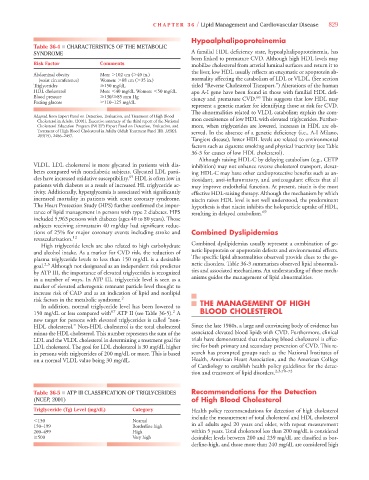
                   Table 36-4 ■ CHARACTERISTICS OF THE METABOLIC
                                                                       A familial HDL deficiency state, hypoalphalipoproteinemia, has
                   SYNDROME
                                                                       been linked to premature CVD. Although high HDL levels may
                   Risk Factor           Comments                      mobilize cholesterol from arterial luminal surfaces and return it to
                                                                       the liver, low HDL usually reflects an enzymatic or apoprotein ab-
                   Abdominal obesity     Men:  102 cm ( 40 in.)
                     (waist circumference)  Women:  88 cm ( 35 in.)    normality affecting the catabolism of LDL or VLDL. (See section
                   Triglycerides          150 mg/dL                    titled “Reverse Cholesterol Transport.”) Alterations of the human
                   HDL cholesterol       Men:  40 mg/dL Women:  50 mg/dL  apo A-I gene have been found in those with familial HDL defi-
                   Blood pressure         130/ 85 mm Hg                ciency and premature CVD. 68  This suggests that low HDL may
                   Fasting glucose        110–125 mg/dL
                                                                       represent a genetic marker for identifying those at risk for CVD.
                                                                       The abnormalities related to VLDL catabolism explain the com-
                   Adapted from Expert Panel on Detection, Evaluation, and Treatment of High Blood
                    Cholesterol in Adults. (2001). Executive summary of the third report of the National  mon coexistence of low HDL with elevated triglycerides. Further-
                    Cholesterol Education Program (NCEP) Expert Panel on Detection, Evaluation, and  more, when triglycerides are lowered, increases in HDL are ob-
                    Treatment of High Blood Cholesterol in Adults (Adult Treatment Panel III). JAMA,  served. In the absence of a genetic deficiency (i.e., A-I Milano,
                    285(19), 2486–2497.
                                                                       Tangiers disease), lower HDL levels are related to environmental
                                                                       factors such as cigarette smoking and physical inactivity (see Table
                                                                       36-3 for causes of low HDL cholesterol).
                                                                         Although raising HDL-C by delaying catabolism (e.g., CETP
                   VLDL. LDL cholesterol is more glycated in patients with dia-  inhibition) may not enhance reverse cholesterol transport, elevat-
                   betes compared with nondiabetic subjects. Glycated LDL parti-  ing HDL-C may have other cardioprotective benefits such as an-
                                                  65
                   cles have increased oxidative susceptibility. HDL is often low in  tioxidant, anti-inflammatory, and anticoagulant effects that all
                   patients with diabetes as a result of increased HL triglyceride ac-  may improve endothelial function. At present, niacin is the most
                   tivity. Additionally, hyperglycemia is associated with significantly  effective HDL-raising therapy. Although the mechanism by which
                   increased mortality in patients with acute coronary syndrome.  niacin raises HDL level is not well understood, the predominant
                   The Heart Protection Study (HPS) further confirmed the impor-  hypothesis is that niacin inhibits the holoparticle uptake of HDL,
                   tance of lipid management in persons with type 2 diabetes. HPS  resulting in delayed catabolism. 69
                   included 5,963 persons with diabetes (ages 40 to 80 years). Those
                   subjects receiving simvastatin 40 mg/day had significant reduc-
                   tions of 25% for major coronary events including stroke and  Combined Dyslipidemias
                   revascularization. 12
                     High triglyceride levels are also related to high carbohydrate  Combined dyslipidemias usually represent a combination of ge-
                   and alcohol intake. As a marker for CVD risk, the reduction of  netic lipoprotein or apoprotein defects and environmental effects.
                   plasma triglyceride levels to less than 150 mg/dL is a desirable  The specific lipid abnormalities observed provide clues to the ge-
                   goal. 2,3  Although not designated as an independent risk predictor  netic disorders. Table 36-3 summarizes observed lipid abnormali-
                   by ATP III, the importance of elevated triglycerides is recognized  ties and associated mechanisms. An understanding of these mech-
                   in a number of ways. In ATP III, triglyceride level is seen as a  anisms guides the management of lipid abnormalities.
                   marker of elevated atherogenic remnant particle level thought to
                   increase risk of CAD and as an indication of lipid and nonlipid
                   risk factors in the metabolic syndrome. 2             THE MANAGEMENT OF HIGH
                     In addition, normal triglyceride level has been lowered to
                                                                 2
                   150 mg/dL or less compared with 67  ATP II (see Table 36-5). A  BLOOD CHOLESTEROL
                   new target for persons with elevated triglycerides is called “non-
                   HDL cholesterol.” Non-HDL cholesterol is the total cholesterol  Since the late 1980s, a large and convincing body of evidence has
                   minus the HDL cholesterol. This number represents the sum of the  associated elevated blood lipids with CVD. Furthermore, clinical
                   LDL and the VLDL cholesterol in determining a treatment goal for  trials have demonstrated that reducing blood cholesterol is effec-
                   LDL cholesterol. The goal for LDL cholesterol is 30 mg/dL higher  tive for both primary and secondary prevention of CVD. This re-
                   in persons with triglycerides of 200 mg/dL or more. This is based  search has prompted groups such as the National Institutes of
                   on a normal VLDL value being 30 mg/dL.              Health, American Heart Association, and the American College
                                                                       of Cardiology to establish health policy guidelines for the detec-
                                                                       tion and treatment of lipid disorders. 2,3,70–72


                   Table 36-5 ■ ATP III CLASSIFICATION OF TRIGLYCERIDES  Recommendations for the Detection
                   (NCEP, 2001)                                        of High Blood Cholesterol

                   Triglyceride (Tg) Level (mg/dL)  Category           Health policy recommendations for detection of high cholesterol
                                                                       include the measurement of total cholesterol and HDL cholesterol
                    150                            Normal
                   150–199                         Borderline high     in all adults aged 20 years and older, with repeat measurement
                   200–499                         High                within 5 years. Total cholesterol less than 200 mg/dL is considered
                    500                            Very high           desirable; levels between 200 and 239 mg/dL are classified as bor-
                                                                       derline-high, and those more than 240 mg/dL are consideredhigh

