


Page 147 - untitled
P. 147
AAAC66  21/5/05  11:01 AM  Page 146
           66 The mouth, palate and nose

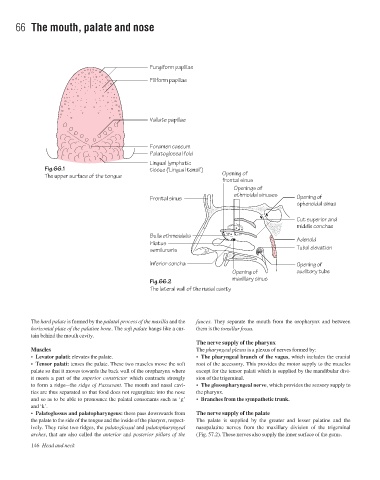
                                                       Fungiform papillae

                                                       Filiform papillae


                                                       Vallate papillae


                                                       Foramen caecum
                                                       Palatoglossal fold
                                                       Lingual lymphatic
                    Fig.66.1                           tissue ('Lingual tonsil')
                    The upper surface of the tongue                           Opening of
                                                                              frontal sinus
                                                                                  Openings of
                                                                                  ethmoidal sinuses
                                                       Frontal sinus                                   Opening of
                                                                                                       sphenoidal sinus

                                                                                                       Cut superior and
                                                                                                       middle conchae
                                                       Bulla ethmoidalis
                                                                                                       Adenoid
                                                       Hiatus
                                                       semilunaris                                     Tubal elevation

                                                       Inferior concha                                 Opening of
                                                                                  Opening of           auditory tube
                                                                                  maxillary sinus
                                                       Fig.66.2
                                                       The lateral wall of the nasal cavity


                The hard palate is formed by the palatal process of the maxilla and the  fauces. They separate the mouth from the oropharynx and between
                horizontal plate of the palatine bone. The soft palate hangs like a cur-  them is the tonsillar fossa.
                tain behind the mouth cavity.
                                                                      The nerve supply of the pharynx
                Muscles                                               The pharyngeal plexus is a plexus of nerves formed by:
                • Levator palati: elevates the palate.                • The pharyngeal branch of the vagus, which includes the cranial
                • Tensor palati: tenses the palate. These two muscles move the soft  root of the accessory. This provides the motor supply to the muscles
                palate so that it moves towards the back wall of the oropharynx where   except for the tensor palati which is supplied by the mandibular divi-
                it meets a part of the superior constrictor which contracts strongly   sion of the trigeminal.
                to form a ridgeathe ridge of Passavant. The mouth and nasal cavi-  • The glossopharyngeal nerve, which provides the sensory supply to
                ties are thus separated so that food does not regurgitate into the nose  the pharynx.
                and so as to be able to pronounce the palatal consonants such as ‘g’   • Branches from the sympathetic trunk.
                and ‘k’.
                • Palatoglossus and palatopharyngeus: these pass downwards from  The nerve supply of the palate
                the palate to the side of the tongue and the inside of the pharynx, respect-  The palate is supplied by the greater and lesser palatine and the
                ively. They raise two ridges, the palatoglossal and palatopharyngeal  nasopalatine nerves from the maxillary division of the trigeminal
                arches, that are also called the anterior and posterior pillars of the  (Fig. 57.2). These nerves also supply the inner surface of the gums.
                146 Head and neck

