


Page 204 - ACCCN's Critical Care Nursing
P. 204
Cardiovascular Assessment and Monitoring  181

                                                                       Capillary beds of
                                                                       lungs where gas
                                                                       exchange occurs


                                     Pulmonary                                  Pulmonary
                                     arteries                                   veins


                                                       Pulmonary circuit


                                Superior vena cava


                                                                                 Aorta and
                             Inferior vena cava                       Left       branches
                                                                      atrium


                                                 Right
                                                 atrium                  Left
                                                                         ventricle  Oxygenated blood from
                         Deoxygenated blood      Right                           the lungs to the whole body
                         returned to the lungs   ventricle
                                                        Systemic circuit


                                                                         Capillary beds of all
                                                                         body tissues where
                                                                         gas exchange occurs


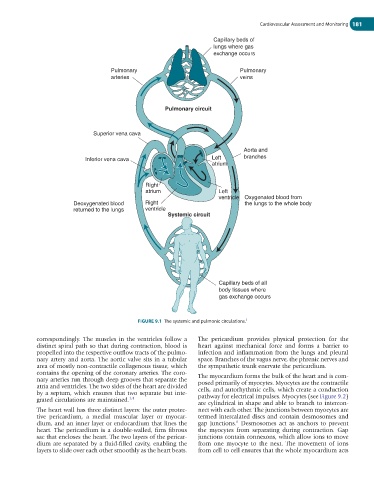
                                              FIGURE 9.1  The systemic and pulmonic circulations.   3

             correspondingly. The muscles in the ventricles follow a   The  pericardium  provides  physical  protection  for  the
             distinct spiral path so that during contraction, blood is   heart  against  mechanical  force  and  forms  a  barrier  to
             propelled into the respective outflow tracts of the pulmo-  infection and inflammation from the lungs and pleural
             nary artery and aorta. The aortic valve sits in a tubular   space. Branches of the vagus nerve, the phrenic nerves and
             area of mostly non-contractile collagenous tissue, which   the sympathetic trunk enervate the pericardium.
             contains the opening of the coronary arteries. The coro-
             nary arteries run through deep grooves that separate the   The myocardium forms the bulk of the heart and is com-
             atria and ventricles. The two sides of the heart are divided   posed primarily of myocytes. Myocytes are the con tractile
             by a septum, which ensures that two separate but inte-  cells, and autorhythmic cells, which create a conduction
             grated circulations are maintained. 1,4              pathway for electrical impulses. Myocytes (see Figure 9.2)
                                                                  are cylindrical in shape and able to branch to intercon-
             The heart wall has three distinct layers: the outer protec-  nect with each other. The junctions between myocytes are
             tive  pericardium,  a  medial  muscular  layer  or  myocar-  termed intercalated discs and contain desmosomes and
                                                                              6
             dium, and an inner layer or endocardium that lines the   gap  junctions.   Desmosomes  act  as  anchors  to  prevent
             heart. The pericardium is a double-walled, firm fibrous   the  myocytes  from  separating  during  contraction.  Gap
             sac that encloses the heart. The two layers of the pericar-  junctions contain connexons, which allow ions to move
             dium are separated by a fluid-filled cavity, enabling the   from  one  myocyte  to  the  next.  The  movement  of  ions
             layers to slide over each other smoothly as the heart beats.   from cell to cell ensures that the whole myocardium acts

