


Page 252 - ACCCN's Critical Care Nursing
P. 252
Cardiovascular Alterations and Management 229

                                                         Activation of sympathetic
                                                            nervous system


                   Coronary artery disease
                     Hypertension         Heart failure  Decreased cardiac output   Body fatigue
                    Valvular disease                                                 Weakness
                                                                   Activation of renin–
                                                                   angiotensin system


                                                    Increased retention of sodium and water  Oedema
                                                                                        Weight gain


                                                        Increased venous pressure


                      Symptoms of right-sided failure                                  Symptoms of left-sided failure
                        SYSTEMIC CONGESTION             Increased venous congestion      PULMONARY CONGESTION
                       Anorexia and nausea                                              Dyspnoea
                       Pain in upper right quadrant                                     Orthopnoea
                       Oliguria during day                                              Paroxysmal nocturnal dyspnoea
                       Polyuria at night                                                Cough and wheezing
                                                           PHYSICAL SIGNS
                                                        Cardiomegaly (hypertrophy)
                                                        Gallop rhythm
                                                        Hepatomegaly
                                                        Peripheral oedema
                                                        Ascites
                                                                                     104
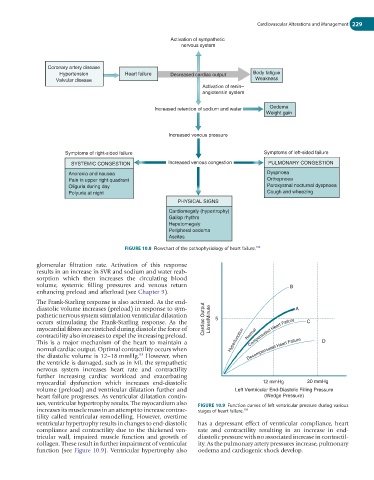
                                          FIGURE 10.8  Flowchart of the pathophysiology of heart failure.
             glomerular  filtration  rate.  Activation  of  this  response
             results in an increase in SVR and sodium and water reab-
             sorption  which  then  increases  the  circulating  blood
             volume,  systemic  filling  pressures  and  venous  return                         B
             enhancing preload and afterload (see Chapter 9).
             The Frank-Starling response is also activated. As the end-
             diastolic volume increases (preload) in response to sym-                             A
             pathetic nervous system stimulation ventricular dilatation
                                                                                   Compensated Heart Failure
             occurs  stimulating  the  Frank-Starling  response.  As  the   Cardiac Output  Litres/Minute  5  C
             myocardial fibres are stretched during diastole the force of
             contractility also increases to expel the increasing preload.        Normal
             This  is  a  major  mechanism  of  the  heart  to  maintain  a   Hyperfunction               D
             normal cardiac output. Optimal contractility occurs when             Decompensated Heart Failure
                                               63
             the diastolic volume is 12–18 mmHg.  However, when
             the ventricle is damaged, such as in MI, the sympathetic
             nervous  system  increases  heart  rate  and  contractility
             further  increasing  cardiac  workload  and  exacerbating
             myocardial  dysfunction  which  increases  end-diastolic                  12 mmHg        20 mmHg
             volume (preload) and ventricular dilatation further and          Left Ventricular End-Diastolic Filling Pressure
             heart failure progresses. As ventricular dilatation contin-               (Wedge Pressure)
             ues, ventricular hypertrophy results. The myocardium also   FIGURE 10.9  Function curves of left ventricular pressure during various
             increases its muscle mass in an attempt to increase contrac-  stages of heart failure.
                                                                                 109
             tility  called  ventricular  remodelling.  However,  overtime
             ventricular hypertrophy results in changes to end-diastolic   has a depressant effect of ventricular compliance, heart
             compliance and contractility due to the thickened ven-  rate  and  contractility  resulting  in  an  increase  in  end-
             tricular  wall,  impaired  muscle  function  and  growth  of   diastolic pressure with no associated increase in contractil-
             collagen. These result in further impairment of ventricular   ity. As the pulmonary artery pressures increase, pulmonary
             function (see Figure 10.9). Ventricular hypertrophy also   oedema and cardiogenic shock develop.

