


Page 257 - ACCCN's Critical Care Nursing
P. 257
234  P R I N C I P L E S   A N D   P R A C T I C E   O F   C R I T I C A L   C A R E


                                               Mild-moderate symptomatic CHF
                                                     (NYHA Class II – III)


                    Correct/prevent acute             Pharmacological              Non-pharmacological
                        precipitants                   management                      management
                      Non-compliance                                                Multidisciplinary care**
                   Acute ischaemia/infarction                                    Exercise/conditioning program
                        Arrhythmia*                                                    Low-salt diet
                                                                                     Fluid management


                                                       Fluid overload


                                   Yes                                             No


                                 Diuretic***                                     ACEI****
                                    +
                                   ACEI


                Persistent oedema                Improved                     Add beta-blocker


                Add spironolactone            Add beta-blocker
                    (Class III)
                   +/- digoxin
                 +/- angiotensin II
               receptor antagonists


                    Improved


                 Add beta-blocker


              *    Patients in atrial fi brillation (AF) should be anticoagulated with a target INR of 2.0 – 3.0. Amiodarone may be used to control
                 AF rate or attempt cardioversion. Electrical cardioversion may be considered after 4 weeks if still in AF. Digoxin will slow
                 resting AF rate.
              **   Multidisciplinary care (pre-discharge and home review by a community care nurse, pharmacist and allied health personnel)
                 with education regarding prognosis, compliance, exercise and rehabilitation, lifestyle modifi cation, vaccinations and
                 self-monitoring.
              ***  The most commonly prescribed fi rst-choice diuretic is a loop diuretic e.g. frusemide; however there is no evidence that loop
                 diuretics are more effective or safer than thiazides.
              **** If ACEI intolerant, use angiotensin II receptor antagonists instead.
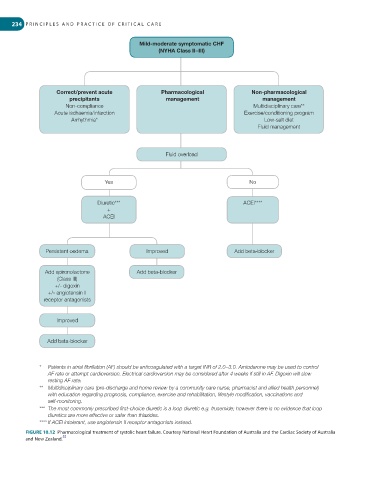
         FIGURE 10.12  Pharmacological treatment of systolic heart failure. Courtesy National Heart Foundation of Australia and the Cardiac Society of Australia
                      55
         and New Zealand.

