


Page 259 - ACCCN's Critical Care Nursing
P. 259
236  P R I N C I P L E S   A N D   P R A C T I C E   O F   C R I T I C A L   C A R E


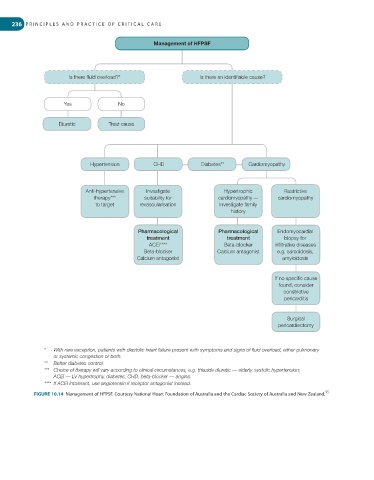
                                                   Management of HFPSF


                        Is there fl uid overload?*                 Is there an identifi able cause?


                      Yes               No


                    Diuretic         Treat cause


                               Hypertension        CHD             Diabetes**     Cardiomyopathy


                             Anti-hypertensive   Investigate              Hypertrophic        Restrictive
                                therapy***      suitability for         cardiomyopathy —    cardiomyopathy
                                to target      revascularisation         Investigate family
                                                                             history


                                              Pharmacological           Pharmacological     Endomyocardial
                                                 treatment                 treatment          biopsy for
                                                  ACEI****                Beta-blocker     infi ltrative diseases
                                                Beta-blocker            Calcium antagonist  e.g. sarcoidosis,
                                              Calcium antagonist                             amyloidosis


                                                                                           If no specifi c cause
                                                                                            found, consider
                                                                                              constrictive
                                                                                              pericarditis


                                                                                               Surgical
                                                                                            pericardiectomy


               *     With rare exception, patients with diastolic heart failure present with symptoms and signs of fl uid overload, either pulmonary
                   or systemic congestion or both.
               **  Better diabetes control.
               ***   Choice of therapy will vary according to clinical circumstances, e.g. thiazide diuretic — elderly, systolic hypertension;
                   ACEI — LV hypertrophy, diabetes, CHD; beta-blocker — angina.
               ****  If ACEI intolerant, use angiotensin II receptor antagonist instead.
                                                                                                           55
            FIGURE 10.14  Management of HFPSF. Courtesy National Heart Foundation of Australia and the Cardiac Society of Australia and New Zealand.

