


Page 460 - ACCCN's Critical Care Nursing
P. 460
Neurological Assessment and Monitoring 437


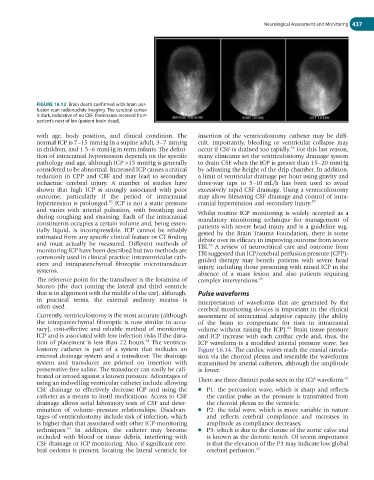
             FIGURE 16.13  Brain death confirmed with brain per-
             fusion scan radionuclide imaging. The cerebral cortex
             is dark, indicative of no CBF. Permission received from
             patient’s next of kin (patient brain dead).

             with  age,  body  position,  and  clinical  condition.  The   insertion  of  the  ventriculostomy  catheter  may  be  diffi-
             normal ICP is 7–15 mmHg in a supine adult, 3–7 mmHg   cult.  Importantly,  bleeding  or  ventricular  collapse  may
                                                                                                56
             in children, and 1.5–6 mmHg in term infants. The defini-  occur if CSF is drained too rapidly.  For this last reason,
             tion of intracranial hypertension depends on the specific   many clinicians set the ventriculostomy drainage system
             pathology and age, although ICP >15 mmHg is generally   to drain CSF when the ICP is greater than 15–20 mmHg
             considered to be abnormal. Increased ICP causes a critical   by adjusting the height of the drip chamber. In addition,
             reduction  in  CPP  and  CBF  and  may  lead  to  secondary   a limit of ventricular drainage per hour using gravity and
             ischaemic  cerebral  injury.  A  number  of  studies  have   three-way  taps  to  5–10 mL/h  has  been  used  to  avoid
             shown  that  high  ICP  is  strongly  associated  with  poor   excessively rapid CSF drainage. Using a ventriculostomy
             outcome,  particularly  if  the  period  of  intracranial     may allow lifesaving CSF drainage and control of intra-
                                     53
             hypertension is prolonged.  ICP is not a static pressure   cranial hypertension and secondary injury. 57
             and  varies  with  arterial  pulsation,  with  breathing  and   Whilst  routine  ICP  monitoring  is  widely  accepted  as  a
             during coughing and straining. Each of the intracranial   mandatory  monitoring  technique  for  management  of
             constituents occupies a certain volume and, being essen-  patients with severe head injury and is a guideline sug-
             tially  liquid,  is  incompressible.  ICP  cannot  be  reliably   gested  by  the  Brain  Trauma  Foundation,  there  is  some
             estimated from any specific clinical feature or CT finding   debate over its efficacy in improving outcome from severe
             and  must  actually  be  measured.  Different  methods  of   TBI.  A review of neurocritical care and outcome from
                                                                     58
             monitoring ICP have been described but two methods are   TBI suggested that ICP/cerebral perfusion pressure (CPP)-
             commonly used in clinical practice: intraventricular cath-  guided  therapy  may  benefit  patients  with  severe  head
             eters  and  intraparenchymal  fibreoptic  microtransducer   injury, including those presenting with raised ICP in the
             systems.                                             absence  of  a  mass  lesion  and  also  patients  requiring
             The reference point for the transducer is the foramina of   complex interventions. 59
             Monro  (the  duct  joining  the  lateral  and  third  ventricle
             that is in alignment with the middle of the ear), although,   Pulse waveforms
             in  practical  terms,  the  external  auditory  meatus  is    Interpretation  of  waveforms  that  are  generated  by  the
             often used.
                                                                  cerebral monitoring devices is important in the clinical
             Currently, ventriculostomy is the most accurate (although   assessment of intracranial adaptive capacity (the ability
             the intraparenchymal fibreoptic is now similar in accu-  of  the  brain  to  compensate  for  rises  in  intracranial
                                                                                               60
             racy),  cost-effective  and  reliable  method  of  monitoring   volume without raising the ICP).  Brain tissue pressure
             ICP and is associated with low infection risks if the dura-  and ICP increase with each cardiac cycle and, thus, the
                                                 54
             tion of placement is less than 72 hours.  The ventricu-  ICP  waveform  is  a  modified  arterial  pressure  wave.  See
             lostomy  catheter  is  part  of  a  system  that  includes  an   Figure 16.14. The cardiac waves reach the cranial circula-
             external drainage system and a transducer. The drainage   tion via the choroid plexus and resemble the waveforms
             system  and  transducer  are  primed  on  insertion  with   transmitted by arterial catheters, although the amplitude
             preservative-free saline. The transducer can easily be cali-  is lower.
             brated or zeroed against a known pressure. Advantages of                                             61
             using an indwelling ventricular catheter include allowing   There are three distinct peaks seen in the ICP waveform:
             CSF  drainage  to  effectively  decrease  ICP  and  using  the   ●  P1: the percussion wave, which is sharp and reflects
             catheter as a means to instil medications. Access to CSF   the cardiac pulse as the pressure is transmitted from
             drainage allows serial laboratory tests of CSF and deter-  the choroid plexus to the ventricle;
             mination  of  volume–pressure  relationships.  Disadvan-  ●  P2: the tidal wave, which is more variable in nature
             tages of ventriculostomy include risk of infection, which   and  reflects  cerebral  compliance  and  increases  in
             is higher than that associated with other ICP-monitoring   amplitude as compliance decreases;
                       55
             techniques.   In  addition,  the  catheter  may  become   ●  P3: which is due to the closure of the aortic valve and
             occluded  with  blood  or  tissue  debris,  interfering  with   is known as the dicrotic notch. Of recent importance
             CSF drainage or ICP monitoring. Also, if significant cere-  is that the elevation of the P3 may indicate low global
             bral oedema is present, locating the lateral ventricle for   cerebral perfusion. 62

