


Page 589 - ACCCN's Critical Care Nursing
P. 589
566  P R I N C I P L E S   A N D   P R A C T I C E   O F   C R I T I C A L   C A R E


                                                Infection
                                                (Bacterial,  Inflammation  Endothelial
                                                viral, fungal,   Coagulation  Dysfunction  Hypoperfusion  Acute
                                                                                                      Organ
                                                or parasitic               and         Ischaemia      Dysfunction
                                                infection/   Fibrinolysis  Microvascular
                                                endotoxin)                 Thrombosis


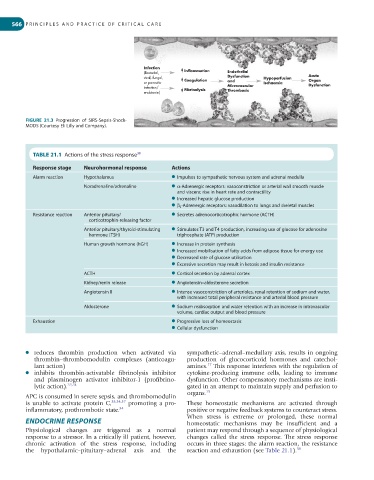
         FIGURE  21.3  Progression  of  SIRS-Sepsis-Shock-
         MODS (Courtesy Eli Lilly and Company).


            TABLE 21.1  Actions of the stress response 38

            Response stage   Neurohormonal response      Actions
            Alarm reaction   Hypothalamus                ●  Impulses to sympathetic nervous system and adrenal medulla
                             Noradrenaline/adrenaline    ●  α-Adrenergic receptors: vasoconstriction or arterial wall smooth muscle
                                                           and viscera; rise in heart rate and contractility
                                                         ●  Increased hepatic glucose production
                                                         ●  β 2 -Adrenergic receptors: vasodilation to lungs and skeletal muscles
            Resistance reaction  Anterior pituitary/     ●  Secretes adrenocorticotrophic hormone (ACTH)
                              corticotrophin-releasing factor
                             Anterior pituitary/thyroid-stimulating   ●  Stimulates T3 and T4 production, increasing use of glucose for adenosine
                              hormone (TSH)                triphosphate (ATP) production
                            Human growth hormone (hGH)   ●  Increase in protein synthesis
                                                         ●  Increased mobilisation of fatty acids from adipose tissue for energy use
                                                         ●  Decreased rate of glucose utilisation
                                                         ●  Excessive secretion may result in ketosis and insulin resistance
                             ACTH                        ●  Cortisol secretion by adrenal cortex
                             Kidney/renin release        ●  Angiotensin–aldosterone secretion
                             Angiotensin II              ●  Intense vasoconstriction of arterioles, renal retention of sodium and water,
                                                           with increased total peripheral resistance and arterial blood pressure
                            Aldosterone                  ●  Sodium reabsorption and water retention with an increase in intravascular
                                                           volume, cardiac output and blood pressure
            Exhaustion                                   ●  Progressive loss of homeostasis
                                                         ●  Cellular dysfunction


         ●  reduces  thrombin  production  when  activated  via   sympathetic–adrenal–medullary axis, results in ongoing
            thrombin–thrombomodulin  complexes  (anticoagu-   production  of  glucocorticoid  hormones  and  catechol-
                                                                     17
            lant action)                                      amines.  This response interferes with the regulation of
         ●  inhibits  thrombin-activatable  fibrinolysis  inhibitor   cytokine-producing  immune  cells,  leading  to  immune
            and  plasminogen  activator  inhibitor-1  (profibrino-  dysfunction. Other compensatory mechanisms are insti-
            lytic action). 33,34                              gated in an attempt to maintain supply and perfusion to
                                                              organs. 15
         APC is consumed in severe sepsis, and thrombomodulin
         is  unable  to  activate  protein  C, 33,34,37   promoting  a  pro-  These  homeostatic  mechanisms  are  activated  through
         inflammatory, prothrombotic state. 34                positive or negative feedback systems to counteract stress.
                                                              When  stress  is  extreme  or  prolonged,  these  normal
         ENDOCRINE RESPONSE                                   homeostatic  mechanisms  may  be  insufficient  and  a
         Physiological  changes  are  triggered  as  a  normal     patient may respond through a sequence of physiological
         response to a stressor. In a critically ill patient, however,   changes  called  the  stress  response.  The  stress  response
         chronic  activation  of  the  stress  response,  including    occurs in three stages: the alarm reaction, the resistance
         the  hypothalamic–pituitary–adrenal  axis  and  the   reaction and exhaustion (see Table 21.1). 38

