


Page 657 - ACCCN's Critical Care Nursing
P. 657
634  S P E C I A LT Y   P R A C T I C E   I N   C R I T I C A L   C A R E


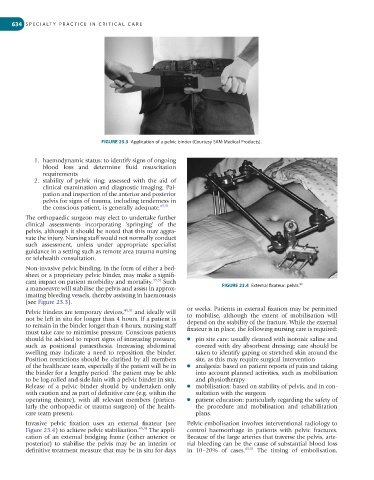
                                  FIGURE 23.3  Application of a pelvic binder (Courtesy SAM Medical Products).


            1.  haemodynamic status: to identify signs of ongoing
               blood  loss  and  determine  fluid  resuscitation
               requirements
            2.  stability  of  pelvic  ring:  assessed  with  the  aid  of
               clinical examination and diagnostic imaging. Pal-
               pation and inspection of the anterior and posterior
               pelvis for signs of trauma, including tenderness in
               the conscious patient, is generally adequate. 45,51
         The orthopaedic surgeon may elect to undertake further
         clinical  assessments  incorporating  ‘springing’  of  the
         pelvis, although it should be noted that this may aggra-
         vate the injury. Nursing staff would not normally conduct
         such  assessment,  unless  under  appropriate  specialist
         guidance in a setting such as remote area trauma nursing
         or telehealth consultation.
         Non-invasive pelvic binding, in the form of either a bed-
         sheet or a proprietary pelvic binder, may make a signifi-
         cant impact on patient morbidity and mortality. 45,51  Such                               80
         a manoeuvre will stabilise the pelvis and assist in approx-      FIGURE 23.4  External fixateur: pelvis.
         imating bleeding vessels, thereby assisting in haemostasis
         (see Figure 23.3).
                                                              or weeks. Patients in external fixation may be permitted
         Pelvic binders are temporary devices, 45,51  and ideally will
         not be left in situ for longer than 4 hours. If a patient is   to  mobilise,  although  the  extent  of  mobilisation  will
         to remain in the binder longer than 4 hours, nursing staff   depend on the stability of the fracture. While the external
         must take care to minimise pressure. Conscious patients   fixateur is in place, the following nursing care is required:
         should be advised to report signs of increasing pressure,   l  pin site care: usually cleaned with isotonic saline and
         such  as  positional  paraesthesia.  Increasing  abdominal   covered with dry absorbent dressing; care should be
         swelling  may  indicate  a  need  to  reposition  the  binder.   taken to identify gaping or stretched skin around the
         Position restrictions should be clarified by all members   site, as this may require surgical intervention
         of the healthcare team, especially if the patient will be in   l  analgesia: based on patient reports of pain and taking
         the binder for a lengthy period. The patient may be able   into account planned activities, such as mobilisation
         to be log-rolled and side-lain with a pelvic binder in situ.   and physiotherapy
         Release  of  a  pelvic  binder  should  by  undertaken  only   l  mobilisation: based on stability of pelvis, and in con-
         with caution and as part of definitive care (e.g. within the   sultation with the surgeon
         operating  theatre),  with  all  relevant  members  (particu-  l  patient education: particularly regarding the safety of
         larly the orthopaedic or trauma surgeon) of the health-  the  procedure  and  mobilisation  and  rehabilitation
         care team present.                                      plans.
         Invasive  pelvic  fixation  uses  an  external  fixateur  (see   Pelvic embolisation involves interventional radiology to
         Figure 23.4) to achieve pelvic stabilisation. 45,51  The appli-  control  haemorrhage  in  patients  with  pelvic  fractures.
         cation of an external bridging frame (either anterior or   Because of the large arteries that traverse the pelvis, arte-
         posterior)  to  stabilise  the  pelvis  may  be  an  interim  or   rial bleeding can be the cause of substantial blood loss
         definitive treatment measure that may be in situ for days   in  10–20%  of  cases. 45,51   The  timing  of  embolisation,

