


Page 1174 - Hematology_ Basic Principles and Practice ( PDFDrive )
P. 1174
1022   Part VII  Hematologic Malignancies


                       A                         C C                       E


                       B                         D D                       F

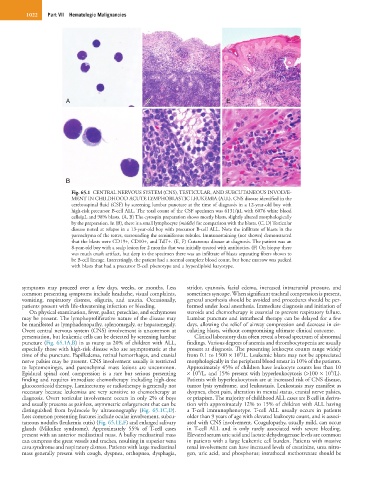
                        Fig. 65.1  CENTRAL NERVOUS SYSTEM (CNS), TESTICULAR, AND SUBCUTANEOUS INVOLVE-
                        MENT IN CHILDHOOD ACUTE LYMPHOBLASTIC LEUKEMIA (ALL). CNS disease identified in the
                        cerebrospinal fluid (CSF) by screening lumbar puncture at the time of diagnosis in a 12-year-old boy with
                        high-risk precursor B-cell ALL. The total count of the CSF specimen was 6131/µL with 6076 white blood
                        cells/µL and 98% blasts. (A, B) The cytospin preparation shows mostly blasts, slightly altered morphologically
                        by the preparation. In (B), there is a small lymphocyte (middle) for comparison with the blasts. (C, D) Testicular
                        disease noted at relapse in a 13-year-old boy with precursor B-cell ALL. Note the infiltrate of blasts in the
                        parenchyma of the testes, surrounding the seminiferous tubules. Immunostaining (not shown) demonstrated
                        that the blasts were CD19+, CD10+, and TdT+. (E, F) Cutaneous disease at diagnosis. The patient was an
                        8-year-old boy with a scalp lesion for 2 months that was initially treated with antibiotics. (F) On biopsy there
                        was much crush artifact, but deep in the specimen there was an infiltrate of blasts separating fibers shown to
                        be B-cell lineage. Interestingly, the patient had a normal complete blood count, but bone marrow was packed
                        with blasts that had a precursor B-cell phenotype and a hyperdiploid karyotype.


        symptoms  may  proceed  over  a  few  days,  weeks,  or  months.  Less   stridor,  cyanosis,  facial  edema,  increased  intracranial  pressure,  and
        common presenting symptoms include headache, visual complaints,   sometimes syncope. When significant tracheal compression is present,
        vomiting,  respiratory  distress,  oliguria,  and  anuria.  Occasionally,   general anesthesia should be avoided and procedures should be per-
        patients present with life-threatening infection or bleeding.  formed under local anesthesia. Immediate diagnosis and initiation of
           On physical examination, fever, pallor, petechiae, and ecchymoses   steroids and chemotherapy is essential to prevent respiratory failure.
        may be present. The lymphoproliferative nature of the disease may   Lumbar puncture and intrathecal therapy can be delayed for a few
        be manifested as lymphadenopathy, splenomegaly, or hepatomegaly.   days, allowing the relief of airway compression and decrease in cir-
        Overt central nervous system (CNS) involvement is uncommon at   culating blasts, without compromising ultimate clinical outcome.
        presentation, but leukemic cells can be detected by screening lumbar   Clinical laboratory data often reveal a broad spectrum of abnormal
        puncture (Fig. 65.1A,B) in as many as 20% of children with ALL,   findings. Various degrees of anemia and thrombocytopenia are usually
        especially those with high-risk disease who are asymptomatic at the   present at diagnosis. The presenting leukocyte counts range widely
                                                                               9
        time of the puncture. Papilledema, retinal hemorrhages, and cranial   from 0.1 to 1500 × 10 /L. Leukemic blasts may not be appreciated
        nerve palsies may be present. CNS involvement usually is restricted   morphologically in the peripheral blood smear in 10% of the patients.
        to  leptomeninges,  and  parenchymal  mass  lesions  are  uncommon.   Approximately 45% of children have leukocyte counts less than 10
                                                                                                             9
                                                                  9
        Epidural  spinal  cord  compression  is  a  rare  but  serious  presenting   × 10 /L, and 15% present with hyperleukocytosis (>100 × 10 /L).
        finding and requires immediate chemotherapy including high-dose   Patients with hyperleukocytosis are at increased risk of CNS disease,
        glucocorticoid therapy. Laminectomy or radiotherapy is generally not   tumor lysis syndrome, and leukostasis. Leukostasis may manifest as
        necessary  because  leukemias  are  very  sensitive  to  chemotherapy  at   dyspnea, chest pain, alteration in mental status, cranial nerve palsies,
        diagnosis. Overt testicular involvement occurs in only 2% of boys   or priapism. The majority of childhood ALL cases are B cell in deriva-
        and usually presents as painless, asymmetric enlargement that can be   tion with approximately 12% to 15% of children with ALL having
        distinguished  from  hydrocele  by  ultrasonography  (Fig.  65.1C,D).   a T-cell  immunophenotype. T-cell  ALL  usually  occurs  in  patients
        Less common presenting features include ocular involvement, subcu-  older than 9 years of age with elevated leukocyte count, and is associ-
        taneous nodules (leukemia cutis) (Fig. 65.1E,F) and enlarged salivary   ated with CNS involvement. Coagulopathy, usually mild, can occur
        glands  (Mikulicz  syndrome).  Approximately  55%  of  T-cell  cases   in  T-cell  ALL  and  is  only  rarely  associated  with  severe  bleeding.
        present with an anterior mediastinal mass. A bulky mediastinal mass   Elevated serum uric acid and lactate dehydrogenase levels are common
        can compress the great vessels and trachea, resulting in superior vena   in patients with a large leukemic cell burden. Patients with massive
        cava syndrome and respiratory distress. Patients with large mediastinal   renal involvement can have increased levels of creatinine, urea nitro-
        mass generally present with cough, dyspnea, orthopnea, dysphagia,   gen, uric acid, and phosphorus; intrathecal methotrexate should be

