


Page 1214 - Hematology_ Basic Principles and Practice ( PDFDrive )
P. 1214
1060   Part VII  Hematologic Malignancies


                       A                         B                       C

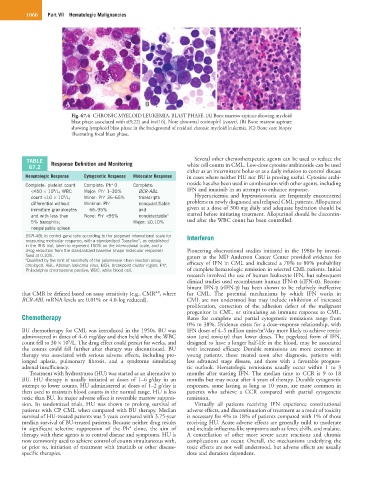
                        Fig. 67.4  CHRONIC MYELOID LEUKEMIA, BLAST PHASE. (A) Bone marrow aspirate showing myeloid
                        blast phase associated with t(9;22) and inv(16). Note abnormal eosinophil (center). (B) Bone marrow aspirate
                        showing lymphoid blast phase in the background of residual chronic myeloid leukemia. (C) Bone core biopsy
                        illustrating focal blast phase.


          TABLE   Response Definition and Monitoring             Several other chemotherapeutic agents can be used to reduce the
          67.2                                                white cell counts in CML. Low-dose cytosine arabinoside can be used
                                                              either as an intermittent bolus or as a daily infusion to control disease
         Hematologic Response  Cytogenetic Response  Molecular Response  in cases where neither HU nor BU is proving useful. Cytosine arabi-
                                     +
         Complete: platelet count   Complete: Ph  0  Complete:   noside has also been used in combination with other agents, including
                                   +
                   9
           <450 × 10 /L; WBC   Major: Ph  1–35%  BCR-ABL      IFN and imatinib in an attempt to enhance response.
                      9
           count <10 × 10 /L;   Minor: Ph  36–65%  transcripts   Hyperuricemia  and  hyperuricosuria  are  frequently  encountered
                                   +
           differential without   Minimal: Ph    nonquantifiable   problems in newly diagnosed and relapsed CML patients. Allopurinol
                                     +
           immature granulocytes   66–95%     and             given at a dose of 300 mg daily and adequate hydration should be
                                   +
           and with less than   None: Ph  <95%  nondetectable a  started before initiating treatment. Allopurinol should be discontin-
           5% basophils;                     Major: ≤0.10%    ued after the WBC count has been controlled.
           nonpalpable spleen
         BCR-ABL to control gene ratio according to the proposed international scale for   Interferon
         measuring molecular response, with a standardized “baseline”, as established
         in the IRIS trial, taken to represent 100% on the international scale, and a
         3-log reduction from the standardized baseline (major molecular response)   Pioneering  observational  studies  initiated  in  the  1980s  by  investi-
         fixed at 0.10%.                                      gators  at  the  MD  Anderson  Cancer  Center  provided  evidence  for
         a Qualified by the limit of sensitivity of the polymerase chain reaction assay
                                                       +
         employed. ABL, Abelson leukemia virus, BCR, breakpoint cluster region; Ph ,   efficacy of IFN in CML and indicated a 70% to 80% probability
         Philadelphia chromosome positive; WBC, white blood cell.  of complete hematologic remission in selected CML patients. Initial
                                                              research involved the use of human leukocyte IFN, but subsequent
                                                              clinical studies used recombinant human IFN-α (rIFN-α). Recom-
                                                              binant  IFN-γ  (rIFN-γ)  has  been  shown  to  be  relatively  ineffective
                                                    4.0
        that CMR be defined based on assay sensitivity (e.g., CMR , where   for  CML.  The  potential  mechanisms  by  which  IFN  works  in
        BCR-ABL mRNA levels are 0.01% or 4.0-log reduced).    CML are not understood but may include inhibition of increased
                                                              proliferation,  correction  of  the  adhesion  defect  of  the  malignant
                                                              progenitor in CML, or stimulating an immune response to CML.
        Chemotherapy                                          Rates  for  complete  and  partial  cytogenetic  remissions  range  from
                                                              0% to 38%. Evidence exists for a dose–response relationship, with
                                                                                       2
        BU chemotherapy for CML was introduced in the 1950s. BU was   IFN doses of 4–5 million units/m /day more likely to achieve remis-
        administered in doses of 4–6 mg/day and then held when the WBC   sion  (and  toxicity)  than  lower  doses. The  pegylated  form  of  IFN,
                       9
        count fell to 30 × 10 /L. The drug effect could persist for weeks, and   designed to have a longer half-life in the blood, may be associated
        the  counts  could  fall  further  after  therapy  was  discontinued.  BU   with  increased  efficacy.  Durable  remissions  are  more  common  in
        therapy  was  associated  with  serious  adverse  effects,  including  pro-  young  patients,  those  treated  soon  after  diagnosis,  patients  with
        longed  aplasia,  pulmonary  fibrosis,  and  a  syndrome  simulating   less  advanced  stage  disease,  and  those  with  a  favorable  prognos-
        adrenal insufficiency.                                tic  outlook.  Hematologic  remissions  usually  occur  within  1  to  3
           Treatment with hydroxyurea (HU) was started as an alternative to   months  after  starting  IFN. The  median  time  to  CCR  is  9  to  18
        BU.  HU  therapy  is  usually  initiated  at  doses  of  1–6 g/day  in  an   months but may occur after 4 years of therapy. Durable cytogenetic
        attempt to lower counts. HU administered at doses of 1–2 g/day is   responses,  some  lasting  as  long  as  10  years,  are  more  common  in
        then used to maintain blood counts in the normal range. HU is less   patients  who  achieve  a  CCR  compared  with  partial  cytogenetic
        toxic than BU. Its major adverse effect is reversible marrow suppres-  remission.
        sion.  In  randomized  trials,  HU  was  shown  to  prolong  survival  of   Virtually  all  patients  receiving  IFN  experience  constitutional
        patients with CP CML when compared with BU therapy. Median   adverse effects, and discontinuation of treatment as a result of toxicity
        survival of HU-treated patients was 5 years compared with 3.75-year   is necessary for 4% to 18% of patients compared with 1% of those
        median survival of BU-treated patients. Because neither drug results   receiving HU. Acute adverse effects are generally mild to moderate
                                           +
        in  significant  selective  suppression  of  the  Ph   clone,  the  aim  of   and include influenza-like symptoms such as fever, chills, and malaise.
        therapy with these agents is to control disease and symptoms. HU is   A  constellation  of  other  more  severe  acute  reactions  and  chronic
        now commonly used to achieve control of counts simultaneous with,   complications  can  occur.  Overall,  the  mechanisms  underlying  the
        or prior to, initiation of treatment with imatinib or other disease-  toxic effects are not well understood, but adverse effects are usually
        specific therapies.                                   dose and duration dependent.

