


Page 1216 - Hematology_ Basic Principles and Practice ( PDFDrive )
P. 1216
1062   Part VII  Hematologic Malignancies


         A                                        B                       C


         D                                        E                       F
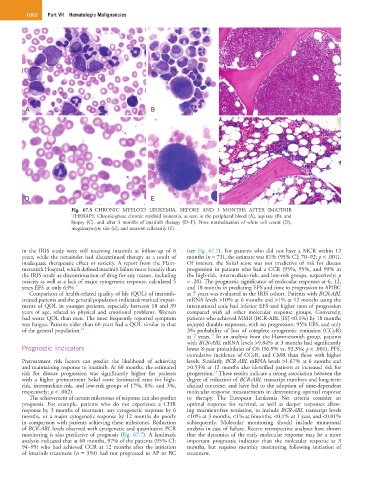
                        Fig.  67.5  CHRONIC  MYELOID  LEUKEMIA,  BEFORE  AND  3  MONTHS  AFTER  IMATINIB
                        THERAPY. Chronic-phase chronic myeloid leukemia, as seen in the peripheral blood (A), aspirate (B), and
                        biopsy  (C),  and  after  3  months  of  imatinib  therapy  (D–F).  Note  normalization  of  white  cell  count  (D),
                        megakaryocyte size (E), and marrow cellularity (F).


        in  the  IRIS  study  were  still  receiving  imatinib  at  follow-up  of  8   (see  Fig.  67.7). For  patients who did  not  have  a  MCR within 12
        years, while the remainder had discontinued therapy as a result of   months (n = 73), the estimate was 81% (95% CI: 70–92; p < .001).
        inadequate  therapeutic  effect  or  toxicity.  A  report  from  the  Ham-  Of  interest,  the  Sokal  score  was  not  predictive  of  risk  for  disease
        mersmith Hospital, which defined imatinib failure more broadly than   progression in patients who had a CCR (95%, 95%, and 99% in
        the IRIS study as discontinuation of drug for any reason, including   the high-risk, intermediate-risk, and low-risk groups, respectively; p
        toxicity as well as a lack of major cytogenetic response, calculated 5   = .20). The prognostic significance of molecular responses at 6, 12,
        years EFS at only 63%. 11                             and 18 months in predicting EFS and time to progression to AP/BC
           Comparison of health-related quality of life (QOL) of imatinib-  at 7 years was evaluated in the IRIS cohort. Patients with BCR-ABL
        treated patients and the general population indicated marked impair-  mRNA levels >10% at 6 months and >1% at 12 months using the
        ments of QOL in younger patients, especially between 18 and 39   international scale had inferior EFS and higher rates of progression
        years  of  age,  related  to  physical  and  emotional  problems. Women   compared  with  all  other  molecular  response  groups.  Conversely,
        had worse QOL than men. The most frequently reported symptom   patients who achieved MMR (BCR-ABL [IS] <0.1%) by 18 months
        was fatigue. Patients older than 60 years had a QOL similar to that   enjoyed durable responses, with no progression, 95% EFS, and only
        of the general population. 12                         3%  probability  of  loss  of  complete  cytogenetic  remission  (CCyR)
                                                                      13
                                                              at 7 years.  In an analysis from the Hammersmith group, patients
                                                              with BCR-ABL mRNA levels >9.84% at 3 months had significantly
        Prognostic Indicators                                 lower 8-year probabilities of OS (56.9% vs. 93.3%; p < .001), PFS,
                                                              cumulative incidence of CCyR, and CMR than those with higher
        Pretreatment  risk  factors  can  predict  the  likelihood  of  achieving   levels. Similarly, BCR-ABL mRNA levels >1.67% at 6 months and
        and maintaining response to imatinib. At 60 months, the estimated   >0.53% at 12 months also identified patients at increased risk for
                                                                       14
        risk  for  disease  progression  was  significantly  higher  for  patients   progression.  These results indicate a strong association between the
        with  a  higher  pretreatment  Sokal  score  (estimated  rates  for  high-  degree of reduction of BCR-ABL transcript numbers and long-term
        risk, intermediate-risk, and low-risk groups of 17%, 8%, and 3%,   clinical outcome, and have led to the adoption of time-dependent
        respectively; p < .002).                              molecular response measurements in determining optimal response
           The achievement of certain milestones of response can also predict   to  therapy.  The  European  Leukemia  Net  criteria  consider  an
        prognosis.  For  example,  patients  who  do  not  experience  a  CHR   optimal  response  for  survival,  as  well  as  deeper  responses  allow-
        response by 3 months of treatment, any cytogenetic response by 6   ing treatment-free remission, to include BCR-ABL transcript levels
        months, or a major cytogenetic response by 12 months do poorly   <10% at 3 months, <1% at 6months, <0.1% at 1 year, and <0.01%
        in comparison with patients achieving these milestones. Reduction   subsequently.  Molecular  monitoring  should  include  mutational
        of BCR-ABL levels observed with cytogenetic and quantitative PCR   analysis in case of failure. Recent retrospective analyses have shown
        monitoring is also predictive of prognosis (Fig. 67.7). A landmark   that the dynamics of the early molecular response may be a more
        analysis indicated that at 60 months, 97% of the patients (95% CI:   important  prognostic  indicator  than  the  molecular  response  at  3
        94–99)  who  had  achieved  CCR  at  12  months  after  the  initiation   months,  but  requires  monthly  monitoring  following  initiation  of
        of imatinib treatment (n = 350) had not progressed to AP or BC   treatment.

