


Page 1462 - Hematology_ Basic Principles and Practice ( PDFDrive )
P. 1462
Chapter 81  Mantle Cell Lymphoma  1299


                                      Naive B cell     Early MCL        Classical MCL       Blastoid MCL

                            Germline
                             ATM
                             CHK2

                                        t(11;14)                  ATM            INK4A/CDK4/RB1
                                       Cyclin D1                  CHK2            ARF/MDM2/p53


                                     RB1     p27                 Complex              High
                                                                karyotypes         proliferation
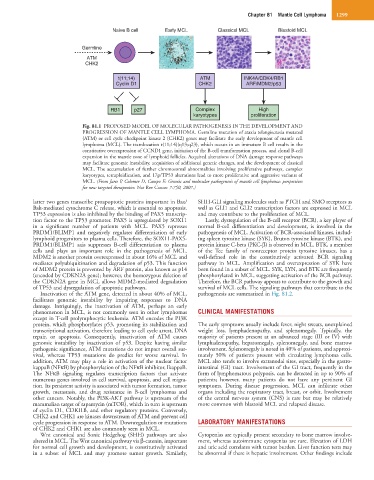
                            Fig. 81.1  PROPOSED MODEL OF MOLECULAR PATHOGENESIS IN THE DEVELOPMENT AND
                            PROGRESSION OF MANTLE CELL LYMPHOMA. Germline mutation of ataxia telangiectasia mutated
                            (ATM) or cell cycle checkpoint kinase 2 (CHK2) genes may facilitate the early development of mantle cell
                            lymphoma (MCL). The translocation t(11;14)(q13;q23), which occurs in an immature B cell results in the
                            constitutive overexpression of CCND1 gene, initiation of the B-cell transformation process, and clonal B-cell
                            expansion in the mantle zone of lymphoid follicles. Acquired alterations of DNA damage response pathways
                            may facilitate genomic instability, acquisition of additional genetic changes, and the development of classical
                            MCL. The accumulation of further chromosomal abnormalities involving proliferative pathways, complex
                            karyotypes, tetraploidization, and 17p/TP53 alterations lead to more proliferative and aggressive variants of
                            MCL. (From Jares P, Colomer D, Campo E: Genetic and molecular pathogenesis of mantle cell lymphoma: perspectives
                            for new targeted therapeutics. Nat Rev Cancer 7:750, 2007.)
            latter two genes transcribe proapoptotic proteins important in Bax/  SHH-GLI signaling molecules such as PTCH and SMO receptors as
            Bak-mediated cytochrome C release, which is essential to apoptosis.   well as GLI1 and GLI2 transcription factors are expressed in MCL
            TP53 expression is also inhibited by the binding of PAX5 transcrip-  and may contribute to the proliferation of MCL.
            tion factor to the TP53 promoter. PAX5 is upregulated by SOX11   Lastly, dysregulation of the B-cell receptor (BCR), a key player of
            in  a  significant  number  of  patients  with  MCL.  PAX5  represses   normal  B-cell  differentiation  and  development,  is  involved  in  the
            PRDM1/BLIMP1  and  negatively  regulates  differentiation  of  early   pathogenesis of MCL. Activation of BCR-associated kinases, includ-
            lymphoid progenitors to plasma cells. Therefore, the SOX11-PAX5-  ing spleen tyrosine kinase (SYK), Bruton tyrosine kinase (BTK), and
            PRDM1/BLIMP1  axis  suppresses  B-cell  differentiation  to  plasma   protein kinase C-beta (PKC-β) is observed in MCL. BTK, a member
            cells  and  plays  an  important  role  in  the  pathogenesis  of  MCL.   of  the  Tec  family  of  nonreceptor  protein  tyrosine  kinases,  has  a
            MDM2 is another protein overexpressed in about 16% of MCL and   well-defined  role  in  the  constitutively  activated  BCR  signaling
            mediates polyubiquitination and degradation of p53. This function   pathway  in  MCL.  Amplification  and  overexpression  of  SYK  have
            of MDM2 protein is prevented by ARF protein, also known as p14   been found in a subset of MCL. SYK, LYN, and BTK are frequently
            (encoded by CDKN2A gene); however, the homozygous deletion of   phosphorylated in MCL, suggesting activation of the BCR pathway.
            the CDKN2A gene in MCL allows MDM2-mediated degradation   Therefore, the BCR pathway appears to contribute to the growth and
            of TP53 and dysregulation of apoptotic pathways.      survival of MCL cells. The signaling pathways that contribute to the
              Inactivation of the ATM gene, detected in about 40% of MCL,   pathogenesis are summarized in Fig. 81.2.
            facilitates  genomic  instability  by  impairing  responses  to  DNA
            damage.  Intriguingly,  the  inactivation  of  ATM,  perhaps  an  early
            phenomenon in MCL, is not commonly seen in other lymphomas   CLINICAL MANIFESTATIONS
            except in T-cell prolymphocytic leukemia. ATM encodes the PI3K
            protein, which phosphorylates p53, promoting its stabilization and   The early symptoms usually include fever, night sweats, unexplained
            transcriptional activation, therefore leading to cell cycle arrest, DNA   weight  loss,  lymphadenopathy,  and  splenomegaly.  Typically,  the
            repair,  or  apoptosis.  Consequently,  inactivation  of  ATM  causes   majority of patients present at an advanced stage (III or IV) with
            genomic  instability  by  inactivation  of  p53.  Despite  having  similar   lymphadenopathy,  hepatomegaly,  splenomegaly,  and  bone  marrow
            pathogenic significance, ATM mutations do not impact overall sur-  involvement. Splenomegaly is noted in 40% of patients, and approxi-
            vival,  whereas  TP53  mutations  do  predict  for  worse  survival.  In   mately  50%  of  patients  present  with  circulating  lymphoma  cells.
            addition, ATM may play a role in activation of the nuclear factor   MCL also tends to involve extranodal sites, especially in the gastro-
            kappaB (NFκB) by phosphorylation of the NFκB inhibitor, IkappaB.   intestinal (GI) tract. Involvement of the GI tract, frequently in the
            The  NFκB  signaling  regulates  transcription  factors  that  activate   form of lymphomatous polyposis, can be detected in up to 90% of
            numerous genes involved in cell survival, apoptosis, and cell migra-  patients;  however,  many  patients  do  not  have  any  pertinent  GI
            tion. Its persistent activity is associated with tumor formation, tumor   symptoms.  During  disease  progression,  MCL  can  infiltrate  other
            growth,  metastasis,  and  drug  resistance  in  B-cell  lymphomas  and   organs including the respiratory tract, breast, or orbit. Involvement
            other cancers. Notably, the PI3K-AKT pathway is upstream of the   of  the  central nervous  system (CNS)  is  rare  but  may be relatively
            mammalian target of rapamycin (mTOR), which in turn is upstream   more common with blastoid MCL and relapsed disease.
            of cyclin D1, CDKI1B, and other regulatory proteins. Conversely,
            CHK2 and CHK1 are kinases downstream of ATM and prevent cell
            cycle progression in response to ATM. Downregulation or mutations   LABORATORY MANIFESTATIONS
            of CHK2 and CHK1 are also commonly seen in MCL.
              Wnt  canonical  and  Sonic  Hedgehog  (SHH)  pathways  are  also   Cytopenias are typically present secondary to bone marrow involve-
            altered in MCL. The Wnt canonical pathway via β-catenin, important   ment, whereas autoimmune cytopenias are rare. Elevation of LDH
            for normal cell growth and development, is constitutively activated   and uric acid correlates with tumor burden. Liver function tests may
            in  a  subset  of  MCL  and  may  promote  tumor  growth.  Similarly,   be abnormal if there is hepatic involvement. Other findings include

