


Page 1475 - Hematology_ Basic Principles and Practice ( PDFDrive )
P. 1475
1310   Part VII  Hematologic Malignancies


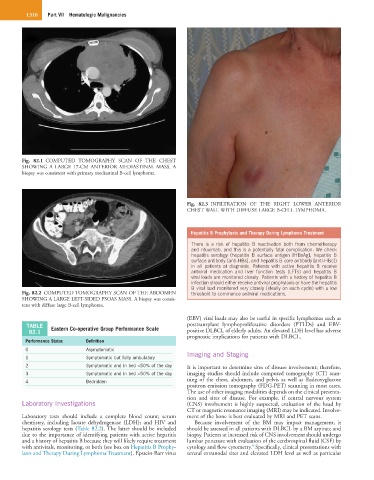
        Fig.  82.1  COMPUTED  TOMOGRAPHY  SCAN  OF  THE  CHEST
        SHOWING  A  LARGE  17-CM  ANTERIOR  MEDIASTINAL  MASS.  A
        biopsy was consistent with primary mediastinal B-cell lymphoma.


                                                              Fig.  82.3  INFILTRATION  OF  THE  RIGHT  LOWER  ANTERIOR
                                                              CHEST WALL WITH DIFFUSE LARGE B-CELL LYMPHOMA.


                                                               Hepatitis B Prophylaxis and Therapy During Lymphoma Treatment
                                                                There  is  a  risk  of  hepatitis  B  reactivation  both  from  chemotherapy
                                                                and rituximab, and this is a potentially fatal complication. We check
                                                                hepatitis  serology  (hepatitis  B  surface  antigen  [HBsAg],  hepatitis  B
                                                                surface antibody [anti-HBs], and hepatitis B core antibody [anti-HBc])
                                                                in  all  patients  at  diagnosis.  Patients  with  active  hepatitis  B  receive
                                                                antiviral  medication  and  liver  function  tests  (LFTs)  and  hepatitis  B
                                                                viral loads are monitored closely. Patients with a history of hepatitis B
                                                                infection should either receive antiviral prophylaxis or have the hepatitis
                                                                B viral load monitored very closely (ideally on each cycle) with a low
        Fig. 82.2  COMPUTED TOMOGRAPHY SCAN OF THE ABDOMEN      threshold to commence antiviral medications.
        SHOWING A LARGE LEFT-SIDED PSOAS MASS. A biopsy was consis-
        tent with diffuse large B-cell lymphoma.
                                                              (EBV) viral loads may also be useful in specific lymphomas such as
          TABLE   Eastern Co-operative Group Performance Scale  posttransplant  lymphoproliferative  disorders  (PTLDs)  and  EBV-
          82.1                                                positive DLBCL of elderly adults. An elevated LDH level has adverse
                                                              prognostic implications for patients with DLBCL.
         Performance Status  Definition
         0                   Asymptomatic
         1                   Symptomatic but fully ambulatory  Imaging and Staging
         2                   Symptomatic and in bed <50% of the day  It is important to determine sites of disease involvement; therefore,
         3                   Symptomatic and in bed >50% of the day  imaging studies should include computed tomography (CT) scan-
         4                   Bedridden                        ning  of  the  chest,  abdomen,  and  pelvis  as  well  as  fludeoxyglucose
                                                              positron emission tomography (FDG-PET) scanning in most cases.
                                                              The use of other imaging modalities depends on the clinical presenta-
                                                              tion  and  sites  of  disease.  For  example,  if  central  nervous  system
        Laboratory Investigations                             (CNS) involvement is highly suspected, evaluation of the head by
                                                              CT or magnetic resonance imaging (MRI) may be indicated. Involve-
        Laboratory  tests  should  include  a  complete  blood  count;  serum   ment of the bone is best evaluated by MRI and PET scans.
        chemistry,  including  lactate  dehydrogenase  (LDH);  and  HIV  and   Because  involvement  of  the  BM  may  impact  management,  it
        hepatitis serology tests (Table 82.2). The latter should be included   should be assessed in all patients with DLBCL by a BM aspirate and
        due to the importance of identifying patients with active hepatitis   biopsy. Patients at increased risk of CNS involvement should undergo
        and a history of hepatitis B because they will likely require treatment   lumbar puncture with evaluation of the cerebrospinal fluid (CSF) by
                                                                                   4
        with antivirals, monitoring, or both (see box on Hepatitis B Prophy-  cytology and flow cytometry.  Specifically, clinical presentations with
        laxis and Therapy During Lymphoma Treatment). Epstein-Barr virus   several extranodal sites and elevated LDH level as well as particular

