


Page 1480 - Hematology_ Basic Principles and Practice ( PDFDrive )
P. 1480
Chapter 82  Diagnosis and Treatment of Diffuse Large B-Cell Lymphoma and Burkitt Lymphoma  1315


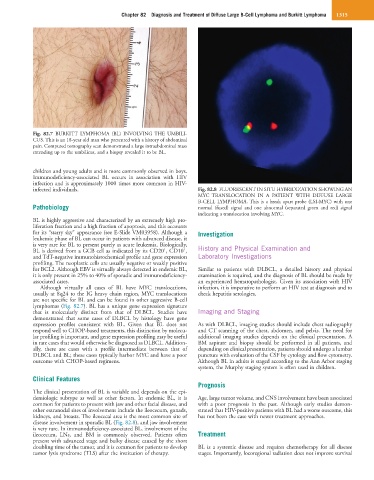
            Fig.  82.7  BURKITT  LYMPHOMA  (BL)  INVOLVING THE  UMBILI-
            CUS. This is an 18-year old man who presented with a history of abdominal
            pain. Computed tomography scan demonstrated a large intraabdominal mass
            extending up to the umbilicus, and a biopsy revealed it to be BL.


            children and young adults and is more commonly observed in boys.
            Immunodeficiency-associated  BL  occurs  in  association  with  HIV
            infection and is approximately 1000 times more common in HIV-
            infected individuals.                                 Fig. 82.8  FLUORESCENT IN SITU HYBRIDIZATION SHOWING AN
                                                                  MYC  TRANSLOCATION  IN  A  PATIENT  WITH  DIFFUSE  LARGE
                                                                  B-CELL LYMPHOMA. This is a break apart probe (LSI-MYC) with one
            Pathobiology                                          normal  (fused)  signal  and  one  abnormal  (separated  green  and  red)  signal
                                                                  indicating a translocation involving MYC.
            BL is highly aggressive and characterized by an extremely high pro-
            liferation fraction and a high fraction of apoptosis, and this accounts
            for its “starry sky” appearance (see E-Slide VM03958). Although a   Investigation
            leukemic phase of BL can occur in patients with advanced disease, it
            is very rare for BL to present purely as acute leukemia. Biologically,
                                                             +
                                                       +
            BL is derived from a GCB cell as indicated by its CD20 , CD10 ,   History and Physical Examination and
            and TdT-negative immunohistochemical profile and gene expression   Laboratory Investigations
            profiling. The neoplastic cells are usually negative or weakly positive
            for BCL2. Although EBV is virtually always detected in endemic BL,   Similar  to  patients  with  DLBCL,  a  detailed  history  and  physical
            it is only present in 25% to 40% of sporadic and immunodeficiency-  examination is required, and the diagnosis of BL should be made by
            associated cases.                                     an experienced hematopathologist. Given its association with HIV
              Although  virtually  all  cases  of  BL  have  MYC  translocations,   infection, it is imperative to perform an HIV test at diagnosis and to
            usually at 8q24 to the IG heavy chain region, MYC translocations   check hepatitis serologies.
            are not specific for BL and can be found in other aggressive B-cell
            lymphomas (Fig. 82.7). BL has a unique gene expression signature
            that  is  molecularly  distinct  from  that  of  DLBCL.  Studies  have   Imaging and Staging
            demonstrated  that  some  cases  of  DLBCL  by  histology  have  gene
            expression  profiles  consistent  with  BL.  Given  that  BL  does  not   As with DLBCL, imaging studies should include chest radiography
            respond well to CHOP-based treatments, this distinction by molecu-  and CT scanning of the chest, abdomen, and pelvis. The need for
            lar profiling is important, and gene expression profiling may be useful   additional imaging studies depends on the clinical presentation. A
            in rare cases that would otherwise be diagnosed as DLBCL. Addition-  BM  aspirate  and  biopsy  should  be  performed  in  all  patients,  and
            ally,  there  are  cases  with  a  profile  intermediate  between  that  of   depending on clinical presentation, patients should undergo a lumbar
            DLBCL and BL; these cases typically harbor MYC and have a poor   puncture with evaluation of the CSF by cytology and flow cytometry.
            outcome with CHOP-based regimens.                     Although BL in adults is staged according to the Ann Arbor staging
                                                                  system, the Murphy staging system is often used in children.
            Clinical Features
                                                                  Prognosis
            The clinical presentation of BL is variable and depends on the epi-
            demiologic  subtype  as  well  as  other  factors.  In  endemic  BL,  it  is   Age, large tumor volume, and CNS involvement have been associated
            common for patients to present with jaw and other facial disease, and   with a poor prognosis in the past. Although early studies demon-
            other extranodal sites of involvement include the ileocecum, gonads,   strated that HIV-positive patients with BL had a worse outcome, this
            kidneys, and breasts. The ileocecal area is the most common site of   has not been the case with newer treatment approaches.
            disease involvement in sporadic BL (Fig. 82.8), and jaw involvement
            is very rare. In immunodeficiency-associated BL, involvement of the
            ileocecum,  LNs,  and  BM  is  commonly  observed.  Patients  often   Treatment
            present with advanced stage and bulky disease caused by the short
            doubling time of the tumor, and it is common for patients to develop   BL is a systemic disease and requires chemotherapy for all disease
            tumor lysis syndrome (TLS) after the institution of therapy.  stages. Importantly, locoregional radiation does not improve survival

