


Page 1519 - Hematology_ Basic Principles and Practice ( PDFDrive )
P. 1519
1346   Part VII  Hematologic Malignancies


        signature associated with a more favorable outcome. Recurrent gains   proliferation,  or  cytokine  signaling.  A  low  frequency  of  recurrent
        of chromosomes 3q, 5q, and 21 have been noted in AITL, although   mutations  has  also  been  observed  in  genes  that  impact  important
        the genes affected by these abnormalities remain unknown. Muta-  T-cell functions such as TCR signaling (CD28, FYN).
        tions of genes involved in epigenetic processes have been observed in
        AITL more frequently than in the other PTCLs. Inactivating TET2
        mutations are observed in 33%–76% of AITL and 38% of PTCL-  Anaplastic Large-Cell Lymphoma, ALK-Positive
        NOS, especially in cases expressing T FH markers, suggesting a biologic
        relationship between AITL and a subset of PTCL-NOS exhibiting   ALCL, ALK+ represents one of the few subtypes of PTCL defined
        the T FH  phenotype. Similar to PTCL-NOS, DNMT3A mutations are   by  recurrent  chromosomal  translocations.  These  involve  the  ALK
        also detected in AITL, with a significant fraction of cases (73%) also   gene located on chromosome 2p23, with the nucleophosmin gene
        harboring TET2 mutations, suggesting oncogenic cooperation and   (NPM),  on  5q35,  being  the  most  common  translocation  partner
        epigenetic deregulation in disease pathogenesis. Recent studies have   (55%–85% of cases), resulting in t(2;5)(p23;q35); variant transloca-
        shown IDH2 mutations at the R172 residue to occur exclusively in   tions  involving  ALK  and  other  partner  genes  are  detected  in  the
        AITL (20%–45% of cases), with the majority of cases also harboring   remaining  cases.  The  translocation  t(2;5)(p23;q35)  results  in  the
        TET2  mutations.  However,  the  prognostic  implications  of  these   fusion protein NPM-ALK, which leads to constitutive activation of
        alterations,  if  any,  are  unclear  at  present.  Unlike  other  neoplasms,   the  ALK  tyrosine  kinase  and  alterations  in  downstream  signaling,
        IDH1 mutations have not been detected in this entity. More recent   metabolic, and prosurvival pathways, among others. These include
        whole-exome and -genome sequencing analyses have revealed recur-  the Janus kinase 3 (JAK3)/signal transducer and activator of tran-
        rent RHOA G17V mutations in 53%–68% of AITL, with concomi-  scription  (STAT)3,  phosphatidylinositol  3-kinase  (PI3K)/protein
        tant TET2 mutations being observed in 65%–100% of cases. The   kinase  (AKT)/mammalian  target  of  rapamycin  (mTOR),  and  the
        RHOA G17V mutation interferes with RHOA signaling, possibly by   phospholipase  C-γ  (PLC-γ)-mediated  RAS-extracellular  signal-
        inhibiting wild-type RHOA function, which could alter cell motility,   regulated kinase (ERK) pathways. Activation of Notch1 signaling has
                                                              also been reported. Overexpression of MYC is noted in a significant
                                                              number of cases and secondary MYC translocations have been associ-
                                                              ated with aggressive behavior. The cell of origin of ALCL, ALK+ is
                                                              unclear at present. It is speculated that different T-cell subsets could
                                                              acquire a cytotoxic phenotype as a consequence of cellular reprogram-
                                                              ming due to genetic or epigenetic aberrations, and some tumors show
                                                              activation of a Th17 differentiation program and increased expression
                                                              of NF-κB target genes.
                                                                 Variant translocations involving ALK and other partner genes can
                                                              be suspected based on the pattern of immunohistochemical staining
                                                              for  ALK  (cytoplasmic,  membranous,  or  nucleolar  instead  of  the
                                                              nuclear  and  cytoplasmic).  Pathologic  consequences  and  molecular
                                                              alterations in signaling pathways as a consequence of variant  ALK
                                                              translocations are not completely understood yet, but partial overlap
                                                              with gene expression profiles of NPM-ALK has been described.
                                                                 While  differences  in  gene  expression  profiles  between  certain
                                                              morphologic  subtypes  of  ALCL,  ALK+  have  been  reported,  array
                                                              CGH  analysis  of  NPM-ALK  and  variant  ALK  translocations  have
                                                              revealed similar recurrent secondary genetic abnormalities including
                                                              gains at 17p and losses at 4q and 11q.
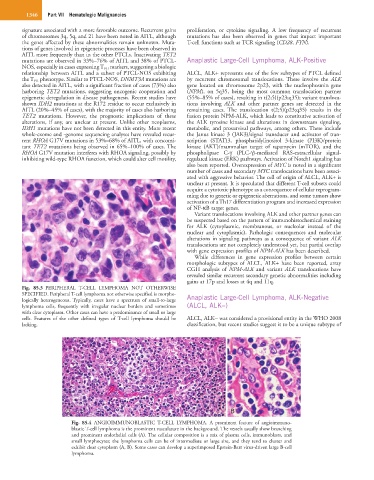
        Fig.  85.3  PERIPHERAL  T-CELL  LYMPHOMA  NOT  OTHERWISE
        SPECIFIED. Peripheral T-cell lymphoma not otherwise specified is morpho-  Anaplastic Large-Cell Lymphoma, ALK-Negative
        logically  heterogeneous. Typically,  cases  have  a  spectrum  of  small-to-large
        lymphoma  cells,  frequently  with  irregular  nuclear  borders  and  sometimes   (ALCL, ALK−)
        with clear cytoplasm. Other cases can have a predominance of small or large
        cells.  Features  of  the  other  defined  types  of  T-cell  lymphoma  should  be   ALCL, ALK− was considered a provisional entity in the WHO 2008
        lacking.                                              classification, but recent studies suggest it to be a unique subtype of


                       A A                                                  B

                        Fig.  85.4  ANGIOIMMUNOBLASTIC  T-CELL  LYMPHOMA.  A  prominent  feature  of  angioimmuno-
                        blastic T-cell lymphoma is the prominent vasculature in the background. The vessels usually show branching
                        and prominent endothelial cells (A). The cellular composition is a mix of plasma cells, immunoblasts, and
                        small lymphocytes; the lymphoma cells can be of intermediate or large size, and they tend to cluster and
                        exhibit clear cytoplasm (A, B). Some cases can develop a superimposed Epstein-Barr virus-driven large B-cell
                        lymphoma.

