


Page 218 - Hematology_ Basic Principles and Practice ( PDFDrive )
P. 218
170    Part II  Cellular Basis of Hematology


                      A                                      B
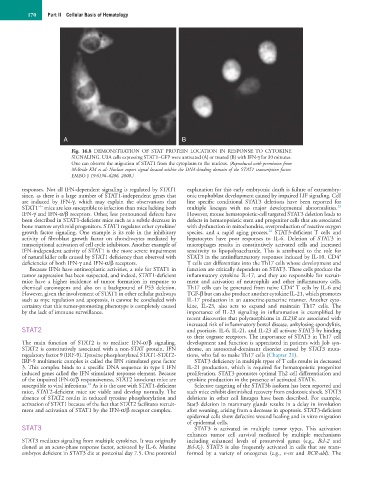
                        Fig.  16.8  DEMONSTRATION  OF  STAT  PROTEIN  LOCATION  IN  RESPONSE  TO  CYTOKINE
                        SIGNALING. U3A cells expressing STAT1–GFP were untreated (A) or treated (B) with IFN-γ for 30 minutes.
                        One can observe the migration of STAT1 from the cytoplasm to the nucleus. (Reproduced with permission from
                        McBride KM et al: Nuclear export signal located within the DNA-binding domain of the STAT1 transcription factor.
                        EMBO J 19:6196–6206, 2000.)

        responses. Not all IFN-dependent signaling is regulated by STAT1   explanation for this early embryonic death is failure of extraembry-
        since, as there is a large number of STAT1-independent genes that   onic trophoblast development caused by impaired LIF signaling. Cell
        are  induced  by  IFN-γ,  which  may  explain  the  observations  that   line  specific  conditional  STAT3  deletions  have  been  reported  for
              −/−
                                                                                                               23
        STAT1  mice are less susceptible to infection than mice lacking both   multiple  lineages  with  no  major  developmental  abnormalities.
        IFN-γ and IFN-α/β receptors. Other, less pronounced defects have   However, mouse hematopoietic-cell targeted STAT3 deletion leads to
        been described in STAT1-deficient mice such as a subtle decrease in   defects in hematopoietic stem and progenitor cells that are associated
        bone marrow erythroid progenitors. STAT1 regulates other cytokine/  with dysfunction in mitochondria, overproduction of reactive oxygen
                                                                                         24
        growth  factor  signaling.  One  example  is  its  role  in  the  inhibitory   species,  and  a  rapid  aging  process.   STAT3-deficient  T  cells  and
        activity  of  fibroblast  growth  factor  on  chondrocytes  mediated  by   hepatocytes  have  poor  responses  to  IL-6.  Deletion  of  STAT3  in
        transcriptional activation of cell cycle inhibitors. Another example of   macrophages  results  in  constitutively  activated  cells  and  increased
        IFN-independent activity of STAT1 is the more severe impairment   sensitivity  to  lipopolysaccharide. This  is  attributed  to  the  role  for
                                                                                                                +
        of natural killer cells caused by STAT1 deficiency than observed with   STAT3 in the antiinflammatory responses induced by IL-10. CD4
        deficiencies of both IFN-γ and IFN-α/β receptors.     T cells can differentiate into the Th17 cells whose development and
           Because IFNs have antineoplastic activities, a role for STAT1 in   function are critically dependent on STAT3. These cells produce the
        tumor suppression has been suspected, and indeed, STAT1-deficient   inflammatory cytokine IL-17, and they are responsible for recruit-
        mice  have  a  higher  incidence  of  tumor  formation  in  response  to   ment  and  activation  of  neutrophils  and  other  inflammatory  cells.
                                                                                                 +
        chemical  carcinogens  and  also  on  a  background  of  P53  deletion.   Th17 cells can be generated from naive CD4  T cells by IL-6 and
        However, given the involvement of STAT1 in other cellular pathways   TGF-β but can also produce another cytokine IL-21, which promotes
        such as myc regulation and apoptosis, it cannot be concluded with   IL-17 production in an autocrine-paracrine manner. Another cyto-
        certainty that this tumor-promoting phenotype is completely caused   kine,  IL-23,  also  acts  to  expand  and  maintain  Th17  cells.  The
        by the lack of immune surveillance.                   importance  of  IL-23  signaling  in  inflammation  is  exemplified  by
                                                              recent discoveries that polymorphisms in IL23R are associated with
                                                              increased risk of inflammatory bowel disease, ankylosing spondylitis,
        STAT2                                                 and psoriasis. IL-6, IL-21, and IL-23 all activate STAT3 by binding
                                                              to their cognate receptors. The importance of STAT3 in Th17 cell
        The  main  function  of  STAT2  is  to  mediate  IFN-α/β  signaling.   development and function is appreciated in patients with Job syn-
        STAT2 is constitutively associated with a non-STAT protein, IFN   drome,  an  autosomal-dominant  disorder  caused  by  STAT3  muta-
        regulatory factor 9 (IRF-9). Tyrosine phosphorylated STAT1-STAT2-  tions, who fail to make Th17 cells (Chapter 21).
        IRF-9 multimeric complex is called the IFN stimulated gene factor   STAT3 deficiency in multiple types of T cells results in decreased
        3. This complex binds to a specific DNA sequence in type I IFN   IL-21  production,  which  is  required  for  hematopoietic  progenitor
        induced genes called the IFN stimulated response element. Because   proliferation. STAT3 promotes optimal Th2 cell differentiation and
        of the impaired IFN-α/β responsiveness, STAT2 knockout mice are   cytokine production in the presence of activated STAT6.
                              22
        susceptible to viral infections.  As it is the case with STAT1-deficient   Selective targeting of the STAT3b isoform has been reported and
        mice,  STAT2-deficient  mice  are  viable  and  develop  normally. The   such mice exhibit diminished recovery from endotoxic shock. STAT3
        absence of STAT2 results in reduced tyrosine phosphorylation and   deletions  in  other  cell  lineages  have  been  described.  For  example,
        activation of STAT1 because of the fact that STAT2 facilitates recruit-  Stat3 deletion in mammary glands results in a delay in involution
        ment and activation of STAT1 by the IFN-α/β receptor complex.  after weaning, arising from a decrease in apoptosis. STAT3-deficient
                                                              epidermal cells show defective wound healing and in vitro migration
                                                              of epidermal cells.
        STAT3                                                    STAT3  is  activated  in  multiple  tumor  types.  This  activation
                                                              enhances  tumor  cell  survival  mediated  by  multiple  mechanisms
        STAT3 mediates signaling from multiple cytokines. It was originally   including  enhanced  levels  of  prosurvival  genes  (e.g.,  Bcl-2  and
        cloned as an acute-phase response factor, activated by IL-6. Murine   Bcl-X L ).  STAT3  is  also  frequently  activated  in  cells  that  are  trans-
        embryos deficient in STAT3 die at postcoital day 7.5. One potential   formed  by  a  variety  of  oncogenes  (e.g.,  v-src  and  BCR-abl).  The

