


Page 221 - Hematology_ Basic Principles and Practice ( PDFDrive )
P. 221
Chapter 16  Cytokine/Receptor Families and Signal Transduction  173


                                                                   TABLE   Consequence of Deficiencies in Genes of Intracellular
                                                      SOCS          16.1   Signaling Molecules
            A- SOCS      KIR             SH2
                                                       box
                                                                   Signal
                                                                   Transduction
                                                                   Molecule  Phenotype of Deficient Mice
                                                                   JAK1      Perinatal mortality, defects in IL-6, IL-2, and cytokine
                                                                               receptor type II families
                                                                   JAK2      Embryonic lethality caused by defective definitive
                                                                               hematopoiesis. Defects in TPO, IL-2 family,
                                             Sumo binding
                                                                             IL-3 and IFN-γ signaling
                                                                   JAK3      Immunodeficiency because of absent common γ chain
                                                                               signaling. JAK3 expression is restricted to the
                                                                               hematopoietic system
            B- PIAS   SAP         SP-RING                S/T
                                                                   Tyk2      Reduced responses to IFN-α/β, IL-12, and unexpectedly
                                                                               IFN-γ
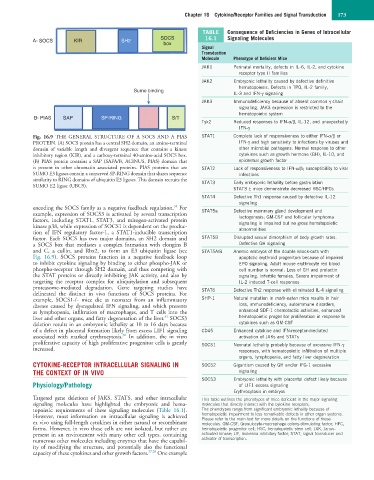
            Fig.  16.9  THE  GENERAL  STRUCTURE  OF  A  SOCS  AND  A  PIAS   STAT1  Complete lack of responsiveness to either IFN-α/β or
            PROTEIN. (A) SOCS protein has a central SH2 domain, an amino-terminal   IFN-γ and high sensitivity to infections by viruses and
            domain  of  variable  length  and  divergent  sequence  that  contains  a  kinase   other microbial pathogens. Normal response to other
            inhibitory region (KIR), and a carboxy-terminal 40-amino-acid SOCS box.   cytokines such as growth hormone (GH), IL-10, and
            (B) PIAS protein contains a SAP (SAFA/B, ACINUS, PIAS) domain that     epidermal growth factor
            is  present  in  other  chromatin  associated  proteins.  PIAS  proteins  that  are   STAT2  Lack of responsiveness to IFN-α/β; susceptibility to viral
            SUMO E3 ligases contain a conserved SP-RING domain that shares sequence   infections
            similarity to RING domains of ubiquitin E3 ligases. This domain recruits the   STAT3  Early embryonic lethality before gastrulation
            SUMO E2 ligase (UBC9).
                                                                             STAT3 ± mice demonstrate decreased HSC/HPCs
                                                                   STAT4     Defective Th1 response caused by defective IL-12
                                                                               signaling
                                                          34
            encoding the SOCS family as a negative feedback regulation.  For   STAT5a  Defective mammary gland development and
            example, expression of SOCS3 is activated by several transcription   lactogenesis; GM-CSF and follicular lymphoma
            factors,  including  STAT1,  STAT3,  and  mitogen-activated  protein   signaling is impaired but no gross hematopoietic
            kinase p38, while expression of SOCS1 is dependent on the produc-  abnormalities
            tion  of  IFN  regulatory  factor-1,  a  STAT1-inducible  transcription
            factor.  Each  SOCS  has  two  major  domains,  an  SH2  domain  and   STAT5B  Disrupted sexual dimorphism of body growth rates.
            a  SOCS  box  that  mediates  a  complex  formation  with  elongins  B   Defective GH signaling
            and  C,  a  cullin,  and  Rbx2,  to  form  an  E3  ubiquitin  ligase  (see   STAT5A/B  Anemic embryos of the double knock-outs with
            Fig.  16.9).  SOCS  proteins  function  in  a  negative  feedback  loop   apoptotic erythroid progenitors because of impaired
            to inhibit cytokine signaling by binding to either phospho-JAK or   EPO signaling. Adult mouse erythrocyte red blood
            phospho-receptor through SH2 domain, and thus competing with       cell number is normal. Loss of GH and prolactin
            the STAT proteins or directly inhibiting JAK activity, and also by   signaling. Infertile females. Severe impairment of
            targeting  the  receptor  complex  for  ubiquitylation  and  subsequent   IL-2 induced T-cell responses
            proteasome-mediated  degradation.  Gene  targeting  studies  have   STAT6  Defective Th2 response with eliminated IL-4 signaling
            delineated  the  distinct  in  vivo  functions  of  SOCS  proteins.  For
            example,  SOCS1-/-  mice  die  as  neonates  from  an  inflammatory   SHP-1  Natural mutation in moth-eaten mice results in hair
            disease  caused  by  dysregulated  IFN  signaling,  and  which  presents   loss, immunodeficiency, autoimmune disorders,
            as  lymphopenia,  infiltration  of  macrophages,  and T  cells  into  the   enhanced SDF-1 chemotactic activities, enhanced
                                                       35
            liver and other organs, and fatty degeneration of the liver.  SOCS3   hematopoietic progenitor proliferation in response to
            deletion results in an embryonic lethality at 10 to 16 days because   cytokines such as GM-CSF
            of a defect in placental formation likely from excess LIF1 signaling   CD45  Enhanced cytokine and IFN-receptor-mediated
                                         36
            associated  with  marked  erythrocytosis.   In  addition,  the  in  vitro   activation of JAKs and STATs
            proliferative capacity of high proliferative progenitor cells is greatly    SOCS1  Neonatal lethality probably because of excessive IFN-γ
            increased.                                                         responses, with hematopoietic infiltration of multiple
                                                                               organs, lymphopenia, and fatty liver degeneration
            CYTOKINE-RECEPTOR INTRACELLULAR SIGNALING IN           SOCS2     Gigantism caused by GH and/or IFG-1 excessive
            THE CONTEXT OF IN VIVO                                             signaling
                                                                   SOCS3     Embryonic lethality with placental defect likely because
            Physiology/Pathology                                               of LIF1 excess signaling
                                                                             Erythrocytosis in embryos
            Targeted  gene  deletions  of  JAKS,  STATS,  and  other  intracellular   This table outlines the phenotypes of mice deficient in the major signaling
            signaling  molecules  have  highlighted  the  embryonic  and  hema-  molecules that directly interact with the cytokine receptors.
            topoietic  requirements  of  these  signaling  molecules  (Table  16.1).   The phenotypes range from significant embryonic lethality because of
            However,  most  information  on  intracellular  signaling  is  achieved   hematopoietic impairment to less remarkable defects in other organ systems.
                                                                   Please refer to the main text for more details on the functions of these
            ex vivo using full-length cytokines in either natural or recombinant   molecules. GM-CSF, Granulocyte-macrophage colony-stimulating factor; HPC,
            forms. However, in vivo these cells are not isolated, but rather are   hematopoietic progenitor cell; HSC, hematopoietic stem cell; JAK, Janus-
            present in an environment with many other cell types, containing   activated kinase; LIF, leukemia inhibitory factor; STAT, signal transducer and
            numerous other molecules including enzymes that have the capabil-  activator of transcription.
            ity  of  modifying  the  structure,  and  potentially  also  the  functional
            capacity of these cytokines and other growth factors. 37,38  One example

