


Page 2373 - Hematology_ Basic Principles and Practice ( PDFDrive )
P. 2373
Chapter 143  Mechanical Interventions in Arterial and Venous Thrombosis  2115


             A                             B                                    C

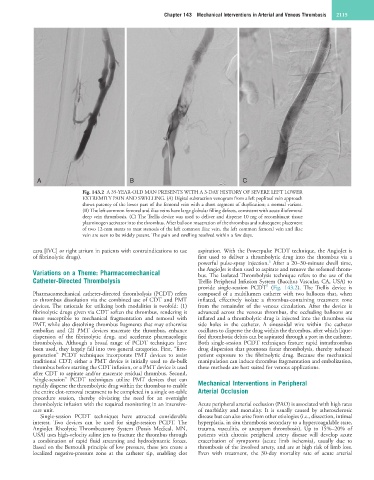
                            Fig. 143.2  A 35-YEAR-OLD MAN PRESENTS WITH A 3-DAY HISTORY OF SEVERE LEFT LOWER
                            EXTREMITY PAIN AND SWELLING. (A) Digital subtraction venogram from a left popliteal vein approach
                            shows patency of the lower part of the femoral vein with a short segment of duplication; a normal variant.
                            (B) The left common femoral and iliac veins have large globular filling defects, consistent with acute iliofemoral
                            deep vein thrombosis. (C) The Trellis device was used to deliver and disperse 10 mg of recombinant tissue
                            plasminogen activator into the thrombus. After balloon maceration of the thrombus and subsequent placement
                            of two 12-mm stents to treat stenosis of the left common iliac vein, the left common femoral vein and iliac
                            vein are seen to be widely patent. The pain and swelling resolved within a few days.

            cava [IVC] or right atrium in patients with contraindications to use   aspiration. With the Powerpulse PCDT technique, the AngioJet is
            of fibrinolytic drugs).                               first  used  to  deliver  a  thrombolytic  drug  into  the  thrombus  via  a
                                                                                         6
                                                                  powerful  pulse-spray  injection.   After  a  20–30-minute  dwell  time,
            Variations on a Theme: Pharmacomechanical             the AngioJet is then used to aspirate and remove the softened throm-
                                                                  bus. The  Isolated Thrombolysis  technique  refers  to  the  use  of  the
            Catheter-Directed Thrombolysis                        Trellis Peripheral Infusion System (Bacchus Vascular, CA, USA) to
                                                                                        7
                                                                  provide  single-session  PCDT   (Fig.  143.2).  The  Trellis  device  is
            Pharmacomechanical catheter-directed thrombolysis (PCDT) refers   composed of a multilumen catheter with two balloons that, when
            to thrombus dissolution via the combined use of CDT and PMT   inflated,  effectively  isolate  a  thrombus-containing  treatment  zone
            devices. The  rationale  for  utilizing  both  modalities  is  twofold:  (1)   from  the  remainder  of  the  venous  circulation.  After  the  device  is
            fibrinolytic drugs given via CDT soften the thrombus, rendering it   advanced  across  the  venous  thrombus,  the  occluding  balloons  are
            more  susceptible  to  mechanical  fragmentation  and  removal  with   inflated and a thrombolytic drug is injected into the thrombus via
            PMT, while also dissolving thrombus fragments that may otherwise   side  holes  in  the  catheter.  A  sinusoidal  wire  within  the  catheter
            embolize;  and  (2)  PMT  devices  macerate  the  thrombus,  enhance   oscillates to disperse the drug within the thrombus, after which lique-
            dispersion  of  the  fibrinolytic  drug,  and  accelerate  pharmacologic   fied thrombotic debris can be aspirated through a port in the catheter.
            thrombolysis.  Although  a  broad  range  of  PCDT  techniques  have   Both  single-session  PCDT  techniques  feature  rapid  intrathrombus
            been used, they largely fall into two general categories. First, “first-  drug dispersion that promotes faster thrombolysis, thereby reduced
            generation”  PCDT  techniques  incorporate  PMT  devices  to  assist   patient  exposure  to  the  fibrinolytic  drug.  Because  the  mechanical
            traditional  CDT;  either  a  PMT  device  is  initially  used  to  de-bulk   manipulation can induce thrombus fragmentation and embolization,
            thrombus before starting the CDT infusion, or a PMT device is used   these methods are best suited for venous applications.
            after CDT to aspirate and/or macerate residual thrombus. Second,
            “single-session”  PCDT  techniques  utilize  PMT  devices  that  can
            rapidly disperse the thrombolytic drug within the thrombus to enable   Mechanical Interventions in Peripheral
            the entire clot-removal treatment to be completed in a single on-table   Arterial Occlusion
            procedure  session,  thereby  obviating  the  need  for  an  overnight
            thrombolytic infusion with the required monitoring in an intensive-  Acute peripheral arterial occlusion (PAO) is associated with high rates
            care unit.                                            of  morbidity  and  mortality.  It  is  usually  caused  by  atherosclerotic
              Single-session  PCDT  techniques  have  attracted  considerable   disease but can also arise from other etiologies (i.e., dissection, intimal
            interest.  Two  devices  can  be  used  for  single-session  PCDT.  The   hyperplasia, in situ thrombosis secondary to a hypercoagulable state,
            AngioJet  Rheolytic  Thrombectomy  System  (Possis  Medical,  MN,   trauma,  vasculitis,  or  aneurysm  thrombosis).  Up  to  15%–20%  of
            USA) uses high-velocity saline jets to fracture the thrombus through   patients  with  chronic  peripheral  artery  disease  will  develop  acute
            a  combination  of  rapid  fluid  streaming  and  hydrodynamic  forces.   exacerbation  of  symptoms  (acute  limb  ischemia),  usually  due  to
            Based on the Bernoulli principle of low pressure, these jets create a   thrombosis of the involved artery, and are at high risk of limb loss.
            localized  negative-pressure  zone  at  the  catheter  tip,  enabling  clot   Even  with  treatment,  the  30-day  mortality  rate  of  acute  arterial

