


Page 337 - Hematology_ Basic Principles and Practice ( PDFDrive )
P. 337
Chapter 24  Complement and Immunoglobulin Biology Leading to Clinical Translation  279


                                   Extract RNA  PCR to amplify                Generation of
                                                                        Phage
                                                             V H  Linker  V L  coat
                                 cDNA synthesis  V H , V  K and λ       protein   phage library
                                                   L
                                                           Introduce into phage DNA
                        Pooled human
                        lymphocytes


                               Elute
                               bound
                               phage


                                        Retain bound phage  Add phage to immobilized antigen


                         Amplify eluted
                         phage in bacteria                                       Elute and
                                                                                 reamplify
                                                                                 phage


                                Add phage to immobilized antigen  Retain bound phage       Phage displaying
                                under increased binding stringency                         scFV with high
                         B      conditions                                                 affinity for antigen
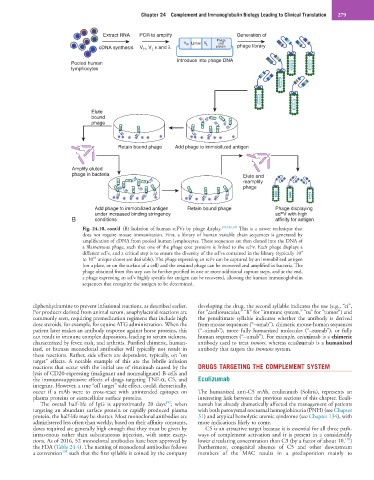
                            Fig. 24.10, cont’d   (B) Isolation of human scFVs by phage display. 185,188,189  This is a newer technique that
                            does not require mouse immunization. First, a library of human variable chain sequences is generated by
                            amplification of cDNA from pooled human lymphocytes. These sequences are then cloned into the DNA of
                            a filamentous phage, such that one of the phage coat proteins is linked to the scFv. Each phage displays a
                                                                                                   9
                            different scFv, and a critical step is to ensure the diversity of the scFvs contained in the library (typically 10
                               10
                            to 10  unique clones are desirable). The phage expressing an scFv can be captured by an immobilized antigen
                            (on a plate, or on the surface of a cell) and the retained phage can be recovered and amplified in bacteria. The
                            phage obtained from this step can be further purified in one or more additional capture steps, and at the end,
                            a phage expressing an scFv highly specific for antigen can be recovered, allowing the human immunoglobulin
                            sequences that recognize the antigen to be determined.


            diphenhydramine to prevent infusional reactions, as described earlier.   developing the drug, the second syllable indicates the use (e.g., “ci”,
            For products derived from animal serum, anaphylactoid reactions are   for “cardiovascular,” “li” for “immune system,” “tu” for “tumor”) and
            commonly seen, requiring premedication regimens that include high   the  penultimate  syllable  indicates  whether  the  antibody  is  derived
            dose steroids, for example, for equine ATG administration. When the   from mouse sequences (“–omab”), chimeric mouse-human sequences
            patient later makes an antibody response against horse proteins, this   (“–ximab”),  more  fully  humanized  molecules  (“–zumab”),  or  fully
            can result in immune complex deposition, leading to serum sickness,   human sequences (“–umab”). For example, cetuximab is a chimeric
            characterized by fever, rash, and arthritis. Purified chimeric, human-  antibody used to treat tumors, whereas eculizumab is a humanized
            ized,  or  human  monoclonal  antibodies  will  typically  not  result  in   antibody that targets the immune system.
            these reactions. Rather, side effects are dependent, typically, on “on
            target”  effects.  A  notable  example  of  this  are  the  febrile  infusion
            reactions that occur with the initial use of rituximab caused by the   DRUGS TARGETING THE COMPLEMENT SYSTEM
            lysis of CD20-expressing (malignant and nonmalignant) B cells and
            the immunosuppressive effects of drugs targeting TNF-α, C5, and   Eculizumab
            integrins. However, a true “off target” side effect, could, theoretically,
            occur  if  a  mAb  were  to  cross-react  with  unintended  epitopes  on   The  humanized  anti-C5  mAb,  eculizumab  (Soliris),  represents  an
            plasma proteins or extracellular surface proteins.    interesting link between the previous sections of this chapter. Eculi-
                                                       197
              The  overall  half-life  of  IgG  is  approximately  20  days ;  when   zumab has already dramatically affected the management of patients
            targeting an abundant surface protein or rapidly produced plasma   with both paroxysmal nocturnal hemoglobinuria (PNH) (see Chapter
            protein, the half-life may be shorter. Most monoclonal antibodies are   31) and atypical hemolytic uremic syndrome (see Chapter 134), with
            administered less often than weekly; based on their affinity constants,   more indications likely to come.
            doses required are generally high enough that they must be given by   C5 is an attractive target because it is essential for all three path-
            intravenous  rather  than  subcutaneous  injection,  with  some  excep-  ways of complement activation and it is present in a considerably
                                                                                                                  199
            tions. As of 2016, 52 monoclonal antibodies have been approved by   lower circulating concentration than C3 (by a factor of about 10. )
            the FDA (Table 24.4). The naming of monoclonal antibodies follows   Furthermore,  congenital  absence  of  C5  and  other  downstream
                     198
            a convention  such that the first syllable is coined by the company   members  of  the  MAC  results  in  a  predisposition  mainly  to

