


Page 34 - Hematology_ Basic Principles and Practice ( PDFDrive )
P. 34
6     Part I  Molecular and Cellular Basis of Hematology


                                                 Coding   Noncoding
                                                sequence  (intervening      3  coding
                                        5        (exon)  sequence, intron)   strand
                                    DNA
                                        3                                 5  noncoding
                                                         Transcription
                                    mRNA  5     Exon  Intron                strand
                                  precursor                                   3
                                                   5  CAP          3 Poly (A), modification
                                                                   and shortening of
                                                          Processing  transcript
                                                                             Nucleus
                                      Processed  5  CAP                  Poly (A)-3
                                         mRNA
                                       transcript  5  CAP                Poly (A)-3
                                                      mRNA
                                                               Transport to
                                                               cytoplasm
                          Nuclear “pore”

                                                                                       Cytoplasm
                                                              Initiation factors
                                                              tRNA, ribosomes
                                                         Translation


                                                5  CAP                 Poly (A)-3

                                                                        Completed
                                      Protein                           apoprotein
                                                                 Cofactors
                                                                 other subunits
                                                         Microsomes
                                                          Golgi, etc.


                                                   Completed functioning protein


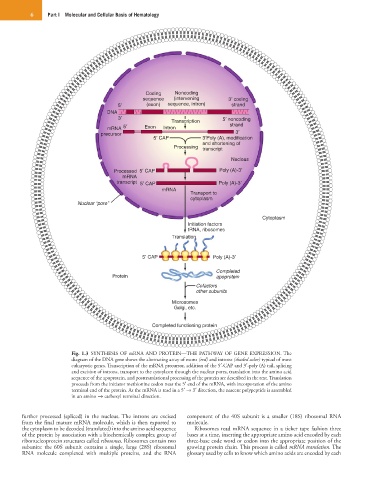
                        Fig. 1.3  SYNTHESIS OF mRNA AND PROTEIN—THE PATHWAY OF GENE EXPRESSION. The
                        diagram of the DNA gene shows the alternating array of exons (red) and introns (shaded color) typical of most
                        eukaryotic genes. Transcription of the mRNA precursor, addition of the 5′-CAP and 3′-poly (A) tail, splicing
                        and excision of introns, transport to the cytoplasm through the nuclear pores, translation into the amino acid
                        sequence of the apoprotein, and posttranslational processing of the protein are described in the text. Translation
                        proceeds from the initiator methionine codon near the 5′ end of the mRNA, with incorporation of the amino
                        terminal end of the protein. As the mRNA is read in a 5′ → 3′ direction, the nascent polypeptide is assembled
                        in an amino → carboxyl terminal direction.


        further  processed  (spliced)  in  the  nucleus. The  introns  are  excised   component of the 40S subunit is a smaller (18S) ribosomal RNA
        from the final mature mRNA molecule, which is then exported to   molecule.
        the cytoplasm to be decoded (translated) into the amino acid sequence   Ribosomes read mRNA sequence in a ticker tape fashion three
        of the protein by association with a biochemically complex group of   bases at a time, inserting the appropriate amino acid encoded by each
        ribonucleoprotein structures called ribosomes. Ribosomes contain two   three-base code word or codon into the appropriate position of the
        subunits: the 60S subunit contains a single, large (28S) ribosomal   growing protein chain. This process is called mRNA translation. The
        RNA  molecule  complexed  with  multiple  proteins,  and  the  RNA   glossary used by cells to know which amino acids are encoded by each

