


Page 352 - Hematology_ Basic Principles and Practice ( PDFDrive )
P. 352
288    Part III  Immunologic Basis of Hematology


           Heterozygous for Tg+           Heterozygous for    B cells generally remained quiescent in a normal animal, suggesting
                                         autoAg expression    that B cells that are not usually regulated by self-tolerance (perhaps
                                                              because  they  recognize  the  self-antigen  only  weakly)  may  be  the
                T G                           A g             precursors of pathogenic autoantibodies in disease.
                                                              Peripheral Control of Self-Reactive Lymphocytes:
                                                              Preventing Activation

                       TG+Ag                     Autoantigen  The  recognition  that  potentially  self-reactive  lymphocytes  exist  in
                                     TG and Ag    present     the  peripheral  lymphoid  repertoire  of  normal  individuals,  despite
                                                              central  tolerance,  raises  the  question  of  why  they  do  not  usually
                        T G           TG only    Autoantigen  cause disease. One reason is the second layer of immune tolerance
                                                              that prevents activation of self-reactive lymphocytes that exist in the
                                                   absent
                                                              periphery. This layer consists of several facets, which are described in
                                                              the following sections.
                         A g
                                      Ag only
                                                              Absence of Self-Antigen
                                      Neither                 The simplest explanation for why a self-specific lymphocyte is not
                                                              spontaneously activated in the peripheral lymphoid compartment is
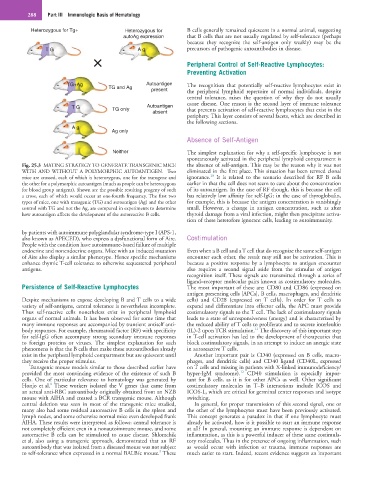
        Fig. 25.3  MATING STRATEGY TO GENERATE TRANSGENIC MICE   the absence of self-antigen. This may be the reason why it was not
        WITH  AND WITHOUT  A  POLYMORPHIC  AUTOANTIGEN.   Two   eliminated in the first place. This situation has been termed clonal
                                                                      10
        mice are crossed, each of which is heterozygous, one for the transgene and   ignorance.   It  is  related  to  the  scenario  described  for  RF  B  cells
        the other for a polymorphic autoantigen (much as people can be heterozygous   earlier in that the cell does not seem to care about the concentration
        for blood group antigens). Shown are the possible resulting progeny of such   of its autoantigen. In the case of RF though, this is because the cell
        a cross, each of which would occur at one-fourth frequency. The first two   has relatively low affinity for self-IgG; in the case of thyroglobulin,
        types of mice, one with transgenic (TG) and autoantigen (Ag) and the other   for example, this is because the antigen concentration is vanishingly
        control with TG and not the Ag, are compared in experiments to determine   small.  However,  a  change  in  antigen  concentration,  such  as  after
        how autoantigen affects the development of the autoreactive B cells.   thyroid damage from a viral infection, might then precipitate activa-
                                                              tion of these heretofore ignorant cells, leading to autoimmunity.

        by patients with autoimmune polyglandular syndrome-type I (APS-1,
        also known as APECED), who express a dysfunctional form of Aire.   Costimulation
        People with the condition have autoimmune-based failure of multiple
        endocrine and nonendocrine organs. Mice with an induced mutation   Even when a B cell and a T cell that do recognize the same self-antigen
        of Aire also display a similar phenotype. Hence specific mechanisms   encounter each other, the result may still not be activation. This is
        enhance thymic T-cell tolerance to otherwise sequestered peripheral    because a positive response by a lymphocyte to antigen encounter
        antigens.                                             also  requires  a  second  signal  aside  from  the  stimulus  of  antigen
                                                              recognition itself. These signals are transmitted through a series of
                                                              ligand–receptor molecular pairs known as costimulatory molecules.
        Persistence of Self-Reactive Lymphocytes              The most important of these are: CD80 and CD86 (expressed on
                                                              antigen presenting cells [APCs], B cells, macrophages, and dendritic
        Despite mechanisms to expose developing B and T cells to a wide   cells)  and  CD28  (expressed  on  T  cells).  In  order  for  T  cells  to
        variety of self-antigens, central tolerance is nevertheless incomplete.   expand and differentiate into effector cells, the APC must provide
        Thus  self-reactive  cells  nonetheless  exist  in  peripheral  lymphoid   costimulatory signals to the T cell. The lack of costimulatory signals
        organs of normal animals. It has been observed for some time that   leads to a state of unresponsiveness (anergy) and is characterized by
        many immune responses are accompanied by transient antiself anti-  the reduced ability of T cells to proliferate and to secrete interleukin
                                                                                    11
        body responses. For example, rheumatoid factor (RF) with specificity   (IL)-2 upon TCR stimulation.  The discovery of this important step
        for  self-IgG  often  accompany  strong  secondary  immune  responses   in T-cell activation has led to the development of therapeutics that
        to  foreign  proteins  or  viruses.  The  simplest  explanation  for  such   block costimulatory signals, in an attempt to induce an anergic state
        phenomena is that the B cells that make these autoantibodies already   in autoreactive T cells.
        exist in the peripheral lymphoid compartment but are quiescent until   Another important pair is CD40 (expressed on B cells, macro-
        they receive the proper stimulus.                     phages,  and  dendritic  cells)  and  CD40  ligand  (CD40L,  expressed
           Transgenic mouse models similar to those described earlier have   on T cells and missing in patients with X-linked immunodeficiency/
                                                                                12
        provided the most convincing evidence of the existence of such B   hyper-IgM  syndrome).   CD40  stimulation  is  especially  impor-
        cells.  One  of  particular  relevance  to  hematology  was  generated  by   tant  for  B  cells,  as  it  is  for  other  APCs  as  well.  Other  significant
                 8
        Honjo  et al.  These  workers  isolated  the  V  genes  that  came  from   costimulatory  molecules  in  T–B  interactions  include  ICOS  and
        an actual anti-RBC autoantibody originally obtained from an NZB   ICOS-L, which are critical for germinal center responses and isotype
        mouse with AIHA and created a BCR transgenic mouse. Although   switching.
        central  deletion  was  seen  in  most  of  the  transgenic  mice  studied,   In general, for proper transmission of this second signal, one or
        many also had some residual autoreactive B cells in the spleen and   the other of the lymphocytes must have been previously activated.
        lymph nodes, and some otherwise normal mice even developed frank   This  concept  generates  a  paradox  in  that  if  one  lymphocyte  must
        AIHA. These results were interpreted as follows: central tolerance is   already be activated, how is it possible to start an immune response
        not completely efficient even in a nonautoimmune mouse, and some   at all? In general, mounting an immune response is dependent on
        autoreactive B cells can be stimulated to cause disease. Shlomchik   inflammation, as this is a powerful inducer of these same costimula-
        et al,  also  using  a  transgenic  approach,  demonstrated  that  an  RF   tory molecules. Thus in the presence of ongoing inflammation, such
        autoantibody that was isolated from a diseased mouse was not subject   as  would  occur  with  infection  or  trauma,  immune  responses  are
                                                     9
        to self-tolerance when expressed in a normal BALB/c mouse.  These   much easier to start. Indeed, recent evidence suggests an important

