


Page 43 - Hematology_ Basic Principles and Practice ( PDFDrive )
P. 43
Chapter 1  Anatomy and Physiology of the Gene  15


                                                                  stem  cells  and  for  performing  gene  transfer  into  those  cells  has
                                                                  advanced rapidly, and clinical trials have begun to test the applicabil-
                                                                  ity of these techniques. Despite the fact that gene therapy has pro-
                                             Embryonic stem cell  gressed  to  the  enrollment  of  patients  in  clinical  protocols,  major
                                                                  technical problems still need to be solved. Presently, there are only
                                                                  few  (but  increasing,  such  as  severe  combined  immunodeficiency
                                                                  syndromes, Wiskott–Aldrich disease, and others) proven therapeutic
                                                                  successes from gene therapy.
                                                                    Progress in this field continues rapidly and is likely to accelerate
                                             Gene of interest     as a consequence of the development of “gene editing” technologies.
                                                                  Among these, “CRISPR” is the most prominent current example. It
                           neo R             Engineered plasmid   is based on the discovery of enzyme systems used by microorganisms
                                                                  to excise foreign DNA sequences (e.g., integrated viral genomes) from
                                                                  the host genome. These systems can be adapted to insert, replace, or
                                                                  delete, in principle, any desired DNA sequence in its naturally occur-
                                              Cells selected for  ring position in the host genome. For example, one could excise the
                                              resistance to G418  mutation causing sickle cell anemia and replace it with the normal
                                                                  DNA sequence in the β-globin gene of a patient’s hematopoietic stem
                                                                  cells,  and  then  re-introduce  them  into  the  patient’s  bone  marrow
                                                                  without introducing any foreign DNA. This exciting technology is
                                                                  rapidly  moving  toward  clinical  trials. The  scientific  basis  for  gene
                                                                  therapy and the clinical issues surrounding this approach are discussed
                                                                  in Chapter 98.


                                              Resistant cells inserted  Antisense Therapy
                                              into blastocyst
                                                                  The recognition that abnormal expression of oncogenes plays a role
                                                                  in malignancy has stimulated attempts to suppress oncogene expres-
                                                                  sion to reverse the neoplastic phenotype. One way of blocking mRNA
                                                                  expression  is  with  antisense  oligonucleotides.  These  are  single-
                                                                  stranded  DNA  sequences  17  to  20  bases  long,  having  a  sequence
                                                                  complementary to the transcription or translation start of the mRNA.
                                                                  These relatively small molecules freely enter the cell and complex to
                                              Blastocyst implanted  the  mRNA  by  their  complementary  DNA  sequence.  This  often
                                              into mouse          results in a decrease in gene expression. The binding of the oligonucle-
                                                                  otide may directly block translation and clearly enhances the rate of
                                                                  mRNA degradation. This technique has been shown to be promising
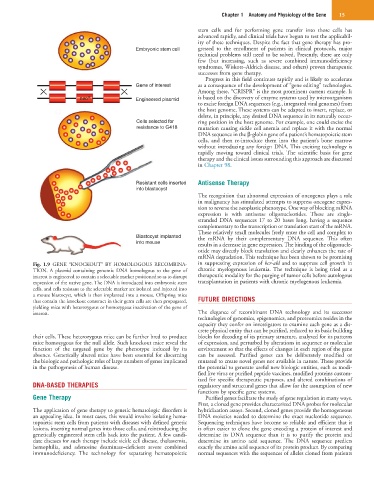
            Fig.  1.9  GENE  “KNOCKOUT”  BY  HOMOLOGOUS  RECOMBINA-  in suppressing expression of bcr-abl and to suppress cell growth in
            TION.  A  plasmid  containing  genomic  DNA  homologous  to  the  gene  of   chronic  myelogenous  leukemia. The  technique  is  being  tried  as  a
            interest is engineered to contain a selectable marker positioned so as to disrupt   therapeutic modality for the purging of tumor cells before autologous
            expression of the native gene. The DNA is introduced into embryonic stem   transplantation in patients with chronic myelogenous leukemia.
            cells, and cells resistant to the selectable marker are isolated and injected into
            a mouse blastocyst, which is then implanted into a mouse. Offspring mice
            that contain the knockout construct in their germ cells are then propagated,   FUTURE DIRECTIONS
            yielding mice with heterozygous or homozygous inactivation of the gene of
            interest.                                             The  elegance  of  recombinant  DNA  technology  and  its  successor
                                                                  technologies of genomics, epigenomics, and proteomics resides in the
                                                                  capacity they confer on investigators to examine each gene as a dis-
                                                                  crete physical entity that can be purified, reduced to its basic building
            their cells. These heterozygous mice can be further bred to produce   blocks for decoding of its primary structure, analyzed for its patterns
            mice homozygous for the null allele. Such knockout mice reveal the   of expression, and perturbed by alterations in sequence or molecular
            function  of  the  targeted  gene  by  the  phenotype  induced  by  its   environment so that the effects of changes in each region of the gene
            absence. Genetically altered mice have been essential for discerning   can  be  assessed.  Purified  genes  can  be  deliberately  modified  or
            the biologic and pathologic roles of large numbers of genes implicated   mutated to create novel genes not available in nature. These provide
            in the pathogenesis of human disease.                 the potential to generate useful new biologic entities, such as modi-
                                                                  fied live virus or purified peptide vaccines, modified proteins custom-
                                                                  ized for specific therapeutic purposes, and altered combinations of
            DNA-BASED THERAPIES                                   regulatory and structural genes that allow for the assumption of new
                                                                  functions by specific gene systems.
            Gene Therapy                                            Purified genes facilitate the study of gene regulation in many ways.
                                                                  First, a cloned gene provides characterized DNA probes for molecular
            The application of gene therapy to genetic hematologic disorders is   hybridization assays. Second, cloned genes provide the homogeneous
            an appealing idea. In most cases, this would involve isolating hema-  DNA moieties needed to determine the exact nucleotide sequence.
            topoietic stem cells from patients with diseases with defined genetic   Sequencing techniques have become so reliable and efficient that it
            lesions, inserting normal genes into those cells, and reintroducing the   is often easier to clone the gene encoding a protein of interest and
            genetically engineered stem cells back into the patient. A few candi-  determine  its  DNA  sequence  than  it  is  to  purify  the  protein  and
            date diseases for such therapy include sickle cell disease, thalassemia,   determine  its  amino  acid  sequence.  The  DNA  sequence  predicts
            hemophilia,  and  adenosine  deaminase–deficient  severe  combined   exactly the amino acid sequence of its protein product. By comparing
            immunodeficiency.  The  technology  for  separating  hematopoietic   normal sequences with the sequences of alleles cloned from patients

