


Page 460 - Hematology_ Basic Principles and Practice ( PDFDrive )
P. 460
Chapter 29  Inherited Bone Marrow Failure Syndromes  381


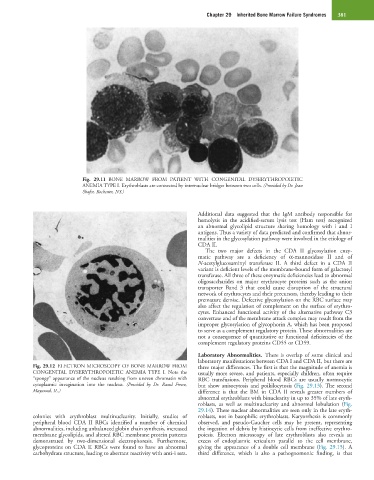
                            Fig.  29.11  BONE  MARROW  FROM  PATIENT  WITH  CONGENITAL  DYSERYTHROPOIETIC
                            ANEMIA TYPE I. Erythroblasts are connected by internuclear bridges between two cells. (Provided by Dr. Jean
                            Shafer, Rochester, NY.)


                                                                  Additional  data  suggested  that  the  IgM  antibody  responsible  for
                                                                  hemolysis  in  the  acidified-serum  lysis  test  (Ham  test)  recognized
                                                                  an  abnormal  glycolipid  structure  sharing  homology  with  i  and  I
                                                                  antigens. Thus a variety of data predicted and confirmed that abnor-
                                                                  malities in the glycosylation pathway were involved in the etiology of
                                                                  CDA II.
                                                                    The  two  major  defects  in  the  CDA  II  glycosylation  enzy-
                                                                  matic  pathway  are  a  deficiency  of  α-mannosidase  II  and  of
                                                                  N-acetylglucosaminyl  transferase  II.  A  third  defect  in  a  CDA  II
                                                                  variant is deficient levels of the membrane-bound form of galactosyl
                                                                  transferase. All three of these enzymatic deficiencies lead to abnormal
                                                                  oligosaccharides  on  major  erythrocyte  proteins  such  as  the  anion
                                                                  transporter  Band  3  that  could  cause  disruption  of  the  structural
                                                                  network of erythrocytes and their precursors, thereby leading to their
                                                                  premature demise. Defective glycosylation on the RBC surface may
                                                                  also affect the regulation of complement on the surface of erythro-
                                                                  cytes.  Enhanced  functional  activity  of  the  alternative  pathway  C3
                                                                  convertase and of the membrane attack complex may result from the
                                                                  improper glycosylation of glycophorin A, which has been proposed
                                                                  to serve as a complement regulatory protein. These abnormalities are
                                                                  not a consequence of quantitative or functional deficiencies of the
                                                                  complement regulatory proteins CD55 or CD59.

                                                                  Laboratory  Abnormalities.  There  is  overlap  of  some clinical and
                                                                  laboratory manifestations between CDA I and CDA II, but there are
            Fig. 29.12  ELECTRON MICROSCOPY OF BONE MARROW FROM   three major differences. The first is that the magnitude of anemia is
            CONGENITAL  DYSERYTHROPOIETIC  ANEMIA  TYPE  I.  Note  the   usually more severe, and patients, especially children, often require
            “spongy” appearance of the nucleus resulting from uneven chromatin with   RBC  transfusions.  Peripheral  blood  RBCs  are  usually  normocytic
            cytoplasmic  invagination  into  the  nucleus.  (Provided  by  Dr.  Raoul  Fresco,   but  show  anisocytosis  and  poikilocytosis  (Fig.  29.13). The  second
            Maywood, IL.)                                         difference  is  that  the  BM  in  CDA  II  reveals  greater  numbers  of
                                                                  abnormal erythroblasts with binuclearity in up to 35% of late eryth-
                                                                  roblasts,  as  well  as  multinuclearity  and  abnormal  lobulation  (Fig.
                                                                  29.14). These nuclear abnormalities are seen only in the late eryth-
            colonies  with  erythroblast  multinuclearity.  Initially,  studies  of   roblasts, not in basophilic erythroblasts. Karyorrhexis is commonly
            peripheral  blood  CDA  II  RBCs  identified  a  number  of  chemical   observed,  and  pseudo-Gaucher  cells  may  be  present,  representing
            abnormalities, including unbalanced globin chain synthesis, increased   the ingestion of debris by histiocytic cells from ineffective erythro-
            membrane glycolipids, and altered RBC membrane protein patterns   poiesis.  Electron  microscopy  of  late  erythroblasts  also  reveals  an
            demonstrated  by  two-dimensional  electrophoresis.  Furthermore,   excess  of  endoplasmic  reticulum  parallel  to  the  cell  membrane,
            glycoproteins  on  CDA  II  RBCs  were  found  to  have  an  abnormal   giving  the  appearance  of  a  double  cell  membrane  (Fig.  29.15).  A
            carbohydrate structure, leading to aberrant reactivity with anti-i sera.   third  difference,  which  is  also  a  pathognomonic  finding,  is  that

