


Page 521 - Hematology_ Basic Principles and Practice ( PDFDrive )
P. 521
Chapter 32  Acquired Disorders of Red Cell, White Cell, and Platelet Production  441


                           A                                     B


                           C                                     D
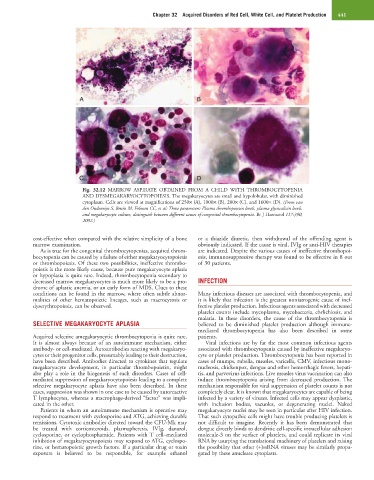
                            Fig.  32.12  MARROW  ASPIRATE  OBTAINED  FROM  A  CHILD  WITH  THROMBOCYTOPENIA
                            AND DYSMEGAKARYOCYTOPOIESIS. The megakaryocytes are small and hypolobular, with diminished
                            cytoplasm. Cells are viewed at magnifications of 250× (A), 1000× (B), 200× (C), and 1600× (D). (From van
                            den Oudenrijn S, Bruin M, Folman CC, et al: Three parameters: Plasma thrombopoietin levels, plasma glycocalicin levels,
                            and megakaryocyte culture, distinguish between different causes of congenital thrombocytopenia. Br J Haematol 117:390,
                            2002.)


            cost-effective when compared with the relative simplicity of a bone   or  a  thiazide  diuretic,  then  withdrawal  of  the  offending  agent  is
            marrow examination.                                   obviously indicated. If the cause is viral, IVIg or anti-HIV therapies
              As is true for the congenital thrombocytopenias, acquired throm-  are indicated. Despite the various causes of ineffective thrombopoi-
            bocytopenia can be caused by a failure of either megakaryocytopoiesis   esis, immunosuppressive therapy was found to be effective in 8 out
            or thrombopoiesis. Of these two possibilities, ineffective thrombo-  of 30 patients.
            poiesis is the more likely cause, because pure megakaryocyte aplasia
            or hypoplasia is quite rare. Indeed, thrombocytopenia secondary to
            decreased marrow megakaryocytes is much more likely to be a pro-  INFECTION
            drome of aplastic anemia, or an early form of MDS. Clues to these
            conditions can be found in the marrow, where often subtle abnor-  Many infectious diseases are associated with thrombocytopenia, and
            malities  of  other  hematopoietic  lineages,  such  as  macrocytosis  or   it is likely that infection is the greatest noniatrogenic cause of inef-
            dyserythropoiesis, can be observed.                   fective platelet production. Infectious agents associated with decreased
                                                                  platelet counts include mycoplasma, mycobacteria, ehrlichiosis, and
                                                                  malaria.  In  these  disorders,  the  cause  of  the  thrombocytopenia  is
            SELECTIVE MEGAKARYOCYTE APLASIA                       believed  to  be  diminished  platelet  production  although  immune-
                                                                  mediated  thrombocytopenia  has  also  been  described  in  some
            Acquired selective amegakaryocytic thrombocytopenia is quite rare.   patients.
            It  is  almost  always  because  of  an  autoimmune  mechanism,  either   Viral  infections  are  by  far  the  most  common  infectious  agents
            antibody- or cell-mediated. Autoantibodies reacting with megakaryo-  associated with thrombocytopenia caused by ineffective megakaryo-
            cytes or their progenitor cells, presumably leading to their destruction,   cyte or platelet production. Thrombocytopenia has been reported in
            have been described. Antibodies directed to cytokines that regulate   cases of mumps, rubella, measles, varicella, CMV, infectious mono-
            megakaryocyte  development,  in  particular  thrombopoietin,  might   nucleosis, chickenpox, dengue and other hemorrhagic fevers, hepati-
            also  play  a  role  in  the  biogenesis  of  such  disorders.  Cases  of  cell-  tis, and parvovirus infections. Live measles virus vaccination can also
            mediated suppression of megakaryocytopoiesis leading to a complete   induce  thrombocytopenia  arising  from  decreased  production. The
            selective  megakaryocyte  aplasia  have  also  been  described.  In  these   mechanism responsible for viral suppression of platelet counts is not
            cases, suppression was shown in one case to be caused by autoreactive   completely clear. It is known that megakaryocytes are capable of being
            T  lymphocytes,  whereas  a  macrophage-derived  “factor”  was  impli-  infected by a variety of viruses. Infected cells may appear dysplastic,
            cated in the other.                                   with  inclusion  bodies,  vacuoles,  or  degenerating  nuclei.  Naked
              Patients in whom an autoimmune mechanism is operative may   megakaryocyte nuclei may be seen in particular after HIV infection.
            respond to treatment with cyclosporine and ATG, achieving durable   That such cytopathic cells might have trouble producing platelets is
            remissions. Cytotoxic antibodies directed toward the CFU-Mk may   not  difficult  to  imagine.  Recently  it  has  been  demonstrated  that
            be  treated  with  corticosteroids,  plasmapheresis,  IVIg,  danazol,   dengue directly binds to dendritic cell-specific intracellular adhesion
            cyclosporine,  or  cyclophosphamide.  Patients  with T  cell–mediated   molecule-3 on the surface of platelets, and could replicate its viral
            inhibition of megakaryocytopoiesis may respond to ATG, cyclospo-  RNA by usurping the translational machinery of platelets and raising
            rine, or hematopoietic growth factors. If a particular drug or toxin   the possibility that other (+)ssRNA viruses may be similarly propa-
            exposure  is  believed  to  be  responsible,  for  example  ethanol   gated by these anucleate cytoplasts.

