


Page 59 - Hematology_ Basic Principles and Practice ( PDFDrive )
P. 59
Chapter 3  Genomic Approaches to Hematology  31


                                           1                      the relative contribution of individual genetic subclones to the entire
                                    Y
                                                                  tumor, these approaches usually have limited resolution and are not
                              X
                         22
                                                                  able to detect very small subclones that comprise few tumor cells.
                       21
                                                     2            Several novel technologies have been developed that allow DNA and
                    20
                                                                  RNA sequencing of single tumor cells as well as of single cells from
                  19
                                                                  the tumor microenvironment. Advances in microfluidic approaches
                18
                                                                  make it possible to generate RNA sequencing data from thousands
                                                           3      of cells simultaneously, and several different technological concepts
              17
                                                                  have emerged for highly parallel sample preparation. For example,
                                                                  the entire sample processing workflow, from isolating single cells to
             16
                                                                  generating sequencing libraries, can be generated in multiwell plates
                                                                  in order to perform multiple reactions at the same time. This can be
            15                                               4    done with typical multiwell plates, or the entire experimental work-
                                                                  flow can take place in a fully integrated microfluidic “lab on a chip.”
             14                                                   Another approach uses microdroplet technology. To this end, a single
                                                                  cell is packaged into an emulsion droplet, and thousands of droplets
                                                            5     are generated. Although the single cells are segregated into individual
              13                                                  droplets,  a  molecular  barcoding  step  takes  place  with  which  every
                                                                  RNA molecule in each cell is labeled with a unique molecular tag.
                                                                  After this step, the droplets are dissolved and RNA sequencing prepa-
                  12                                    6         ration is performed in a single tube. The barcodes can later be used
                                                                  to precisely assign each RNA molecule to the correct cell, making it
                       11                         7               possible to determine the gene expression profile of each single cell.
                                                                    These technologies currently enable sequencing of thousands of
                             10     9      8                      single cells simultaneously, but that number will undoubtedly increase
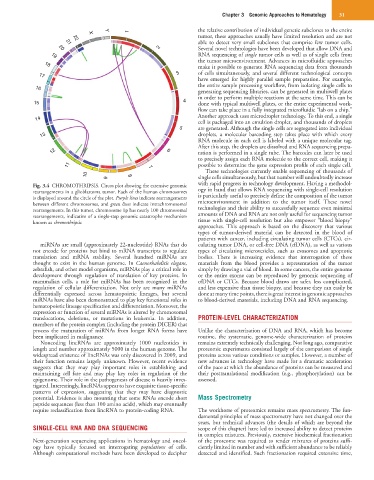
            Fig. 3.4  CHROMOTHRIPSIS. Circos plot showing the extensive genomic   with rapid progress in technology development. Having a methodol-
            rearrangements in a glioblastoma tumor. Each of the human chromosomes   ogy in hand that allows RNA sequencing with single-cell resolution
            is displayed around the circle of the plot. Purple lines indicate rearrangements   is particularly useful to precisely define the composition of the tumor
            between different chromosomes, and green lines indicate intrachromosomal   microenvironment  in  addition  to  the  tumor  itself.  These  novel
            rearrangements. In this tumor, chromosome 1p has nearly 100 chromosomal   technologies and their ability to successfully sequence even minimal
            rearrangements, indicative of a single-step genomic catastrophe mechanism   amounts of DNA and RNA are not only useful for sequencing tumor
            known as chromothripsis.                              tissue with single-cell resolution but also empower “blood biopsy”
                                                                  approaches. This  approach  is  based  on  the  discovery  that  various
                                                                  types  of  tumor-derived  material  can  be  detected  in  the  blood  of
                                                                  patients with cancer, including circulating tumor cells (CTCs), cir-
              miRNAs are small (approximately 22-nucleotide) RNAs that do   culating tumor DNA, or cell-free DNA (cfDNA), as well as various
            not encode for proteins but bind to mRNA transcripts to regulate   types  of  circulating  microvesicles,  such  as  exosomes  and  apoptotic
            translation  and  mRNA  stability.  Several  hundred  miRNAs  are   bodies.  There  is  increasing  evidence  that  interrogation  of  these
            thought  to  exist  in  the  human  genome.  In  Caenorhabditis  elegans,   materials  from  the  blood  provides  a  representation  of  the  tumor
            zebrafish, and other model organisms, miRNAs play a critical role in   simply by drawing a vial of blood. In some cancers, the entire genome
            development  through  regulation  of  translation  of  key  proteins.  In   or the entire exome can be reproduced by genomic sequencing of
            mammalian  cells,  a  role  for  miRNAs  has  been  recognized  in  the     cfDNA or CTCs. Because blood draws are safer, less complicated,
            regulation  of  cellular  differentiation.  Not  only  are  many  miRNAs     and less expensive than tissue biopsy, and because they can easily be
            differentially  expressed  across  hematopoietic  lineages,  but  several   done at many time points, there is great interest in genomic approaches
            miRNAs have also been demonstrated to play key functional roles in   to blood-derived materials, including DNA and RNA sequencing.
            hematopoietic lineage specification and differentiation. Moreover, the
            expression or function of several miRNAs is altered by chromosomal
            translocations,  deletions,  or  mutations  in  leukemia.  In  addition,   PROTEIN-LEVEL CHARACTERIZATION
            members of the protein complex (including the protein DICER) that
            process  the  maturation  of  miRNAs  from  longer  RNA  forms  have   Unlike the characterization of DNA and RNA, which has become
            been implicated in malignancy.                        routine,  the  systematic,  genome-wide  characterization  of  proteins
              Noncoding  lincRNAs  are  approximately  1000  nucleotides  in   remains extremely technically challenging. Not long ago, comparative
            length and number approximately 5000 in the human genome. The   proteomic experiments consisted largely of the comparison of single
            widespread existence of lincRNAs was only discovered in 2009, and   proteins across various conditions or samples. However, a number of
            their function remains largely unknown. However, recent evidence   new advances in technology have made for a dramatic acceleration
            suggests  that  they  may  play  important  roles  in  establishing  and   of the pace at which the abundance of proteins can be measured and
            maintaining  cell  fate  and  may  play  key  roles  in  regulation  of  the   their  posttranslational  modification  (e.g.,  phosphorylation)  can  be
            epigenome. Their role in the pathogenesis of disease is heavily inves-  assessed.
            tigated. Interestingly, lincRNAs appear to have exquisite tissue-specific
            patterns  of  expression,  suggesting  that  they  may  have  diagnostic
            potential. Evidence is also mounting that some RNAs encode short   Mass Spectrometry
            peptide sequences (less than 100 amino acids), which may eventually
            require reclassification from lincRNA to protein-coding RNA.  The workhorse of proteomics remains mass spectrometry. The fun-
                                                                  damental principles of mass spectrometry have not changed over the
                                                                  years, but technical advances (the details of which are beyond the
            SINGLE-CELL RNA AND DNA SEQUENCING                    scope of this chapter) have led to increased ability to detect proteins
                                                                  in complex mixtures. Previously, extensive biochemical fractionation
            Next-generation sequencing applications in hematology and oncol-  of the proteome was required to render mixtures of proteins suffi-
            ogy  have  typically  focused  on  interrogating  populations  of  cells.   ciently limited in number and with sufficient abundance to be reliably
            Although computational methods have been developed to decipher   detected and identified. Such fractionation required extensive time,

