


Page 597 - Hematology_ Basic Principles and Practice ( PDFDrive )
P. 597
512    Part V  Red Blood Cells


                       A                   B                     C                   D
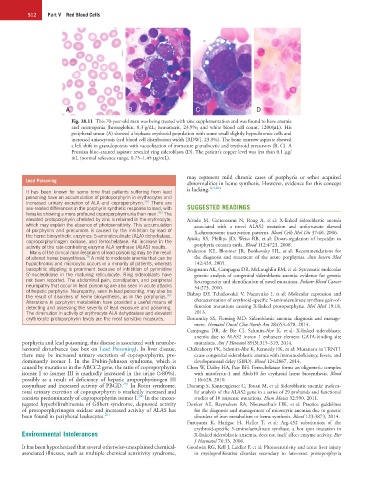
                        Fig. 38.11  This 70-year-old man was being treated with zinc supplementation and was found to have anemia
                        and  neutropenia  (hemoglobin,  8.3 g/dL;  hematocrit,  23.9%;  and  white  blood  cell  count,  1200/µL).  His
                        peripheral smear (A) showed a biphasic erythroid population with some small slightly hypochromic cells and
                        increased anisocytosis (red blood cell distribution width [RDW], 23.9%). The bone marrow aspirate showed
                        a left shift in granulopoiesis with vacuolization of immature granulocytic and erythroid precursors (B, C). A
                        Prussian blue–stained aspirate revealed ring sideroblasts (D). The patient’s copper level was less than 0.1 µg/
                        mL (normal reference range, 0.75–1.45 µg/mL).


                                                              may  represent  mild  chronic  cases  of  porphyria  or  other  acquired
         Lead Poisoning
                                                              abnormalities in heme synthesis. However, evidence for this concept
          It  has  been  known  for  some  time  that  patients  suffering  from  lead   is lacking. 263,264
          poisoning have an accumulation of protoporphyrin in erythrocytes and
          increased urinary excretion of ALA and coproporphyrin. 262  There are
          sex-related differences in the porphyrin synthetic response to lead, with   SUGGESTED READINGS
          females showing a more profound coproporphyrinuria than men. 263  The
          elevated protoporphyrin chelated by zinc is retained in the erythrocyte,   Aivado  M,  Gattermann  N,  Rong  A,  et al:  X-linked  sideroblastic  anemia
          which may explain the absence of photosensitivity. This accumulation   associated  with  a  novel  ALAS2  mutation  and  unfortunate  skewed
          of  porphyrins  and  precursors  is  caused  by  the  inhibition  by  lead  of   X-chromosome inactivation patterns. Blood Cells Mol Dis 37:40, 2006.
          the heme biosynthetic enzymes: 5-aminolevulinate (ALA) dehydratase,
          coproporphyrinogen  oxidase,  and  ferrochelatase.  An  increase  in  the   Ajioka  RS,  Phillips  JD,  Weiss  RB,  et al:  Down-regulation  of  hepcidin  in
          activity of the rate-controlling enzyme ALA synthase (ALAS) results.  porphyria cutanea tarda. Blood 112:4723, 2008.
           Many of the clinical manifestations of lead poisoning may be the result   Anderson  KE,  Bloomer  JR,  Bonkovsky  HL,  et al:  Recommendations  for
                             79
          of altered heme biosynthesis.  A mild to moderate anemia that can be   the  diagnosis  and  treatment  of  the  acute  porphyrias.  Ann  Intern  Med
          hypochromic and microcytic occurs in a minority of patients, whereas   142:439, 2005.
          basophilic  stippling  is  prominent  because  of  inhibition  of  pyrimidine   Bergmann AK, Campagna DR, McLoughlin EM, et al: Systematic molecular
          5′-nucleotidase  in  the  maturing  reticulocyte.  Ring  sideroblasts  have   genetic analysis of congenital sideroblastic anemia: evidence for genetic
          not been reported. The abdominal pain, constipation, and peripheral   heterogeneity and identification of novel mutations. Pediatr Blood Cancer
          neuropathy that occur in lead poisoning are also seen in acute attacks   54:273, 2010.
          of hepatic porphyria. Neuropathy, seen in lead poisoning, may also be
          the result of disorders of heme biosynthesis, as in the porphyrias.    Bishop  DF, Tchaikovskii  V,  Nazarenko  I,  et al:  Molecular  expression  and
                                                        262
          Alterations in porphyrin metabolism have provided a useful means of   characterization of erythroid-specific 5-aminolevulinate synthase gain-of-
          detecting and assessing the severity of lead exposure and poisoning.   function  mutations  causing  X-linked  protoporphyria.  Mol  Med  19:18,
          The diminution in activity of erythrocyte ALA dehydratase and elevated   2013.
          erythrocyte protoporphyrin levels are the most sensitive measures.  Bottomley SS, Fleming MD: Sideroblastic anemia: diagnosis and manage-
                                                                 ment. Hematol Oncol Clin North Am 28:653–670, 2014.
                                                              Campagna  DR,  de  Bie  CI,  Schmitz-Abe  K,  et al:  X-linked  sideroblastic
                                                                 anemia  due  to  ALAS2  intron  1  enhancer  element  GATA-binding  site
        porphyria and lead poisoning, this disease is associated with neurobe-  mutations. Am J Hematol 89(3):315–319, 2014.
        havioral disturbance (see box on Lead Poisoning). In liver disease,   Chakraborty PK, Schmitz-Abe K, Kennedy EK, et al: Mutations in TRNT1
        there  may  be  increased  urinary  excretion  of  coproporphyrin,  pre-  cause congenital sideroblastic anemia with immunodeficiency, fevers, and
        dominantly  isomer  I.  In  the  Dubin-Johnson  syndrome,  which  is   developmental delay (SIFD). Blood 124:2867, 2014.
        caused by mutations in the ABCC2 gene, the ratio of coproporphyrin   Chen W, Dailey HA, Paw BH: Ferrochelatase forms an oligomeric complex
        isomer I to isomer III is markedly increased in the urine (>80%),   with  mitoferrin-1  and  Abcb10  for  erythroid  heme  biosynthesis.  Blood
        possibly  as  a  result  of  deficiency  of  hepatic  uroporphyrinogen  III   116:628, 2010.
                                         259
        cosynthase and increased activity of PBGD.  In Rotor syndrome,   Ducamp S, Kannengiesser C, Touati M, et al: Sideroblastic anemia: molecu-
        total urinary excretion of coproporphyrin is markedly increased and   lar analysis of the ALAS2 gene in a series of 29 probands and functional
                                              260
        consists predominantly of coproporphyrin isomer I.  In the uncon-  studies of 10 missense mutations. Hum Mutat 32:590, 2011.
        jugated hyperbilirubinemia of Gilbert syndrome, depressed activity   Donker  AE,  Raymakers  RA,  Nieuwenhuis  HK,  et al:  Practice  guidelines
        of protoporphyrinogen oxidase and increased activity of ALAS has   for the diagnosis and management of microcytic anemias due to genetic
        been found in peripheral leukocytes. 261                 disorders of iron metabolism or heme synthesis. Blood 123:3873, 2014.
                                                              Furuyama  K,  Harigae  H,  Heller  T,  et al:  Arg-452  substitution  of  the
                                                                 erythroid-specific  5-aminolaevulinate  synthase,  a  hot  spot  mutation  in
        Environmental Intolerances                               X-linked sideroblastic anaemia, does not itself affect enzyme activity. Eur
                                                                 J Haematol 76:33, 2006.
        It has been hypothesized that several otherwise-unexplained chemical-  Goodwin RG, Kell J, Laidler P, et al: Photosensitivity and acute liver injury
        associated illnesses, such as multiple chemical sensitivity syndrome,   in  myeloproliferative  disorder  secondary  to  late-onset  protoporphyria

