


Page 593 - Hematology_ Basic Principles and Practice ( PDFDrive )
P. 593
508    Part V  Red Blood Cells


                                                              rapid, with subnormal retention of the iron isotope in erythrocytes
         1                                                    after 10 to 14 days. Other features of ineffective erythropoiesis may
                                                              be  variably  present:  a  mild  increase  in  bilirubin  concentration,
                                                              decrease in haptoglobin levels, mild increase in lactate dehydrogenase
                                                              levels,  and  normal  or  slight  increase  in  reticulocyte  numbers. The
         2                                                    magnitude  of  iron  overload  correlates  poorly  with  the  degree  of
                                                              anemia in patients who are not transfused. The degree of ineffective
                                                              erythropoiesis is a better predictor of the amount of iron overload.
                                                              When ferrokinetics are unavailable, the extent of erythroid hyperpla-
                                                              sia relative to normal acts as a rough measure of the magnitude of
         3                                                    ineffective erythropoiesis. Several studies have shown that the relative
                                                              increase in erythroid activity multiplied by the patient’s age shows a
                                                              good  correlation  with  the  degree  of  iron  overload  as  measured  by
                                                              plasma ferritin. 172,173  The iron overload does not result from muta-
                                                                               174
                                                              tions in the HFE gene  (see box on Therapy for Hereditary Sidero-
         4                       ?   ?   ?   ?   ?  ?         blastic Anemia).
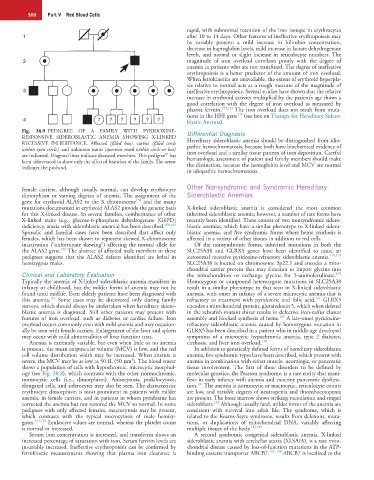
        Fig.  38.9  PEDIGREE  OF  A  FAMILY  WITH  PYRIDOXINE-  Differential Diagnosis
        RESPONSIVE  SIDEROBLASTIC  ANEMIA  SHOWING  X-LINKED   Hereditary sideroblastic anemia should be distinguished from idio-
        RECESSIVE  INHERITANCE.  Affected  (filled  box),  carrier  (filled  circle   pathic hemochromatosis, because both have biochemical evidence of
        within open circle), and unknown status (question mark within circle or box)   iron overload and a similar tissue pattern of iron deposition. Careful
                                                       47
        are indicated. Diagonal lines indicate deceased members. This pedigree  has   hematologic assessment of patient and family members should make
        been abbreviated to show only the affected branches of the family. The arrow   the distinction, because the hemoglobin level and MCV are normal
        indicates the proband.
                                                              in idiopathic hemochromatosis.
                                                              Other Nonsyndromic and Syndromic Hereditary
        female  carriers,  although  usually  normal,  can  develop  erythrocyte
        dimorphism  or  varying  degrees  of  anemia. The  assignment  of  the   Sideroblastic Anemias
                                              158
        gene for erythroid ALAS2 to the X chromosome  and the many
        mutations documented in erythroid ALAS2 provide the genetic basis   X-linked  sideroblastic  anemia  is  considered  the  most  common
        for this X-linked disease. In several families, coinheritance of other   inherited sideroblastic anemia; however, a number of rare forms have
        X-linked  traits  (e.g.,  glucose-6-phosphate  dehydrogenase  [G6PD]   recently been identified. These consist of two nonsyndromic sidero-
        deficiency, ataxia with sideroblastic anemia) has been described. 168,169    blastic anemias, which have a similar phenotype to X-linked sidero-
        Sporadic  and  familial  cases  have  been  described  that  affect  only   blastic  anemia,  and  five  syndromic  forms  where  heme  synthesis  is
        females, which has been shown to represent skewed X-chromosome   affected in a variety of other tissues in addition to red cells.
        inactivation (“unfortunate skewing”) affecting the normal allele for   Of  the  nonsyndromic  forms,  inherited  mutations  in  both  the
                     170
        the ALAS2 gene.  The absence of affected male members in these   SLC25A38  and  GLRX5  genes  have  been  identified  to  cause  an
        pedigrees  suggests  that  the  ALAS2  defects  identified  are  lethal  in   autosomal recessive pyridoxine-refractory sideroblastic anemia. 178,179
        hemizygous males.                                     SLC25A38 is located on chromosome 3p22.1 and encodes a mito-
                                                              chondrial carrier protein that may function to import glycine into
        Clinical and Laboratory Evaluation                    the  mitochondrion  or  exchange  glycine  for  5-aminolevulinate.
                                                                                                               179
        Typically the anemia of X-linked sideroblastic anemia manifests in   Homozygous  or  compound  heterozygote  mutations  in  SLC25A38
        infancy or childhood, but the milder forms of anemia may not be   result in a similar phenotype to that seen in X-linked sideroblastic
        found until midlife. Even elderly patients have been diagnosed with   anemia, with onset in infancy of a severe microcytic anemia that is
                 171
                                                                                                        161
        this  anemia.   Some  cases  may  be  discovered  only  during  family   refractory  to  treatment  with  pyridoxine  and  folic  acid.   GLRX5
        surveys, which should always be undertaken when hereditary sidero-  encodes a mitochondrial protein, glutaredoxin 5, which when deleted
        blastic  anemia  is  diagnosed.  Still  other  patients  may  present  with   in the zebrafish mutant shiraz results in defective iron-sulfur cluster
                                                                                            180
        features  of  iron  overload,  such  as  diabetes  or  cardiac  failure.  Iron   assembly and blocked synthesis of heme.  A late-onset pyridoxine-
        overload occurs commonly even with mild anemia and may occasion-  refractory sideroblastic anemia caused by homozygous mutation in
        ally be seen with female carriers. Enlargement of the liver and spleen   GLRX5 has been described in a patient who in middle age developed
        may occur with mild abnormalities of liver function tests.  symptoms  of  a  microcytic  hypochromic  anemia,  type  2  diabetes,
           Anemia is extremely variable, but even when little or no anemia   cirrhosis, and liver iron overload. 178
        is present, the mean corpuscular volume (MCV) is low, and the red   In addition to genetically defined forms of hereditary sideroblastic
        cell volume distribution width may be increased. When anemia is   anemia, five syndromic types have been described, which present with
                                            3
        severe, the MCV may be as low as 50 fL (50 µm ). The blood smear   anemia in combination with either muscle, neurologic, or pancreatic
        shows a population of cells with hypochromic, microcytic morphol-  tissue  involvement.  The  first  of  these  disorders  to  be  defined  by
        ogy (see Fig. 38.8), which contrasts with the other normochromic,   molecular genetics, the Pearson syndrome, is a rare entity that mani-
        normocytic  cells  (i.e.,  dimorphism).  Anisocytosis,  poikilocytosis,   fests in early infancy with anemia and exocrine pancreatic dysfunc-
                                                                  181
        elongated cells, and siderocytes may also be seen. The characteristic   tion.  The anemia is normocytic or macrocytic, reticulocyte counts
        erythrocyte dimorphism is most prominent in patients with milder   are low, and variable degrees of neutropenia and thrombocytopenia
        anemia, in female carriers, and in patients in whom pyridoxine has   are present. The bone marrow shows striking vacuolation and ringed
                                                                       182
        corrected the anemia but not restored the MCV to normal. In some   sideroblasts.  Although usually fatal, milder forms of the anemia are
        pedigrees with only affected females, macrocytosis may be present,   consistent  with  survival  into  adult  life.  The  syndrome,  which  is
        which  contrasts  with  the  typical  microcytosis  of  male  hemizy-  related to the Kearns-Sayre syndrome, results from deletions, muta-
        gotes. 141,170  Leukocyte values are normal, whereas the platelet count   tions,  or  duplications  of  mitochondrial  DNA,  variably  affecting
        is normal or increased.                               multiple tissues of the body. 183,184
           Serum iron concentration is increased, and transferrin shows an   A  second  syndromic  congenital  sideroblastic  anemia,  X-linked
        increased percentage of saturation with iron. Serum ferritin levels are   sideroblastic anemia with cerebellar ataxia (XLSA/A), is a rare mito-
        invariably increased. Ineffective erythropoiesis can be confirmed by   chondrial disease caused by loss-of-function mutations in the ATP-
        ferrokinetic  measurements  showing  that  plasma  iron  clearance  is   binding cassette transporter ABCB7. 185–188  ABCB7 is localized to the

