


Page 685 - Hematology_ Basic Principles and Practice ( PDFDrive )
P. 685
Chapter 41  Pathobiology of Sickle Cell Disease  577


                                Anti–               Hemoglobin
                                band 3              precipitate
                                                       Bivalently
                                                          bound          30 µm
                                                         anti–
                                                         band 3
                                                     Band 3
                                                     cluster
                                   Band 3
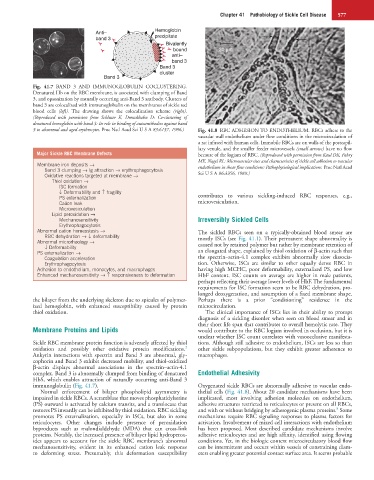
            Fig.  41.7  BAND  3  AND  IMMUNOGLOBULIN  COCLUSTERING.
            Denatured Hb on the RBC membrane, is associated with clumping of Band
            3, and opsonization by naturally occurring anti-Band 3 antibody. Clusters of
            band 3 are colocalized with immunoglobulin on the membranes of sickle red
            blood  cells  (left).  The  drawing  shows  the  colocalization  scheme  (right).
            (Reproduced  with  permission  from  Schluter  K,  Drenckhahn  D:  Co-clustering  of
            denatured hemoglobin with band 3: Its role in binding of autoantibodies against band
            3 to abnormal and aged erythrocytes. Proc Natl Acad Sci U S A 83:6137, 1986.)  Fig. 41.8  RBC ADHESION TO ENDOTHELIUM. RBCs adhere to the
                                                                  vascular wall endothelium under flow conditions in the microcirculation of
                                                                  a rat infused with human cells. Immobile RBCs are on walls of the postcapil-
                                                                  lary venule, and the smaller feeder microvessels (small arrows) have no flow
             Major Sickle RBC Membrane Defects                    because of the logjam of RBC. (Reproduced with permission from Kaul DK, Fabry
                                                                  ME, Nagel RL: Microvascular sites and characteristics of sickle cell adhesion to vascular
             Membrane iron deposits →                             endothelium in shear flow conditions: Pathophysiological implications. Proc Natl Acad
                Band 3 clumping → Ig attraction → erythrophagocytosis
                Oxidative reactions targeted at membrane →        Sci U S A 86:3356, 1989.)
                  Thiol oxidation →
                    ISC formation
                    ↓ Deformability and ↑ fragility
                    PS externalization                            contributes  to  various  sickling-induced  RBC  responses,  e.g.,
                    Cation leak                                   microvesiculation.
                    Microvesiculation
                  Lipid peroxidation →
                    Mechanosensitivity                            Irreversibly Sickled Cells
                    Erythrophagocytosis
             Abnormal cation homeostasis →                        The  sickled  RBCs  seen  on  a  typically-obtained  blood  smear  are
                RBC dehydration → ↓ deformability                 mostly ISCs (see Fig. 41.1). Their permanent shape abnormality is
             Abnormal microrheology →                             caused not by retained polymer but rather by membrane retention of
                ↓ Deformability
             PS externalization →                                 an elongated shape, explained by thiol oxidation of β-actin such that
                Coagulation acceleration                          the  spectrin–actin-4.1  complex  exhibits  abnormally  slow  dissocia-
                Erythrophagocytosis                               tion.  Otherwise,  ISCs  are  similar  to  other  equally  dense  RBC  in
             Adhesion to endothelium, monocytes, and macrophages  having high MCHC, poor deformability, externalized PS, and low
             Enhanced mechanosensitivity → ↑ responsiveness to deformation  HbF  content.  ISC  counts  on  average  are  higher  in  male  patients,
                                                                  perhaps reflecting their average lower levels of HbF. The fundamental
                                                                  requirements for ISC formation seem to be RBC dehydration, pro-
                                                                  longed deoxygenation, and assumption of a fixed membrane shape.
            the bilayer from the underlying skeleton due to spicules of polymer-  Perhaps  there  is  a  prior  “conditioning”  residence  in  the
            ized  hemoglobin,  with  enhanced  susceptibility  caused  by  protein   microcirculation.
            thiol oxidation.                                        The clinical importance of ISCs lies in their ability to prompt
                                                                  diagnosis of a sickling disorder when seen on blood smear and in
                                                                  their short life span that contributes to overall hemolytic rate. They
            Membrane Proteins and Lipids                          would contribute to the RBC logjam involved in occlusion, but it is
                                                                  unclear whether ISC count correlates with vasoocclusive manifesta-
            Sickle RBC membrane protein function is adversely affected by thiol   tions. Although still adhesive to endothelium, ISCs are less so than
                                                              2
            oxidation  and  possibly  other  oxidative  protein  modifications.    other  sickle  subpopulations,  but  they  exhibit  greater  adherence  to
            Ankyrin interactions with spectrin and Band 3 are abnormal, gly-  macrophages.
            cophorin and Band 3 exhibit decreased mobility, and thiol-oxidized
            β-actin  displays  abnormal  associations  in  the  spectrin–actin-4.1
            complex. Band 3 is abnormally clumped from binding of denatured   Endothelial Adhesivity
            HbS,  which  enables  attraction  of  naturally  occurring  anti-Band  3
            immunoglobulin (Fig. 41.7).                           Oxygenated sickle RBCs are abnormally adhesive to vascular endo-
              Normal  enforcement  of  bilayer  phospholipid  asymmetry  is   thelial cells (Fig. 41.8). About 20 candidate mechanisms have been
            impaired in sickle RBCs. A scramblase that moves phosphatidylserine   implicated,  most  involving  adhesion  molecules  on  endothelium,
            (PS) outward is activated by calcium transits, and a translocase that   adhesive structures restricted to reticulocytes or present on all RBCs,
                                                                                                               8
            restores PS inwardly can be inhibited by thiol oxidation. RBC sickling   and with or without bridging by adhesogenic plasma proteins.  Some
            promotes  PS  externalization,  especially  in  ISCs,  but  also  in  some   mechanisms require RBC signaling responses to plasma factors for
            reticulocytes.  Other  changes  include  presence  of  peroxidation   activation. Involvement of mixed cell interactions with endothelium
            byproducts  such  as  malondialdehyde  (MDA)  that  can  cross-link   has  been  proposed.  Most  described  candidate  mechanisms  involve
            proteins. Notably, the increased presence of bilayer lipid hydroperox-  adhesive reticulocytes and are high affinity, identified using flowing
            ides  appears  to  account  for  the  sickle  RBC  membrane’s  abnormal   conditions. Yet, in the biologic context microcirculatory blood flow
            mechanosensitivity,  evident  in  its  enhanced  cation  leak  response     can be intermittent and occurs within vessels of constraining diam-
            to  deforming  stress.  Presumably,  this  deformation  susceptibility   eters enabling greater potential contact surface area. It seems probable

