


Page 688 - Hematology_ Basic Principles and Practice ( PDFDrive )
P. 688
580    Part V  Red Blood Cells


                              HbS       RBC                   responses. As one example, the growth factor angiopoietin-2, released
                             polymer   sickling               from  Weibel-Palade  bodies,  sensitizes  the  endothelial  cell  toward
           ↓pO 2
           ↑[HbS]  deoxyHbS                    Vascular       TNF-α and consequent adhesion molecule expression. It is not pos-
                    +            Hemolysis      Stasis        sible  to  identify  proportionate  contributions  of  the  many  specific
                                                              inflammatory inputs, but ligand-triggered TLR4 signaling is emerg-
                                                              ing as an important contributor. 17
         ↑ RBC & WBC adhesion  Free heme &                       In summation, sickle cell anemia is a chronic, systemic inflamma-
                                                                      19
            to endothelium    hemoglobin                      tory state.  Characteristic features include: leukocytosis; activation
                                                   Vascular   of  granulocytes,  monocytes,  lymphocyte  subsets,  and  mast  cells;
                                                   Occlusion  elevated  levels  of  proximate  inflammatory  mediators,  acute-phase
                                                              reactants, and distal effectors; abundance of soluble adhesion mol-
                    Systemic                                  ecules;  activation  of  coagulation;  presence  of  microparticles  from
                    Endothelial     Systemic                  multiple  activated  cell  types;  and  generation  of  excess  oxidant  via
                   Dysfunction     Inflammation   Ischemia    multiple mechanisms. Importantly, this systemic inflammatory state
                                                 reperfusion  is perpetual, with footprints of active inflammation apparent even
                                                              between  acute  clinical  events.  Clinically,  leukocytosis  in  sickle  cell
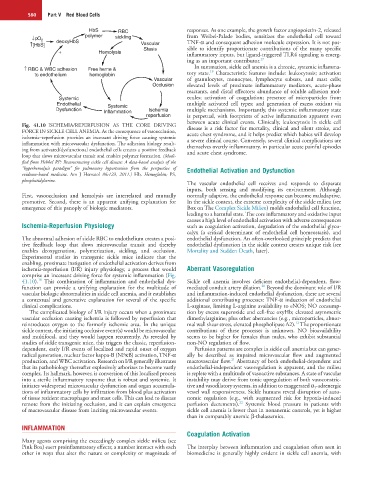
        Fig.  41.10  ISCHEMIA/REPERFUSION  AS  THE  CORE  DRIVING   disease is a risk factor for mortality, clinical and silent stroke, and
        FORCE IN SICKLE CELL ANEMIA. As the consequence of vasoocclusion,   acute chest syndrome, and it helps predict which babies will develop
        ischemia–reperfusion  provides  an  incessant  driving  force  causing  systemic   a severe clinical course. Conversely, several clinical complications are
        inflammation with microvascular dysfunction. The adhesion biology result-  themselves overtly inflammatory, in particular acute painful episodes
        ing from activated/dysfunctional endothelial cells creates a positive feedback   and acute chest syndrome.
        loop that slows microvascular transit and enables polymer formation. (Modi-
        fied from Hebbel RP: Reconstructing sickle cell disease: A data-based analysis of the
        “hyperhemolysis  paradigm”  for  pulmonary  hypertension  from  the  perspective  of   Endothelial Activation and Dysfunction
        evidence-based  medicine.  Am  J  Hematol  86:123,  2011.)  Hb,  Hemoglobin;  PS,
        phosphatidylserine.
                                                              The  vascular  endothelial  cell  receives  and  responds  to  disparate
                                                              inputs,  both  sensing  and  modifying  its  environment.  Although
        First,  vasoocclusion  and  hemolysis  are  interrelated  and  mutually   normally adaptive, the endothelial response can become maladaptive.
        promotive.  Second,  there  is  an  apparent  unifying  explanation  for   In the sickle context, the extreme complexity of the sickle milieu (see
        emergence of this panoply of biologic mediators.      Box on The Complex Sickle Milieu) molds endothelial cell function,
                                                              leading to a harmful state. The core inflammatory and oxidative input
                                                              causes a high level of endothelial activation with adverse consequences
        Ischemia-Reperfusion Physiology                       such as coagulation activation, degradation of the endothelial glyco-
                                                              calyx  (a  critical  determinant  of  endothelial  cell  homeostasis),  and
        The abnormal adhesion of sickle RBC to endothelium creates a posi-  endothelial dysfunction. An often-overlooked principle predicts that
        tive  feedback  loop  that  slows  microvascular  transit  and  thereby   endothelial dysfunction in the sickle context creates unique risk (see
        enables  deoxygenation,  polymerization,  sickling,  and  occlusion.   Mortality and Sudden Death, later).
        Experimental  studies  in  transgenic  sickle  mice  indicate  that  the
        enabling, proximate instigation of endothelial activation derives from
        ischemia-reperfusion  (I/R)  injury  physiology,  a  process  that  would   Aberrant Vasoregulation
        comprise an incessant driving force for systemic inflammation (Fig.
              18
        41.10).  This  combination  of  inflammation  and  endothelial  dys-  Sickle  cell  anemia  involves  deficient  endothelial-dependent,  flow-
                                                                                       20
        function  can  provide  a  unifying  explanation  for  the  multitude  of   mediated conduit artery dilation.  Beyond the dominant role of I/R
        vascular biologic abnormalities in sickle cell anemia, and it establishes   and inflammation-induced endothelial dysfunction, there are several
        a  contextual  and  generative  explanation  for  several  of  the  specific   additional contributing processes: TNF-α induction of endothelial
        clinical complications.                               L-arginase, limiting L-arginine availability to eNOS; NO consump-
           The complicated biology of I/R injury occurs when a proximate   tion by excess superoxide and cell-free oxyHb; elevated asymmetric
        vascular occlusion causing ischemia is followed by reperfusion that   dimethylarginine; plus other aberrancies (e.g., microparticles, abnor-
                                                                                                  12
        reintroduces  oxygen  to  the  formerly  ischemic  area.  In  the  unique   mal wall shear stress, elevated phospholipase A2).  The proportionate
        sickle context, the initiating occlusive event(s) would be microvascular   contributions  of  these  processes  is  unknown.  NO  bioavailability
        and multifocal, and they would happen recurrently. As revealed by   seems to be higher for females than males, who exhibit substantial
        studies of sickle transgenic mice, this triggers the classic, reperfusion-  non-NO regulation of flow.
        dependent, early I/R events of localized and rapid onset of oxygen   Perfusion patterns are complex in sickle cell anemia but can gener-
        radical generation, nuclear factor kappa-B (NFκB) activation, TNF-α   ally  be  described  as  impaired  microvascular  flow  and  augmented
                                                                             21
        production, and WBC activation. Research on I/R generally illustrates   macrovascular flow.  Aberrancy of both endothelial-dependent and
        that its pathobiology thereafter explosively arborizes to become vastly   endothelial-independent vasoregulation is apparent, and the milieu
        complex. Its hallmark, however, is conversion of this localized process   is replete with a multitude of vasoactive substances. A state of vascular
        into a sterile inflammatory response that is robust and systemic. It   instability may derive from tonic upregulation of both vasoconstric-
        initiates widespread microvascular dysfunction and organ accumula-  tive and vasodilatory systems, in addition to exaggerated α 1 -adrenergic
        tions of inflammatory cells by infiltration from blood plus activation   vessel wall responsiveness. Sickle humans reveal disruption of auto-
        of tissue resident macrophages and mast cells. This can lead to disease   nomic  regulation  (e.g.,  with  augmented  risk  for  hypoxia-induced
                                                                               22
        remote from the initiating occlusion, and it can explain emergence   perfusion  decrements).   Systemic  blood  pressure  in  patients  with
        of macrovascular disease from inciting microvascular events.  sickle cell anemia is lower than in nonanemic controls, yet is higher
                                                              than in comparably anemic β-thalassemics.
        INFLAMMATION
                                                              Coagulation Activation
        Many agents comprising the exceedingly complex sickle milieu (see
        Pink Box) exert proinflammatory effects; a number interact with each   The interplay between inflammation and coagulation often seen in
        other in ways that alter the nature or complexity or magnitude of   biomedicine is generally highly evident in sickle cell anemia, with

