


Page 762 - Hematology_ Basic Principles and Practice ( PDFDrive )
P. 762
Chapter 46  Autoimmune Hemolytic Anemia  649


                          A


                                             B                      C


                                               Light coat               Heavy coat
                                             (no complement)         (plus complement)

                                             Splenic removal          Hepatic removal
                                             (slow circulation)       (fast circulation)
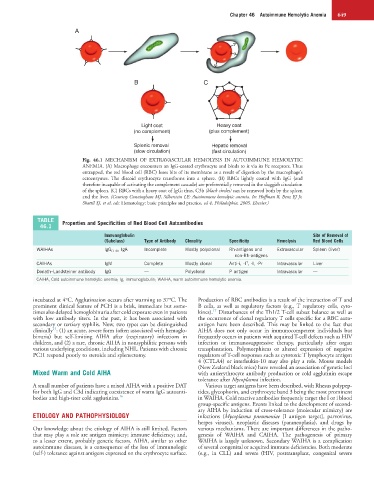
                            Fig.  46.1  MECHANISM  OF  EXTRAVASCULAR  HEMOLYSIS  IN  AUTOIMMUNE  HEMOLYTIC
                            ANEMIA. (A) Macrophage encounters an IgG-coated erythrocyte and binds to it via its Fc receptors. Thus
                            entrapped, the red blood cell (RBC) loses bits of its membrane as a result of digestion by the macrophage’s
                            ectoenzymes.  The  discoid  erythrocyte  transforms  into  a  sphere.  (B)  RBCs  lightly  coated  with  IgG  (and
                            therefore incapable of activating the complement cascade) are preferentially removed in the sluggish circulation
                            of the spleen. (C) RBCs with a heavy coat of IgG; thus, C3b (black circles) can be removed both by the spleen
                            and the liver. (Courtesy Cunningham MJ, Silberstein LE: Autoimmune hemolytic anemia. In: Hoffman R, Benz EJ Jr,
                            Shattil SJ, et al, eds: Hematology: basic principles and practice, ed 4, Philadelphia, 2005, Elsevier.)

             TABLE   Properties and Specificities of Red Blood Cell Autoantibodies
              46.1
                                   Immunoglobulin                                                      Site of Removal of
                                   (Subclass)   Type of Antibody  Clonality  Specificity    Hemolysis  Red Blood Cells
             WAIHAs                IgG (1–4) , IgA  Incomplete  Mostly polyclonal  Rh-antigens and   Extravascular  Spleen (liver)
                                                                              non-Rh-antigens
             CAIHAs                IgM          Complete      Mostly clonal  Anti-i, -I , -l, -Pr  Intravascular  Liver
                                                                                  T
             Donath–Landsteiner antibody  IgG   —             Polyclonal    P antigen       Intravascular  —
             CAIHA, Cold autoimmune hemolytic anemia; Ig, immunoglobulin; WAIHA, warm autoimmune hemolytic anemia.


            incubated at 4°C. Agglutination occurs after warming to 37°C. The   Production of RBC antibodies is a result of the interaction of T and
            prominent clinical feature of PCH is a brisk, immediate but some-  B cells, as well as regulatory factors (e.g., T regulatory cells, cyto-
                                                                       17
            times also delayed hemoglobinuria after cold exposure even in patients   kines).  Disturbances of the Th1/2 T-cell subset balance as well as
            with  low  antibody  titers.  In  the  past,  it  has  been  associated  with   the occurrence of clonal regulatory T cells specific for a RBC auto-
            secondary or tertiary syphilis. Now, two types can be distinguished   antigen  have  been  described. This  may  be  linked  to  the  fact  that
                  15
            clinically : (1) an acute, severe form (often associated with hemoglo-  AIHA  does  not  only  occur  in  immunocompetent  individuals  but
            binuria)  but  self-limiting  AIHA  after  (respiratory)  infections  in   frequently occurs in patients with acquired T-cell defects such as HIV
            children, and (2) a rare, chronic AIHA in nonsyphilitic persons with   infection  or  immunosuppressive  therapy,  particularly  after  organ
            various underlying conditions, including NHL. Patients with chronic   transplantation.  Polymorphisms  or  altered  expression  of  negative
            PCH respond poorly to steroids and splenectomy.       regulators of T-cell responses such as cytotoxic T lymphocyte antigen
                                                                  4 (CTLA4) or interleukin-10 may also play a role. Mouse models
                                                                  (New Zealand black mice) have revealed an association of genetic loci
            Mixed Warm and Cold AIHA                              with antierythrocyte antibody production or cold agglutinin escape
                                                                  tolerance after Mycoplasma infection.
            A small number of patients have a mixed AIHA with a positive DAT   Various target antigens have been described, with Rhesus polypep-
            for both IgG and C3d indicating coexistence of warm IgG autoanti-  tides, glycophorin, and erythrocyte band 3 being the most prominent
            bodies and high-titer cold agglutinins. 16            in WAIHA. Cold reactive antibodies frequently target the I or i blood
                                                                  group-specific antigens. Events linked to the development of second-
                                                                  ary AIHA by induction of cross-tolerance (molecular mimicry) are
            ETIOLOGY AND PATHOPHYSIOLOGY                          infections  (Mycoplasma  pneumoniae  [I  antigen  target],  parvovirus,
                                                                  herpes  viruses),  neoplastic  diseases  (paraneoplasia),  and  drugs  by
            Our knowledge about the etiology of AIHA is still limited. Factors   various mechanisms. There are important differences in the patho-
            that may play a role are antigen mimicry; immune deficiency; and,   genesis  of  WAIHA  and  CAIHA.  The  pathogenesis  of  primary
            to a lesser extent, probably genetic factors. AIHA, similar to other   WAIHA is largely unknown. Secondary WAIHA is a complication
            autoimmune diseases, is a consequence of the loss of immunologic   of several congenital or acquired immune deficiencies. Both moderate
            (self-) tolerance against antigens expressed on the erythrocyte surface.   (e.g.,  in  CLL)  and  severe  (HIV,  posttransplant,  congenital  severe

