


Page 770 - Hematology_ Basic Principles and Practice ( PDFDrive )
P. 770
Chapter 46  Autoimmune Hemolytic Anemia  657


                                         Prednisone: 1 to 1.5 mg/kg per day for 3 to 4 weeks
                                         (  preceeded by i.v methylprednisolone at 500 mg
                                            for 1 to 3 days in case of severe anemia)


                                        Failure                       Initial response


                                 Increase prednisone up to         Start tapering prednisone
                               2 mg/kg for 2 additional weeks         from week 3 to 4
                                      IVIg   danazol


                                                              Corticosteroid-   Stop prednisone
                                 Failure     Response         dependency ∗   within 3 to 6 months


                                Rituximab
                                                                      Early relapse  Long-term remission


                        Response       Primary failure or
                                      transient response


                      Taper and stop     Splenectomy
                       prednisone
                      over 2 months

                                    Response      Failure        Azathioprine  or  ∗∗∗
                                                             mycophenolate mofetil


                                                                    Failure   Cyclosporine (3 to 5 mg/kg/day) or i.v
                                                                                     cyclophosphamide


                        ∗ Dose of prednisone 10 mg day to maintain at least a partial response (i.e Hb level  10 g dL with at least a 2 g
                          increase from baseline without recent transfusion )
                        ∗∗ Complete response normal hemoglobin level without hemolysis.
                        ∗∗∗ The response to each one of these drugs can take as long as 2 to 3 months. They can be considered before
                              splenectomy in case of contra-indication to splenectomy or patient’s refusal.


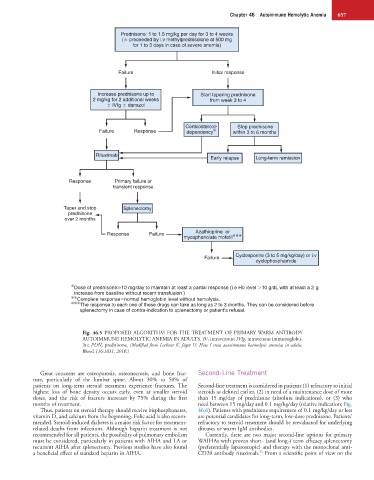
                            Fig. 46.5  PROPOSED ALGORITHM FOR THE TREATMENT OF PRIMARY WARM ANTIBODY
                            AUTOIMMUNE HEMOLYTIC ANEMIA IN ADULTS. IV, intravenous; IVIg, intravenous immunoglobu-
                            lin; PDN, prednisone. (Modified from Lechner K, Jäger U: How I treat autoimmune haemolytic anemias in adults.
                            Blood 116:1831, 2010.)


              Great  concerns  are  osteoporosis,  osteonecrosis,  and  bone  frac-  Second-Line Treatment
            ture,  particularly  of  the  lumbar  spine.  About  30%  to  50%  of
            patients  on  long-term  steroid  treatment  experience  fractures.  The   Second-line treatment is considered in patients (1) refractory to initial
            highest  loss  of  bone  density  occurs  early,  even  at  smaller  steroid   steroids as defined earlier, (2) in need of a maintenance dose of more
            doses,  and  the  risk  of  fracture  increases  by  75%  during  the  first   than  15 mg/day  of  prednisone  (absolute  indications),  or  (3)  who
            months of treatment.                                  need between 15 mg/day and 0.1 mg/kg/day (relative indication; Fig.
              Thus, patients on steroid therapy should receive bisphosphonates,   46.6). Patients with prednisone requirement of 0.1 mg/kg/day or less
            vitamin D, and calcium from the beginning. Folic acid is also recom-  are potential candidates for long-term, low-dose prednisone. Patients’
            mended. Steroid-induced diabetes is a major risk factor for treatment-  refractory to steroid treatment should be reevaluated for underlying
            related  deaths  from  infections.  Although  heparin  treatment  is  not   diseases or warm IgM antibodies.
            recommended for all patients, the possibility of pulmonary embolism   Currently, there are two major second-line options for primary
            must be considered, particularly in patients with AIHA and LA or   WAIHAs with proven short- (and long-) term efficacy splenectomy
            recurrent AIHA after splenectomy. Previous studies have also found   (preferentially laparoscopic) and therapy with the monoclonal anti-
                                                                                      35
            a beneficial effect of standard heparin in AIHA.      CD20 antibody rituximab.  From a scientific point of view on the

