


Page 1467 - Williams Hematology ( PDFDrive )
P. 1467
1442           Part X:  Malignant Myeloid Diseases                                                                                                   Chapter 89:  Chronic Myelogenous Leukemia and Related Disorders             1443


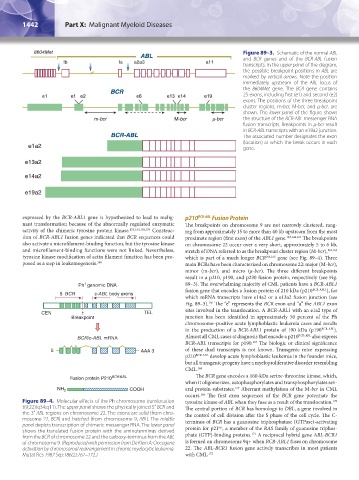
                                                                                         Figure 89–3.  Schematic of the normal ABL
                                                                                         and  BCR genes and of the  BCR-ABL fusion
                                                                                         transcripts. In the upper panel of the diagram,
                                                                                         the possible breakpoint positions in ABL are
                                                                                         marked by vertical arrows. Note the position
                                                                                         immediately upstream of the  ABL locus of
                                                                                         the  8604Met  gene. The  BCR gene contains
                                                                                         25 exons, including first (e1) and second (e2)
                                                                                         exons. The positions of the three breakpoint
                                                                                         cluster regions, m-bcr, M-bcr, and  μ-bcr, are
                                                                                         shown. The lower panel of the figure shows
                                                                                         the structure of the BCR-ABL messenger RNA
                                                                                         fusion transcripts. Breakpoints in μ-bcr result
                                                                                         in BCR-ABL transcripts with an e19a2 junction.
                                                                                         The associated number designates the exon
                                                                                         (location) at which the break occurs in each
                                                                                         gene.


               expressed by the  BCR-ABL1 gene is hypothesized to lead to malig-  p210 BCR-ABL  Fusion Protein
               nant transformation because of the abnormally regulated enzymatic   The breakpoints on chromosome 9 are not narrowly clustered, rang-
               activity of the chimeric tyrosine protein kinase. 153,154,158,159  Construc-  ing from approximately 15 to more than 40 kb upstream from the most
               tion of BCR-ABL1 fusion genes indicated that BCR sequences could   proximate region (first exon) of the ABL1 gene. 143,144,161  The breakpoints
               also activate a microfilament-binding function, but the tyrosine kinase   on chromosome 22 occur over a very short, approximately 5 to 6 kb,
               and microfilament-binding functions were not linked. Nevertheless,   stretch of DNA referred to as the breakpoint cluster region (M-bcr), 162,163
               tyrosine kinase modification of actin filament function has been pro-  which is part of a much longer BCR 164,165  gene (see Fig. 89–4). Three
               posed as a step in leukemogenesis. 160                 main BCRs have been characterized on chromosome 22: major (M-bcr),
                                                                      minor  (m-bcr),  and  micro  (μ-bcr).  The  three  different  breakpoints
                                                                      result in a p210, p190, and p230 fusion protein, respectively (see Fig.
                                    1
                                  Ph genomic DNA                      89–3). The overwhelming majority of CML patients have a BCR-ABL1
                                                                      fusion gene that encodes a fusion protein of 210 kDa (p210 BCR-ABL1 ), for
                            5 BCR       c-ABL body exons
                                                                      which mRNA transcripts have e14a2 or a e13a2 fusion junction (see
                                                                      Fig. 89–3).  The “e” represents the BCR exon and “a” the ABL1 exon
                                                                              166
                                                                      sites involved in the translocation. A BCR-ABL1 with an e1a2 type of
                      CEN                               TEL
                                Breakpoint                            junction has been identified in approximately 50  percent of the Ph
                                                                      chromosome–positive acute lymphoblastic leukemia cases and results
                                                                      in the production of a  BCR-ABL1 protein of 190 kDa (p190 BCR-ABL ).
                                  BCR/c-ABL mRNA                      Almost all CML cases at diagnosis that encode a p210 BCR-ABL  also express
                                                                      BCR-ABL transcripts for p190.  The biologic or clinical significance
                                                                                             167
                         5                             AAA 3          of these dual transcripts is not known. Transgenic mice expressing
                                                                      p210 BCR-ABL  develop acute lymphoblastic leukemia in the founder mice,
                                                                      but all transgenic progeny have a myeloproliferative disorder resembling
                                                                      CML. 168
                               Fusion protein P210 BCR/ABL                The BCR gene encodes a 160-kDa serine-threonine kinase, which,
                                                                      when it oligomerizes, autophosphorylates and transphosphorylates sev-
                                                                                       169
                           NH 2                    COOH               eral protein substrates.  Aberrant methylation of the M-bcr in CML
                                                                      occurs.  The first exon sequences of the  BCR gene potentiate the
                                                                           166
               Figure 89–4.  Molecular effects of the Ph chromosome translocation   tyrosine kinase of ABL when they fuse as a result of the translocation.
                                                                                                                       170
               t(9;22)(q34;q11). The upper panel shows the physically joined 5′ BCR and   The central portion of BCR has homology to DBL, a gene involved in
               the 3′ ABL regions on chromosome 22. The exons are solid (from chro-  the control of cell division after the S phase of the cell cycle. The C-
               mosome 22, BCR) and hatched (from chromosome 9, ABL). The middle   terminus of BCR has a guanosine triphosphatase (GTPase)-activating
               panel depicts transcription of chimeric messenger RNA. The lower panel   protein for p21 , a member of the RAS family of guanosine triphos-
                                                                                 rac
               shows the translated fusion protein with the aminoterminus derived           171
               from the BCR of chromosome 22 and the carboxy-terminus from the ABL   phate (GTP)-binding proteins.  A reciprocal hybrid gene ABL-BCR1
               of chromosome 9. (Reproduced with permission from De Klein A: Oncogene   is formed on chromosome 9q+ when BCR-ABL1 fuses on chromosome
               activation by chromosomal rearrangement in chronic myelocytic leukemia.   22. The  ABL-BCR1 fusion gene actively transcribes in most patients
               Mutat Res 1987 Sep;186(2):161–172.)                    with CML. 172


          Kaushansky_chapter 89_p1437-1490.indd   1442                                                                  9/18/15   3:41 PM

