


Page 1469 - Williams Hematology ( PDFDrive )
P. 1469
1444           Part X:  Malignant Myeloid Diseases                                                                                                   Chapter 89:  Chronic Myelogenous Leukemia and Related Disorders             1445


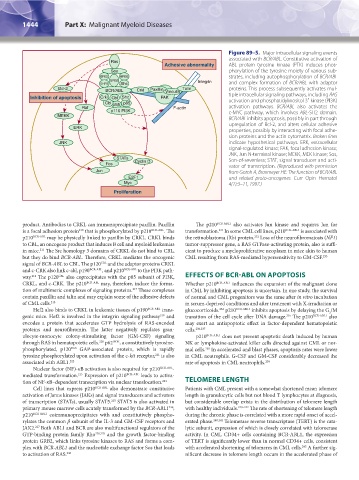
                                                                                     Figure 89–5.  Major intracellular signaling events
                                                                                     associated with BCR/ABL. Constitutive activation of
                                             Ras
                                                               Adhesive abnormality  ABL protein tyrosine kinase (PTK) induces phos-
                                             Sos                                     phorylation of the tyrosine moiety of various sub-
                                         GRB2   GRB2                                 strates, including autophosphorylation of BCR/ABL
                                             GRB2                         Integrin
                                         SHP2   Shc                                  and complex  formation of  BCR/ABL with  adaptor
                           Bcl-2           BCR/ABL    Crkl  Paxillin  Vinculin  Talin  proteins. This process subsequently activates mul-
                  Inhibition of apoptosis  Crkl Cbl  Shc      FAK                    tiple intracellular signaling pathways, including RAS
                                                                                     activation and phosphatidylinositol 3′-kinase (PI3K)
                                           Cbl  p85  p85
                                   Raf                            F-actin            activation pathways.  BCR/ABL also activates the
                                             p110 PI3K                               c-MYC pathway, which involves ABL-SH2 domain.
                           MEKK
                                                                                     BCR/ABL inhibits apoptosis, possibly in part through
                                                                                     upregulation of Bcl-2, and alters cellular adhesive
                                 ERK
                                                                                     properties, possibly by interacting with focal adhe-
                                                                                     sion proteins and the actin cytomatrix. Broken lines
                            JNK                                                      indicate hypothetical pathways. ERK, extracellular
                                                                                     signal-regulated kinase; FAK, focal adhesion kinase;
                                                                                     JNK, Jun N-terminal kinase; MEKK, MEK kinase; Sos,
                                               STATs                                 Son-of-sevenless; STAT, signal transducer and acti-
                                           Fos       Cyclin D                        vator of transcription. (Reproduced with permission
                                        Jun                                          from Gotoh A, Broxmeyer HE: The function of BCR/ABL
                                                   E2F1                              and related proto-oncogenes.  Curr Opin Hematol
                                                 Myc                                 4(1):3–11, 1997.)
                                              Proliferation


               product. Antibodies to CRKL can immunoprecipitate paxillin. Paxillin   The p210 BCR-ABL1  also activates Jun kinase and requires Jun for
               is a focal adhesion protein  that is phosphorylated by p210 BCR-ABL . The   transformation.  In some CML cell lines, p210 BCR-ABL1  is associated with
                                  210
                                                                                 231
               p210 BCR-ABL  may be physically linked to paxillin by CRKL. CRKL binds   the retinoblastoma (Rb) protein.  Loss of the neurofibromatosis (NF1)
                                                                                             232
               to CBL, an oncogene product that induces B cell and myeloid leukemias   tumor-suppressor gene, a RAS GTPase-activating protein, also is suffi-
               in mice.  The Src homology 3 domains of CRKL do not bind to CBL,   cient to produce a myeloproliferative neoplasm in mice akin to human
                     211
               but they do bind BCR-ABL. Therefore, CRKL mediates the oncogenic   CML resulting from RAS-mediated hypersensitivity to GM-CSF. 233
               signal of BCR-ABL to CBL. The p120 CBL  and the adaptor proteins CRKL
               and c-CRK also link c-abl, p190 BCR-ABL , and p210 BCR-ABL  to the PI3K path-
               way.  The p120 CBL  also coprecipitates with the p85 subunit of PI3K,   EFFECTS OF BCR-ABL ON APOPTOSIS
                  212
               CRKL, and c-CRK. The p210 BCR-ABL  may, therefore, induce the forma-  Whether p210 BCR-ABL1  influences the expansion of the malignant clone
               tion of multimeric complexes of signaling proteins.  These complexes   in CML by inhibiting apoptosis is uncertain. In one study, the survival
                                                    217
               contain paxillin and talin and may explain some of the adhesive defects   of normal and CML progenitors was the same after in vitro incubation
               of CML cells. 218                                      in serum-deprived conditions and after treatment with X-irradiation or
                   Hef2 also binds to CRKL in leukemic tissues of p190 BCR-ABL  trans-  glucocorticoids.  p210 BCR-ABL1  inhibits apoptosis by delaying the G /M
                                                                                 234
                                                                                                                      2
               genic mice. Hef2 is involved in the integrin signaling pathway  and   transition of the cell cycle after DNA damage.  The p210 BCR-ABL1  also
                                                                                                        235
                                                              219
               encodes a protein that accelerates GTP hydrolysis of RAS-encoded   may exert an antiapoptotic effect in factor-dependent hematopoietic
               proteins  and  neurofibromin.  The  latter  negatively  regulates  gran-  cells. 236,237
               ulocyte-monocyte colony-stimulating factor (GM-CSF) signaling   p210 BCR-ABL1  does not prevent apoptotic death induced by human
               through RAS in hematopoietic cells.  p62 DOK , a constitutively tyrosine-   NK or lymphokine-activated killer cells directed against CML or nor-
                                         220
               phosphorylated, p120 RAS  GAP-associated protein, which is rapidly   mal cells.  In accelerated and blast phases, apoptosis rates were lower
                                                                             238
               tyrosine phosphorylated upon activation of the c-kit receptor,  is also   in CML neutrophils. G-CSF and GM-CSF considerably decreased the
                                                            221
               associated with ABL1. 222                              rate of apoptosis in CML neutrophils. 239
                   Nuclear factor (NF)-κB activation is also required for p210 BCR-ABL -
               mediated transformation.  Expression of p210 BCR-ABL  leads to activa-
                                  223
               tion of NF-κB–dependent transcription via nuclear translocation. 224  TELOMERE LENGTH
                   Cell  lines that express p210 BCR-ABL  also  demonstrate constitutive   Patients with CML present with a somewhat shortened mean telomere
               activation of Janus kinases (JAKs) and signal transducers and activators   length in granulocytic cells but not blood T lymphocytes at diagnosis,
               of transcription (STATs), usually STAT5.  STAT5 is also activated in   but considerable overlap exists in the distribution of telomere length
                                             225
               primary mouse marrow cells acutely transformed by the BCR-ABL1 ;   with healthy individuals. 240–242  The rate of shortening of telomere length
                                                                226
               p210 BCR-ABL1  coimmunoprecipitates with and constitutively phospho-  during the chronic phase is correlated with a more rapid onset of accel-
               rylates the common β subunit of the IL-3 and GM-CSF receptors and   erated phase. 240,242  Telomerase reverse transcriptase (TERT) is the cata-
               JAK2.  Both ABL1 and BCR are also multifunctional regulators of the   lytic subunit, expression of which is closely correlated with telomerase
                    227
               GTP-binding protein family Rho 228,229  and the growth factor-binding   activity. In CML CD34+  cells containing  BCR-ABL1, the  expression
               protein GRB2, which links tyrosine kinases to RAS and forms a com-  of TERT is significantly lower than in normal CD34+ cells, consistent
               plex with BCR-ABL1 and the nucleotide exchange factor Sos that leads   with accelerated shortening of telomeres in CML cells.  A further sig-
                                                                                                             243
               to activation of RAS. 230                              nificant decrease in telomere length occurs in the accelerated phase of

          Kaushansky_chapter 89_p1437-1490.indd   1444                                                                  9/18/15   3:41 PM

