


Page 1760 - Williams Hematology ( PDFDrive )
P. 1760
1734  Part XI:  Malignant Lymphoid Diseases                                         Chapter 107:  Myeloma            1735


                  [t(6;14), t(11;14), and t(14;16)]. However, chromosome 13 deletions,
                  RAS mutations and non–immunoglobulin (Ig)-locus associated MYC
                  translocations are more frequent in myeloma.  Indeed, the develop-
                                                    43
                  ment of myeloma seems to necessitate an immortalizing event, such as a
                  primary IGH translocation, an oncogene activation, or deregulation of                Extramedullary myeloma
                  a tumor suppressor, to occur in the germinal center during the switch
                  recombination or somatic hypermutation, resulting in uncontrolled
                                                        42
                  expansion of a long-lived plasmablast/plasma cell.  In early stages,   Smoldering
                  myeloma cells are dependent on the growth support provided by bone   MG  myeloma  Myeloma  Plasma cell leukemia
                  marrow stromal cells (BMSCs) (intramedullary phase), but can become   Hyperdiploidy
                  independent of their medullary environment at late stages (plasma cell
                  leukemia). However, 15 to 70 percent of newly diagnosed myeloma   IGH translocations: t(11;14); t(4;14); MAF translocations
                  patients, using conventional morphology techniques 45–51  or multipara-     Del (13q) and monosomy 13
                                  52
                  metric flow cytometry  have circulating clonotypic myeloma cells (cir-
                  culating tumor cells [CTCs]) in their blood, suggesting the presence of a   chr (1q) amplification
                  “metastatic”/dissemination process that disseminates the disease hema-  RAS mutations and myc overexpression
                          53
                  togenously.  Moreover, the presence of CTCs in MG is a risk factor for
                  myeloma progression, 54,55  as well as a poor prognostic factor in newly          Del (17p) or TP53 mutations
                  diagnosed or relapsed/refractory myeloma patients. 56,57  Myeloma CTCs                 RB1 mutations
                  share a similar phenotype to marrow myeloma cells, but are more quies-
                  cent, have better in vitro clonogenic capacity and have lower expression                  PTEN loss
                  of integrin and adhesion molecules (including CD138) making them                        p14 promoter meth
                  less dependent on marrow niches. 58
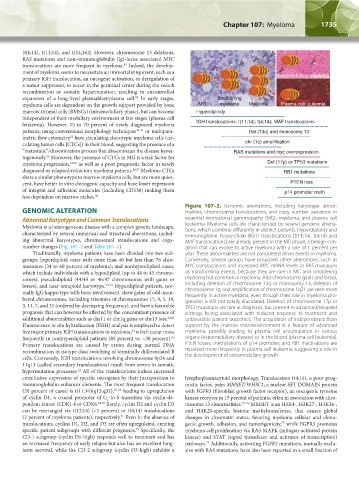
                                                                        Figure 107–2.  Genomic  aberrations,  including  karyotype  abnor-
                  GENOMIC ALTERATION                                    malities, chromosomal translocations, and copy number variations in
                  Abnormal Karyotype and Common Translocations          essential monoclonal gammopathy (MG), myeloma, and plasma cell
                  Myeloma is a heterogeneous disease with a complex genetic landscape,   leukemia. Myeloma cells are characterized by several genomic aberra-
                  characterized by several numerical and structural aberrations, includ-  tions, which combine differently in distinct patients. Hyperdiploidy and
                                                                        immunoglobin heavy-chain (IGH) translocations [t(11;14), t(4;14) and
                  ing abnormal karyotypes, chromosomal translocations and copy-   MAF translocations] are already present in the MG phase, a benign con-
                  number changes (Fig. 107–2 and Table 107–1).          dition that can evolve to active myeloma with a rate of 1 percent per
                     Traditionally, myeloma patients have been divided into two sub-  year. These abnormalities are not considered driver events in myeloma.
                  groups: hyperdiploid cases with more than 46 but less than 76 chro-  Conversely, several groups have proposed other aberrancies, such as
                  mosomes (34 to 60 percent of myeloma); and nonhyperdiploid cases,   MYC translocations and increased MYC mRNA levels or RAS mutations
                  which include individuals with a hypodiploid (up to 44 to 45 chromo-  as transforming events, because they are rare in MG and smoldering
                  somes), pseudodiploid (44/45 or 46/47 chromosomes with gains or   myeloma but common in myeloma. Also chromosome gains and losses,
                  losses), and near-tetraploid karyotype. 59–61  Hyperdiploid patients, nor-  including deletion of chromosome 13q or monosomy 13, deletion of
                  mally IgG kappa-type with bone involvement, show gains of odd-num-  chromosome 1p, and amplification of chromosome 1q21 are seen more
                  bered chromosomes, including trisomies of chromosomes 15, 9, 5, 19,   frequently in active myeloma, even though their role in myeloma pro-
                                                                        gression is still not totally elucidated. Deletion of chromosome 17p or
                  3, 11, 7, and 21 (ordered by decreasing frequency), and have a favorable   TP53 mutations are rare at diagnosis, but present in advanced/relapsed
                  prognosis that can however be affected by the concomitant presence of   settings,  being  associated  with  reduced  response  to  treatment  and
                  additional abnormalities such as chr11 or chr1q gains or chr13 loss. 62,63    unfavorable patient outcomes. The acquisition of independence from
                  Fluorescence in situ hybridization (FISH) analysis is employed to detect   support by the marrow microenvironment is a feature of advanced
                  five major primary IGH translocations in myeloma,  which occur more   myeloma, possibly leading to plasma cell accumulation in various
                                                      64
                  frequently in nonhyperdiploid patients (85 percent vs. <30 percent).    organs (extramedullary disease) or in the blood (plasma cell leukemia).
                                                                    65
                  Primary  translocations  are  caused  by  errors  during  normal  DNA   PTEN losses, methylations of p14 promoter, and RB1 inactivations are
                  recombination in isotype class switching of terminally differentiated B   reported more frequently in plasma cell leukemia, suggesting a role in
                  cells. Conversely, IGH translocations involving chromosome 8p24 and   the development of extramedullary growth.
                  11q13 (called secondary translocations) result from errors in somatic
                  hypermutation processes.  All of the translocations induce increased
                                    42
                  constitutive expression of specific oncogenes by their juxtaposition to   lymphoplasmacytoid morphology. Translocation t(4;14), a poor prog-
                  immunoglobulin enhancer elements. The most frequent translocation   nostic factor, pairs MMSET/WHSC1, a nuclear SET DOMAIN protein
                  (20 percent of cases) is t(11;14)(q13;q32), 66–68  leading to upregulation   with FGFR3 (fibroblast growth factor receptor), an oncogenic tyrosine
                  of cyclin D1, a crucial promoter of G -to-S transition via cyclin-de-  kinase receptor in 15 percent of patients, often in association with chro-
                                              1
                  pendent kinase (CDK)-4 or CDK6. 69,70  Rarely, cyclin D2 and cyclin D3   mosome 13 abnormalities. 73–76  MMSET is an H3K4-, H3K27-, H3K36-,
                  can be rearranged via t(12;14) (<1 percent) or t(6;14) translocations   and H4K20-specific histone methyltransferase, that causes global
                  (2 percent of myeloma patients), respectively.  Even in the absence of   changes in  chromatin  status, favoring  myeloma cellular and  clono-
                                                   71
                  translocations, cyclins D1, D2, and D3 are often upregulated, creating   genic growth, adhesion, and tumorigenicity,  while FGFR3 promotes
                                                                                                         75
                  specific patient subgroups with different prognoses.  Specifically, the   myeloma cell proliferation via RAS-MAPK (mitogen-activated protein
                                                        72
                  CD-1 subgroup (cyclin D1-high) responds well to treatment and has   kinase) and STAT (signal transducer and activator of transcription)
                  an increased frequency of early relapse but also has an excellent long-  pathways.  Additionally, activating FGFR3 mutations, mutually exclu-
                                                                               77
                  term survival, while the CD-2 subgroup (cyclin D3-high) exhibits a   sive with RAS mutations, have also been reported in a small fraction of


          Kaushansky_chapter 107_p1733-1772.indd   1735                                                                 9/21/15   12:33 PM

